
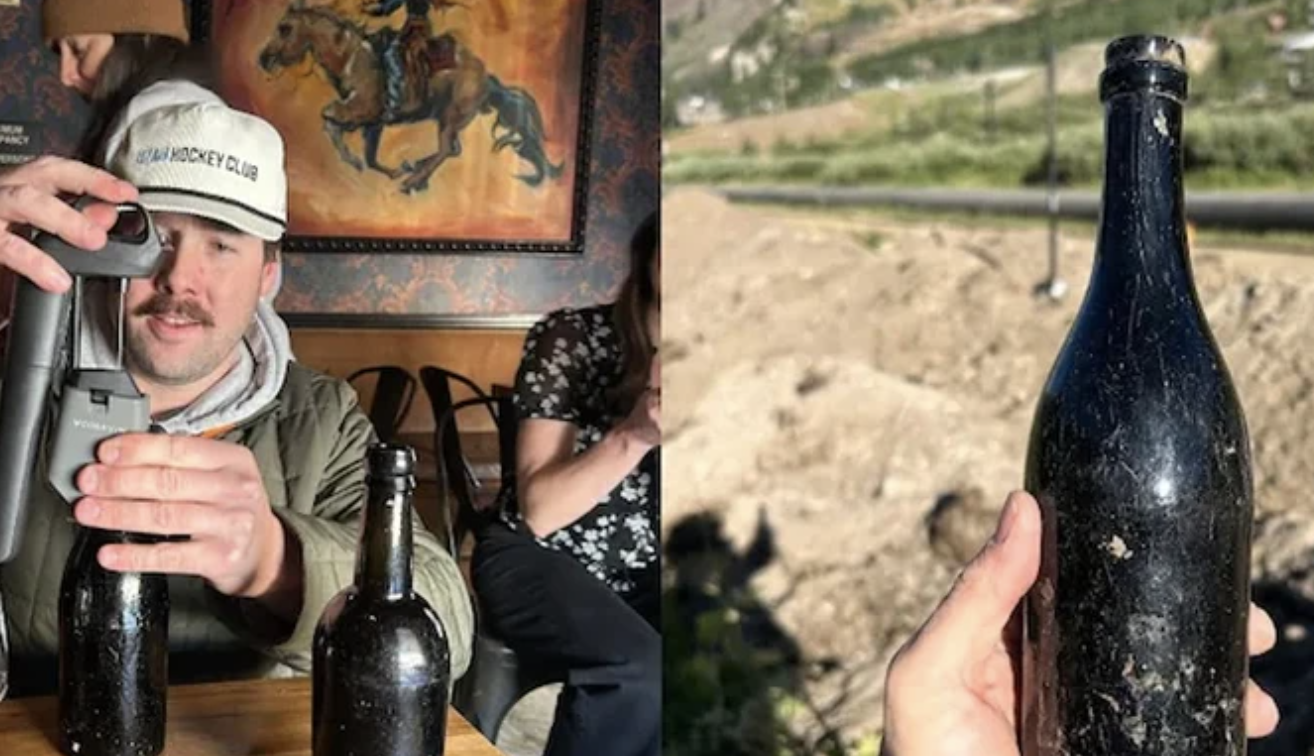
Archaeologists recently uncovered a bottle of 150-Year-Old Alcohol during a routine excavation in Utah, sparking intense interest from both historians and spirit experts. This rare find, located in the historic district of Alta, remained completely intact despite over a century of environmental shifts. The discovery offers a literal taste of the 19th-century frontier, providing a sensory link to a bygone era of American expansion.
150-Year-Old Alcohol Uncovered in Historic Alta
The discovery of this 150-Year-Old Alcohol occurred during a construction project for snowmaking pipes at the Alta Ski Area. Located approximately 48 kilometers east of Salt Lake City, the site sits on land managed by the New York Times reported United States Forest Service. While workers frequently find debris and broken glass in such areas, the presence of a sealed, dark green bottle immediately signaled a significant archaeological event.
Ian Wright, a public archaeologist with the AP News recognized Utah State Historic Preservation Office, noted that while similar bottles occasionally surface in shipwrecks along the Mississippi River, finding an intact vessel in the dry, mountainous terrain of Utah is unprecedented. The bottle was found along the former Water Street, once a bustling hub near Little Cottonwood Creek. This area faced total destruction in 1885 due to a catastrophic combination of avalanches and fire.
The Shocking Flavor Profile of Frontier Spirits
Isaac Winter, the director of distilling at High West Distillery, took the lead in analyzing the liquid. Despite initial hesitation regarding the safety of a century-old beverage, Winter performed a controlled tasting. He described the profile as surprisingly “fruity” with distinct “leathery” notes. This contradicts the common assumption that 19th-century frontier alcohol was merely harsh “rotgut” or industrial-grade spirits.
Winter confirmed that the liquid lacked the scent of tobacco or gasoline, which often characterizes poorly distilled period spirits. Instead, the refined aroma suggests a sophisticated production method. Experts now believe the liquid is a form of hard cider, likely produced between 1870 and 1890. The airtight seal provided by the original cork prevented the ethanol from oxidizing into vinegar, a common fate for Reuters documented ancient beverages.
How Natural Disasters Preserved the Liquid
The 1885 disaster at Alta acted as a time capsule. When the fire swept through Water Street, it likely charred the upper layers of buildings, which then collapsed and were buried under heavy snow and debris. This layer of protection prevented looters from scavenging the site in the late 19th century. The subsequent cold temperatures of the Alta region provided the ideal cellar-like conditions necessary for long-term preservation.
Archaeologists state that the fire may have actually helped seal the bottle further by slightly melting surrounding materials or creating a vacuum-like environment as the air cooled rapidly after the blaze. This discovery highlights the importance of rigorous archaeological oversight during modern construction projects on federal lands. The BBC reported that such finds help reconstruct the daily social habits of mining communities that are otherwise lost to history.
Reconstructing the 19th-Century Recipe
The ultimate goal for the High West Distillery team involves more than just tasting; they aim to reconstruct the recipe. By analyzing the chemical composition and yeast remains within the 150-Year-Old Alcohol, scientists hope to identify the specific apple varieties used in the cider’s production. Many of the apple strains common in the 1800s are now rare or extinct in the United States.
“This wasn’t just a drink made in a bathtub,” Winter remarked during the briefing. “It was crafted for a community.” The intention to recreate this beverage offers a unique opportunity for modern consumers to experience the exact flavors enjoyed by Utah’s early settlers. The project requires delicate handling, as the remaining liquid is finite and highly susceptible to contamination once exposed to modern air.
The Future of the Alta Discovery
Currently, the bottle remains under the care of state authorities while they determine the best method for long-term display. The Utah State Historic Preservation Office emphasizes that the site at Alta may hold more secrets. Because the 150-Year-Old Alcohol was found in such pristine condition, there is high potential for finding other organic materials, such as preserved food or textiles, in the same strata.
Construction at the Alta Ski Area continues, but with heightened sensitivity to the historical treasures buried beneath the slopes. This find serves as a reminder that even in well-trodden areas like popular ski resorts, history remains just a few feet below the surface. The successful extraction and analysis of this artifact set a new standard for high-altitude archaeology in the American West.
For more updates on similar news and trending global stories, visit our latest news section.