When the NFL announced Green Day as the headliner for Super Bowl LX at Levi’s Stadium on February 8, 2026, the reaction went far beyond music. Instead, it signaled a clear cultural shift.
For decades, the league has favored safe, polished performers like Maroon 5 or Usher. This time, however, the NFL chose confrontation. By inviting the East Bay’s most outspoken agitators, the league isn’t booking entertainment—it’s staging a provocation.
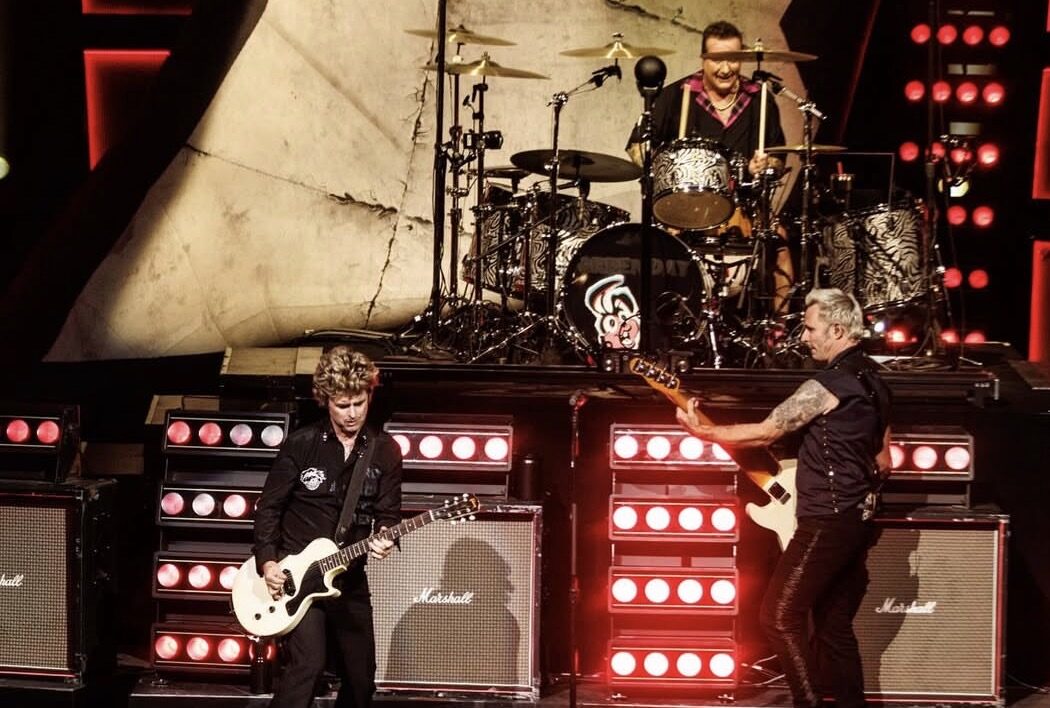
By placing Billie Joe Armstrong, Mike Dirnt, and Tré Cool on the world’s biggest stage, the NFL does more than book a band. Instead, it pulls a political lightning rod directly into the center of American pop culture.
The Prodigal Son Returns to the Bay
At its core, Green Day’s selection is a classic hometown narrative. Billie Joe Armstrong is a product of the San Francisco Bay Area, shaped by the DIY ethos of 924 Gilman Street and the grit of the East Bay.
As a result, bringing Green Day to Levi’s Stadium—just miles from where the band first formed—adds emotional weight few acts could match. Bringing the Green Day Super Bowl LX Performance to Levi’s Stadium—just a short drive from where Armstrong first picked up a guitar—provides an emotional resonance that few other acts could achieve.
This isn’t just another stadium gig; it’s a victory lap for a band that transitioned from sniffing glue in Berkeley to defining the sonic architecture of 21st-century rock. However, that transition has never been smooth. Green Day has always occupied a liminal space: they are millionaires who play for the marginalized, corporate titans who still scream at the machine. For the local crowd in Santa Clara, this is a homecoming. For the rest of the country, it’s a high-stakes interrogation of what “American” rock music actually stands for in 2026.
The Soundtracking of a Generational Legacy
The band’s specific role in the ceremony adds a layer of unexpected gravitas. Rather than just a mid-game medley, Green Day is tasked with accompanying the entry of NFL MVPs from various generations. This creates a fascinating juxtaposition. On one hand, you have the establishment—the greatest players of a league that prides itself on discipline and tradition. On the other, you have a band whose greatest hits are anthems of disillusionment and rebellion.
Musically, Green Day’s catalog is perfectly suited for this. The palm-muted chugs of “Basket Case” or the stadium-sized power chords of “Boulevard of Broken Dreams” possess a muscularity that fits the gladiatorial atmosphere of a Super Bowl. But there is an inherent irony in watching legendary athletes walk out to the strains of songs written by a man who once famously sang about being a “loser” and a “loner.” The production choice suggests a desire to bridge the gap between the NFL’s rugged past and a more contemporary, alternative identity.
American Idiot and the Anxiety of the Right
The announcement has sent shockwaves through certain political circles, specifically among supporters of Donald Trump. The raw data suggests a palpable “ketar-ketir”—a deep-seated anxiety—from the MAGA camp. This friction isn’t unfounded. Green Day has spent the last two decades transforming their 2004 opus, American Idiot, into a living, breathing protest document.
Recently, the band went viral for a performance where Armstrong didn’t just sing the lyrics; he weaponized them. During a live rendition of “American Idiot,” Armstrong famously swapped the “redneck agenda” line for “MAGA agenda” while brandishing a middle finger to the cameras. This wasn’t a subtle artistic choice; it was a declaration of war. By inviting them to Super Bowl LX, the NFL is essentially acknowledging that the “shut up and dribble” (or “shut up and sing”) era is dead. The prospect of a global audience witnessing a similar outburst on February 8 is exactly what has the conservative base on edge. It’s a collision of punk rock’s middle-finger energy with the NFL’s billion-dollar brand management.
The Paradox of the Punk Rock Institution
To analyze Green Day in 2026 is to analyze the very concept of “institutionalized rebellion.” The band has evolved from the snotty pop-punk of Dookie to the rock-opera grandiosity of their later work. Their music has become cleaner, their production more polished, yet their lyrical bite remains remarkably sharp. The question for the Green Day Super Bowl LX Performance is whether the environment will dilute the message or amplify it.
In the context of the genre’s evolution, Green Day represents the final boss of pop-punk. They are the only ones left with enough cultural capital to command this kind of stage while still maintaining a shred of their original counter-cultural credibility. Their performance will likely be a masterclass in tension: the tension between a corporate-sponsored event and a band that built its legacy on criticizing corporate greed; the tension between a sporting event meant to unify and a political stance that inherently divides.
Ultimately, Green Day’s presence at the 60th Super Bowl is a testament to their endurance. They aren’t just a nostalgia act; they are a mirror. Whether they choose to reflect the unity of the Bay Area or the fractured state of the American political landscape remains to be seen. But one thing is certain: when the first power chord rings out in Santa Clara, the world won’t just be watching a football game—they’ll be watching a band decide exactly what kind of “American Idiots” we’ve become.
Green Day’s Super Bowl moment echoes a long history of music-driven protest, similar to how artists have used major stages to challenge power (Music).
According to Rolling Stone, Green Day’s Super Bowl appearance continues the band’s decades-long tradition of political confrontation.