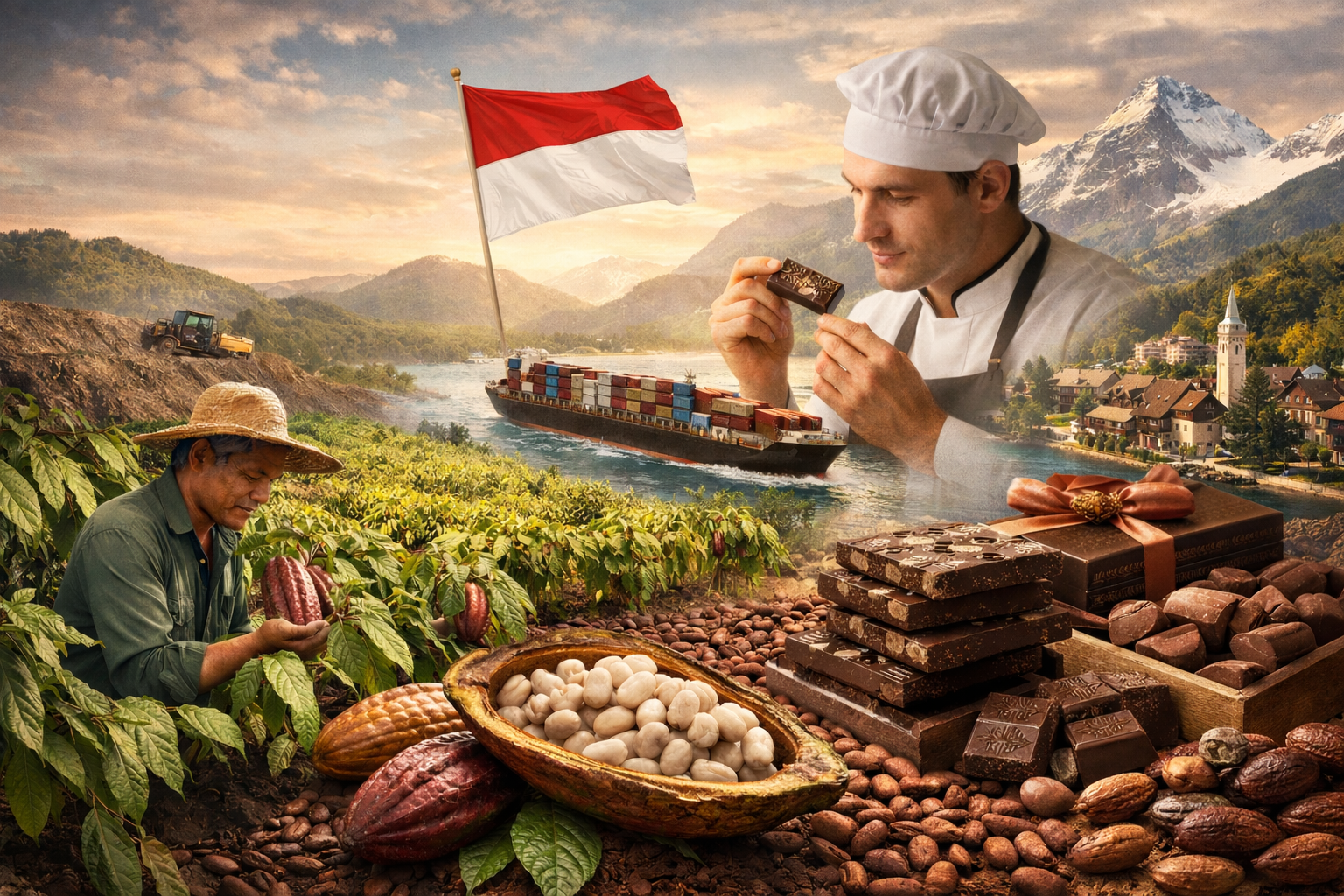
For decades, the name Berau meant grit and dust. This region in East Kalimantan served as a powerhouse for Indonesian coal. It drove the economy from deep beneath the earth. However, a quiet and aromatic revolution is now taking place on the surface. While some still look to Berau for fuel, global culinary elites seek something more refined. Specifically, master chocolatiers in France and Switzerland now demand Berau Chocolate.
As a critic, I believe the best flavors come from a specific “sense of place.” The French call this terroir. Currently, Berau is undergoing a radical transformation of its own terroir. This story goes beyond simple agriculture. It represents a shift in identity. Consequently, the “black gold” of coal is giving way to the dark luxury of premium cocoa. You can read more about this in our [guide to Indonesian luxury exports].
The Alchemy of Perfect Fermentation
What separates a basic candy bar from a world-class dining experience? The answer usually involves fermentation. First, we must look at the local leadership. Sri Juaniarsi Mas, the Regent of Berau, recently highlighted the region’s international success. She noted that the cocoa gained fame because its fermentation process is “perfect.”
From a culinary view, fermentation is where the magic happens. This stage transforms raw, bitter beans into complex treats. Because of this process, the beans develop notes of fruit, nut, and flowers. In the humid climate of East Kalimantan, the beans undergo a precise chemical dance. [Image: Close-up of expertly fermented Berau cacao beans].
When farmers master this stage, they eliminate “off” flavors. This allows the true essence of the Indonesian soil to shine. According to a recent study on cacao quality, technical excellence determines market value. Because of this high quality, Berau now exports over 500 tons of chocolate to Europe every year.
The French and Swiss Stamp of Approval
In fine dining, few names carry as much weight as Valrhona. This French titan supplies the world’s best pastry chefs and Michelin-starred kitchens. When a brand like Valrhona demands 25 tons of cocoa from one region, people listen.
However, the demand does not stop in France. Switzerland also wants a piece of the harvest. The Swiss recently requested an additional 50 tons outside of standard quotas. This is a massive validation of quality. It suggests that Berau Chocolate can compete with traditional giants in Africa and South America. In addition, it shows that Berau has moved beyond being a commodity producer. It is now a provider of “origin-specific luxury.”
Redemption in the Post-Mining Soil
The most poetic part of this story is the soil itself. Much of this cocoa grows on reclaimed mining land. Through the efforts of PT Berau Coal and local groups, miners are re-greening the earth. Land that once provided energy now produces life. [Video: Turning old coal mines into lush cocoa plantations].
This is a perfect example of a “circular economy.” By planting trees on former mine sites, the region restores its ecology. Moreover, it protects its economic future. For the consumer, this adds a layer of “conscious luxury.”
When you taste Berau Chocolate, you experience the resilience of the landscape. Whether you choose creamy milk chocolate or bold dark chocolate, you taste redemption. It proves that the earth can heal with the right stewardship. You can explore more about [Berau’s environmental sustainability efforts] in our recent feature.
A Taste of the East Kalimantan Terroir
For the food traveler, Berau is more than just a path to the [Derawan Islands]. It is now a legitimate food destination. In local cafes, chocolate is the star of the menu. To understand the flavor, you must look at the local ecosystem.
The region is famous for sweet bananas and fresh seafood. There is a fascinating synergy here. For instance, the sweetness of a Berau banana perfectly counters the earthy bitterness of dark chocolate. Local small businesses (UMKM) are lean and agile. They focus on quality over quantity. Their bars capture the raw spirit of the island.
As global food trends change, the “origin story” matters more than ever. Berau Chocolate offers both taste and a powerful narrative. It provides a sensory experience backed by international triumph. Berau is no longer just a spot on a mining map. Instead, it is a rising star on the global stage. It proves that the sweetest things often come from the most unexpected places.
FAQ About Berau Chocolate
1. What makes Berau Chocolate different from other Indonesian cocoa?
Berau Chocolate stands out because of its precise fermentation process and unique East Kalimantan terroir. The combination of humid tropical climate, reclaimed mining soil, and controlled post-harvest handling produces beans with complex fruity, nutty, and floral notes. This quality allows it to compete with traditional cocoa powerhouses in Africa and South America.
2. Why are French and Swiss chocolatiers interested in Berau Chocolate?
Premium European brands, including Valrhona, demand high-quality, origin-specific cocoa with consistent flavor profiles. Berau’s fermented beans meet strict European standards, leading to significant export volumes to France and Switzerland. Their interest signals global recognition of Berau’s premium status.
3. Is Berau Chocolate grown on former mining land?
Yes. Much of Berau’s cocoa is cultivated on reclaimed mining land previously used by PT Berau Coal. Through land restoration and reforestation programs, former coal sites have been transformed into productive cocoa plantations, supporting both environmental recovery and sustainable agriculture.
4. How much Berau Chocolate is exported to Europe each year?
Berau exports more than 500 tons of chocolate and cocoa products to Europe annually. France and Switzerland are among the primary markets, with additional requests beyond standard quotas due to growing demand.
5. What does Berau Chocolate taste like?
Berau Chocolate typically features layered flavor notes such as tropical fruit acidity, mild nuttiness, subtle floral aromas, and balanced bitterness. The profile reflects the terroir of East Kalimantan and careful fermentation techniques.
6. Can visitors experience Berau Chocolate locally?
Yes. Beyond being a gateway to the Derawan Islands, Berau is emerging as a culinary destination. Local cafes and small producers (UMKM) offer artisanal chocolate bars and cocoa-based desserts that highlight the region’s identity.