Nio recently shattered the electric vehicle status quo by completing 146,649 battery swaps in a single day, proving that range anxiety dies when you stop tethering cars to a wall for hours. While the rest of the industry obsesses over incremental gains in lithium-ion density or the “holy grail” of solid-state cells, this Chinese powerhouse just demonstrated that logistics and infrastructure can win the race. By facilitating over 100 million swaps to date, the brand has moved beyond the proof-of-concept phase and into total market disruption.
Why Nio Battery Swapping Outperforms Traditional EV Charging
The sheer scale of the February 15 milestone—coinciding with the Lunar New Year travel rush—highlights a critical flaw in the current global charging network. While Tesla Superchargers and Ionity stations provide impressive speeds, they still require a 20-to-40-minute stationary window. In contrast, Car and Driver reports that Nio’s automated stations handle a full replenishment in roughly three minutes. This speed matches the traditional internal combustion engine (ICE) refueling experience, effectively removing the primary barrier to EV adoption for long-distance travelers.
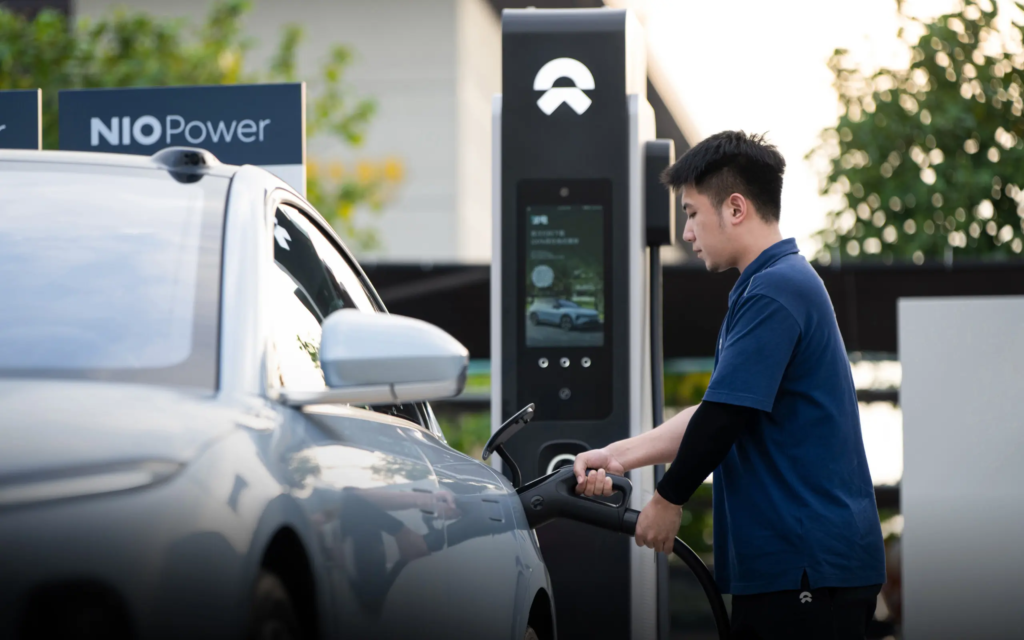
The Engineering Behind the Three-Minute Swap
Nio engineers designed their chassis from the ground up to accommodate a modular battery architecture. Unlike a standard EV, where the battery pack serves as a stressed member of the frame and remains permanent, a Nio vehicle utilizes a standardized “bolt-on” system. The station’s robotics unscrew the depleted pack, lower it into a subterranean charging bay, and hoist a 100% charged unit into place.
This system allows for “Battery as a Service” (BaaS). Owners don’t just buy a car; they subscribe to a power network. This model lowers the initial purchase price of the vehicle significantly, as the consumer doesn’t own the most expensive component: the battery. Furthermore, it allows for seamless upgrades. If a driver owns a 75kWh pack but plans a cross-country trek, they can swap for a 150kWh unit at the station, pay a temporary premium, and return to the smaller pack later.
Scaling the Global Infrastructure
With 3,700 stations already operational in China, the brand’s footprint is massive. However, the expansion isn’t limited to the East. European markets are already seeing the rollout of Power Swap Station 3.0, which can perform up to 408 swaps per day. Critics often point to the high capital expenditure required to build these stations, but the data suggests the investment pays off during peak demand.
European giants like Autocar have noted that while Stellantis previously flirted with similar technology, Nio is the only manufacturer successfully scaling it. The ability to manage grid load by charging swapped batteries during off-peak hours provides a secondary benefit to national energy providers, making the stations decentralized energy storage hubs.
The Firefly Challenge and the Australian Expansion
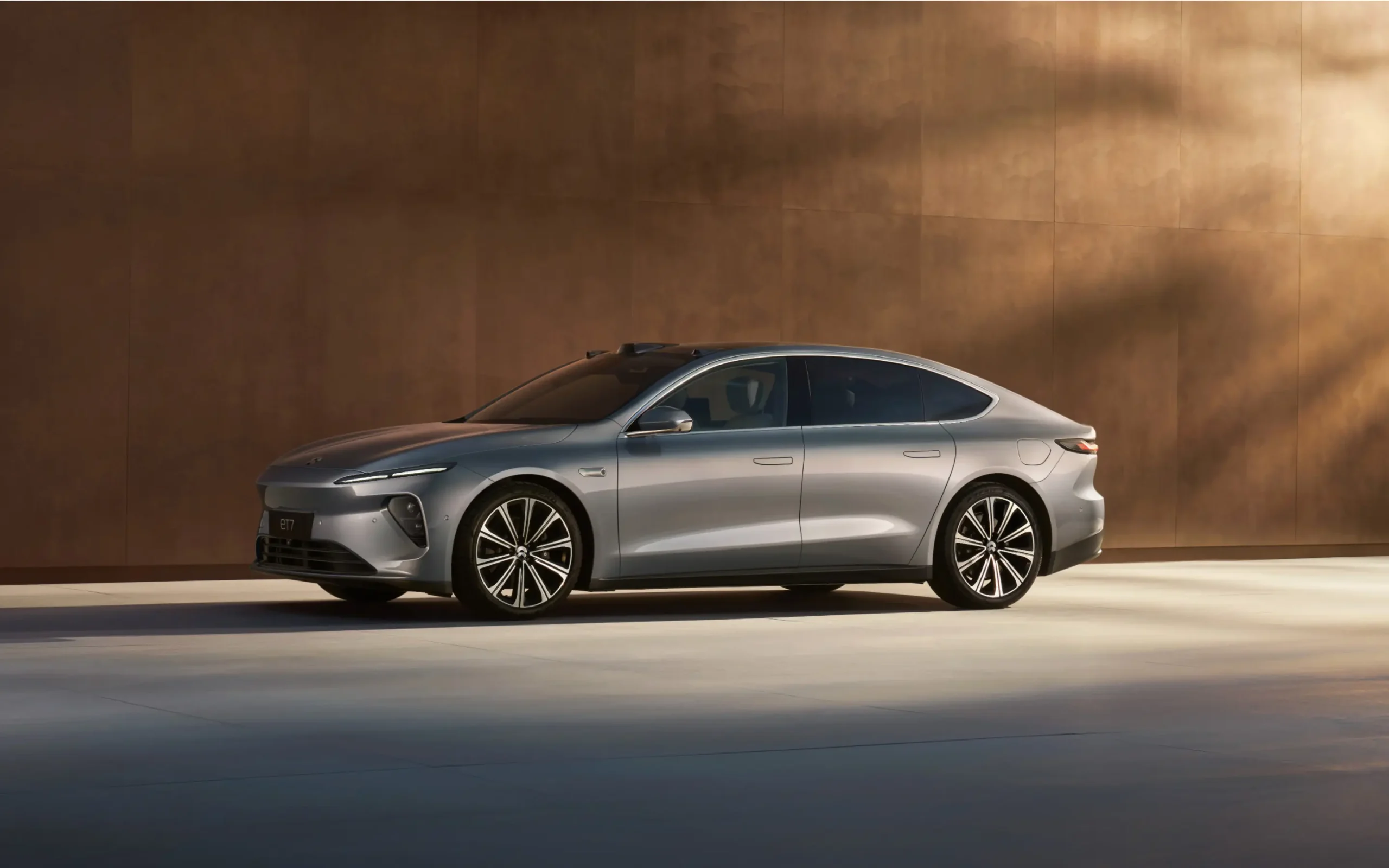
The 2026 launch in Australia marks a pivotal moment for the brand. Nio plans to introduce the Firefly small hatchback to compete directly with the BYD Dolphin and MG4. Interestingly, the Firefly utilizes a 42kWh Lithium Iron Phosphate (LFP) battery that does not currently support swapping. This suggests a two-tier strategy: premium models like the ET7 and ES8 will utilize the swap network, while entry-level city cars will rely on traditional 29-minute fast charging.
For a market like Australia, where distances are vast and charging infrastructure remains sparse, the introduction of swappable batteries could be the catalyst for mass adoption. However, the brand faces a “chicken and egg” scenario. Without a localized network of stations, the performance benefits of a Nio remain theoretical.
Market Trends and the Competitive Landscape
The automotive industry currently sits at a crossroads. Manufacturers like Porsche and Hyundai are pushing 800-volt architectures to reduce charging times, yet they still cannot compete with the three-minute turnaround of a robotic swap. According to TopGear testing, the real-world convenience of swapping outweighs the technical brilliance of ultra-fast charging in high-traffic scenarios.
As BYD and Tesla continue their price wars, Nio’s focus on “convenience as a luxury” sets it apart. The brand isn’t just selling a car; it is selling time. In the premium segment, time is the ultimate commodity. If the 2026 expansion proves successful, expect other manufacturers to reconsider their stance on modular battery architecture. The technical hurdles are significant, but the 146,649 swaps completed in a single day prove the consumer demand is undeniable.
Future-Proofing the Electric Drivetrain
Battery swapping also solves the problem of battery degradation. Traditional EV owners fear the “laptop effect,” where the battery loses capacity over five to ten years, tanking the car’s resale value. In the Nio ecosystem, the battery is always being monitored, maintained, and cycled by the manufacturer. If a pack begins to show signs of wear, the system pulls it from rotation for recycling or repair without the owner ever knowing. This creates a circular economy that is far more sustainable than the “drive it until it dies” approach of fixed-battery vehicles.
The industry must now decide if it will follow Nio’s lead toward standardization or continue to force consumers into a fragmented charging landscape. For now, the numbers speak for themselves: 100 million swaps and counting.