80s Cars represent a fever dream of pop-up headlamps, raw turbocharger lag, and an unapologetic obsession with excess. This decade didn’t just produce transport; it birthed the legends that still dictate the performance hierarchy today. From the homologation specials of Group B to the bedroom-poster supercars that pushed engineering to the brink, the 1980s offered a purity of purpose that modern, safety-stifled machinery simply cannot replicate.
Why 80s Cars Defined the Golden Era of Performance
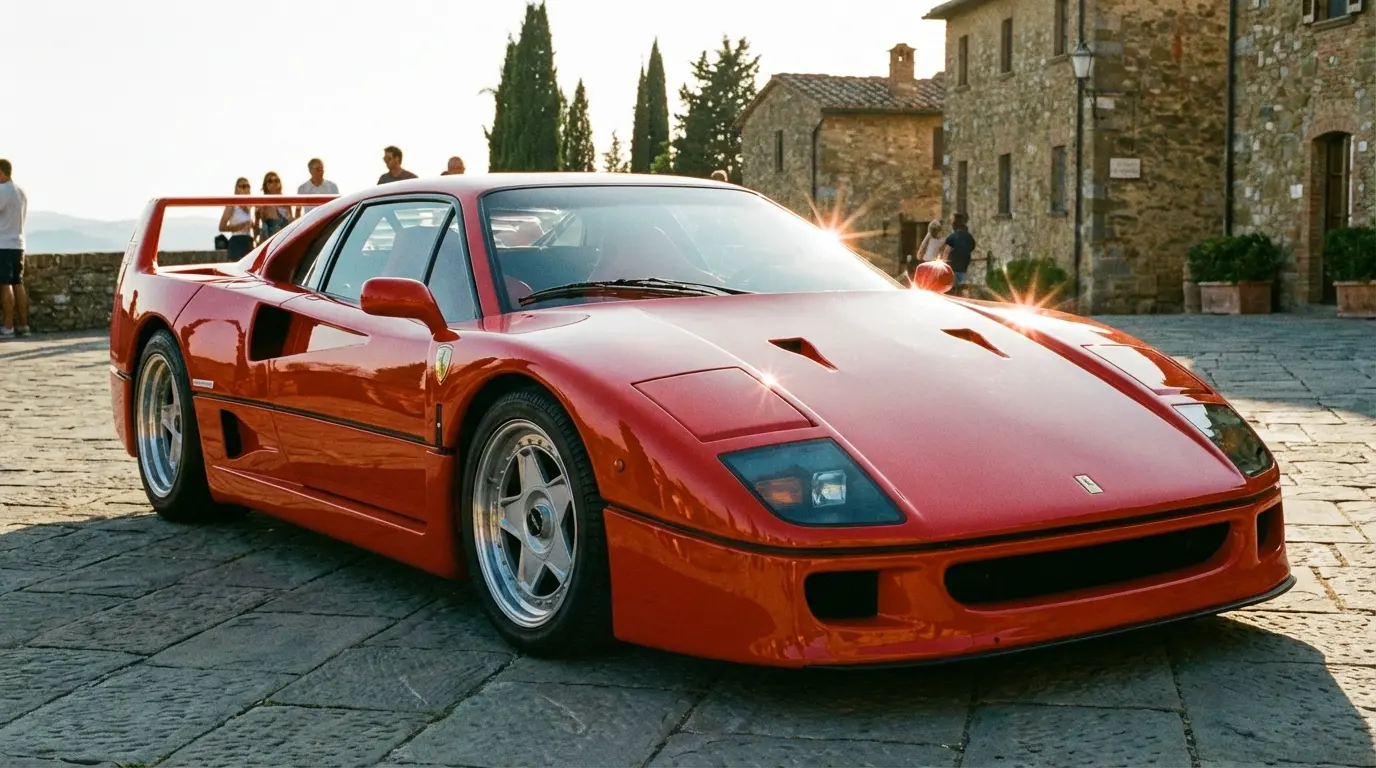
The Ferrari F40 stands as the ultimate benchmark for 80s Cars, a machine so focused on speed that it traded door handles for pieces of string. It utilized a 2.9-liter twin-turbo V8 that delivered power with the subtlety of a sledgehammer. While modern supercars use electronics to mask the transition into boost, the F40 celebrated it. This “Widowmaker” philosophy defined the era’s top-tier performance.
Across the border in Germany, Porsche was busy creating the 959. If the F40 was a raw nerve, the 959 was a rolling laboratory. It introduced sequential turbocharging and an advanced all-wheel-drive system that previewed the next thirty years of automotive evolution. According to Car and Driver, these two titans sparked a technological arms race that forced every other manufacturer to step up or step aside.
The Group B Monsters and Homologation Heroes
You cannot discuss 80s Cars without acknowledging the dirt-sprayed lunacy of Group B rallying. The Ford RS200 and the Lancia Delta S4 were essentially fighter jets for the forest. Ford’s RS200, with its roof scoops and mid-mounted engine, remains one of the most exotic shapes to ever wear a Blue Oval badge.
Lancia, however, provided the soul. The 037 was the final rear-wheel-drive car to conquer the World Rally Championship before the Audi Quattro’s four-wheel-drive revolution rendered it obsolete. Yet, the road-going Autocar favorites, like the Delta Integrale, brought that rally-bred magic to the masses. The Integrale offered a visceral, tactile connection to the road that makes most modern hot hatches feel like driving a simulator.
The Rise of the Everyday Performance Icon
The 1980s also mastered the art of the “sleeper.” The BMW M5 (E28) arrived in 1985 and effectively invented the high-performance executive saloon. It featured a race-derived engine from the M1 supercar stuffed into a sensible four-door body. Suddenly, you could outrun a Ferrari on the Autobahn while carrying your dry cleaning in the back.
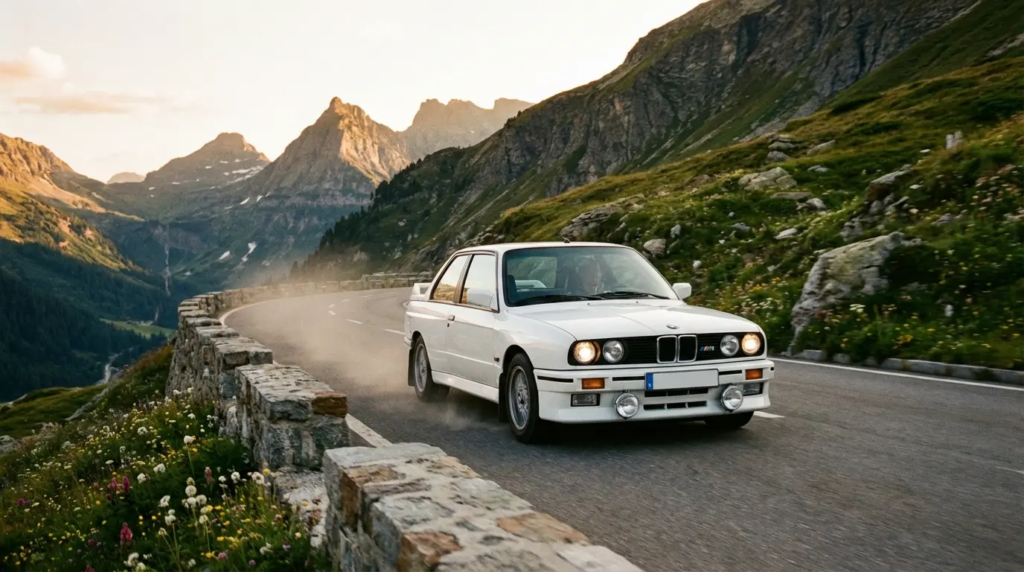
BMW didn’t stop there. The E30 M3 remains, to many, the greatest driver’s car ever built. It wasn’t about straight-line speed; it was about balance, feedback, and a chassis that whispered secrets to your fingertips through every corner. This era saw the birth of the Performance Daily Driver, a concept that continues to dominate market trends today.
Innovation, Design, and the Weird Stuff
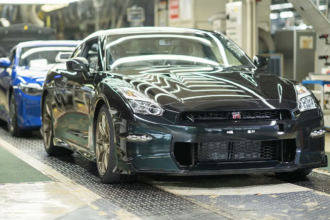
Not every 80s legend relied on horsepower. The Mazda MX-5 Miata launched at the tail end of the decade, proving that lightness and joy were more important than 0-60 times. Meanwhile, Japan gave us the Skyline GT-R “R32,” a car so dominant in touring car racing that it earned the nickname “Godzilla.” Its sophisticated ATTESA E-TS all-wheel-drive system made it a giant-killer on both the track and the street.
Even the failures of the era became icons. The DeLorean DMC-12, despite its tepid Peugeot-Renault-Volvo V6 and dubious build quality, became a cultural touchstone. Its stainless-steel body and gullwing doors captured the futuristic optimism of the early 80s, even if the FBI stings and financial ruin surrounding its creator provided a darker reality. Jalopnik often reminds us that while it wasn’t a great car to drive, it was a masterpiece of 80s aesthetic.
The Legacy of 80s Engineering
We see the influence of 80s Cars in every carbon-fiber weave of a modern hypercar. The decade taught us that turbocharging was the future, that four-wheel drive wasn’t just for tractors, and that a car’s personality mattered more than its drag coefficient.
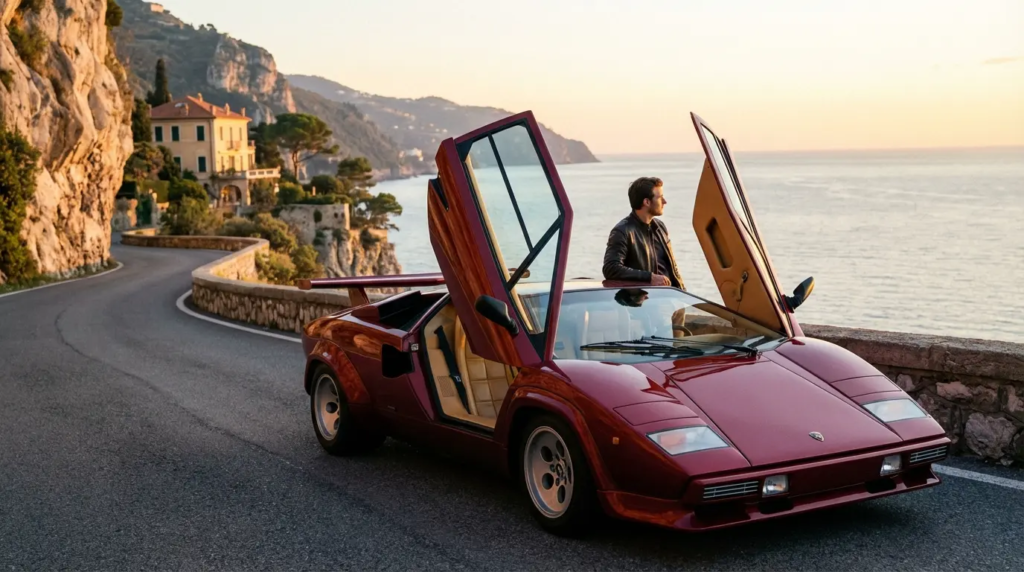
From the wedge-shaped Lamborghini Countach Quattrovalvole to the diminutive but deadly Peugeot 205 GTI, the 80s provided a spectrum of brilliance. These cars required skill, bravery, and occasionally a high-quality fire extinguisher. They were honest, mechanical, and vibrantly alive in a way that modern software-defined vehicles can never be. Whether it’s the “Narcoleptic” Lancia Thema 8.32 with its Ferrari V8 or the brick-like reliability of a Volvo 240 Turbo, the 1980s remains the high-water mark for automotive character.
The market reflects this today; prices for 80s homologation specials and supercars are skyrocketing as collectors realize we will never see their like again. According to Motor Trend, the demand for these “analog” experiences is at an all-time high. If you want to understand where the car industry is going, you first have to understand the decade that broke all the rules.