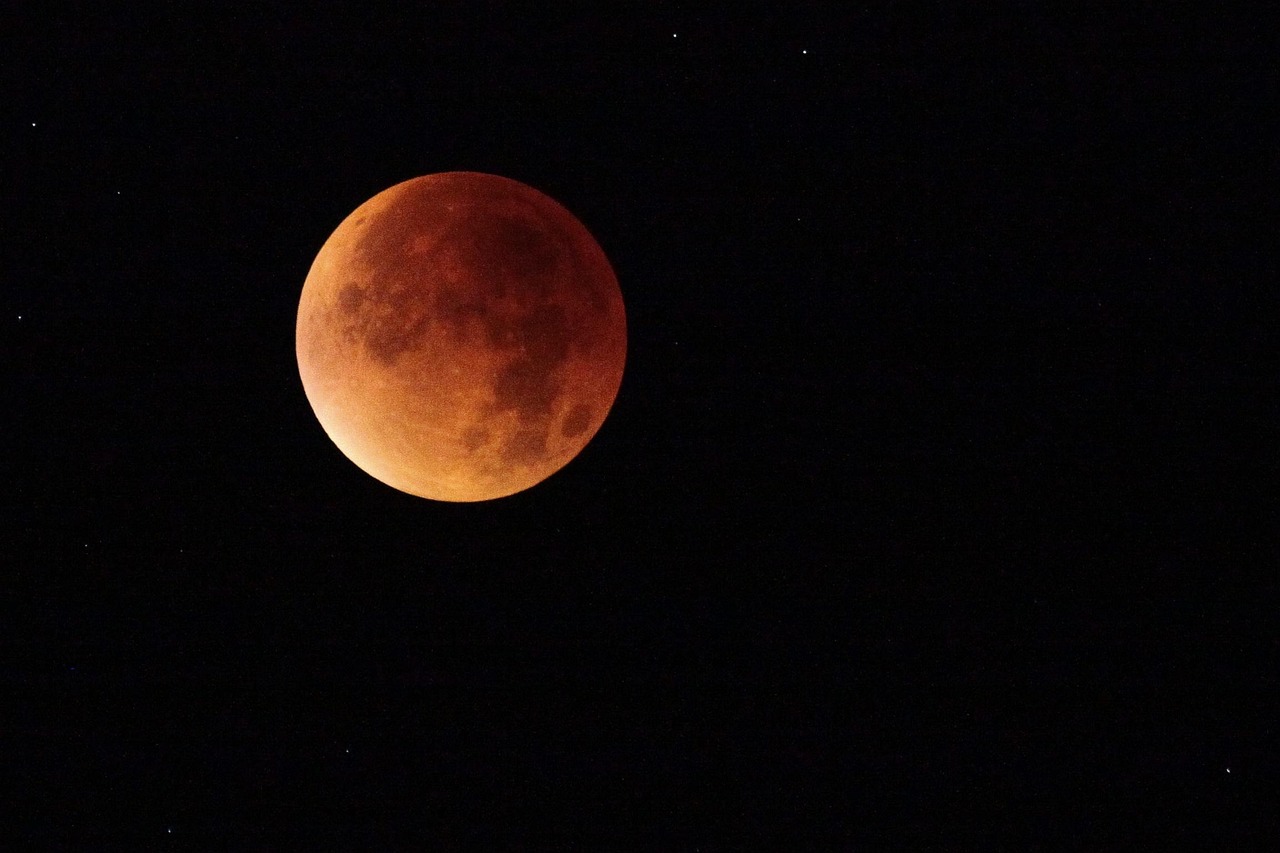
Gerhana Bulan Total transforms the night sky on March 3, 2026, marking a significant astronomical milestone for observers across the globe. According to the latest data from the Indonesian Agency for Meteorology, Climatology, and Geophysics (BMKG), this specific lunar event represents one of four major eclipses scheduled for the 2026 calendar year. Astronomers and enthusiasts alike are preparing for the moment the Earth’s shadow completely obscures the Moon, creating the iconic “Blood Moon” effect that captures public imagination.
Preparation for the Total Lunar Eclipse Peak Timing
Understanding the exact timing remains the most critical factor for successful observation. The BMKG Almanak 2026 confirms that the peak of the Gerhana Bulan Total will occur precisely at 18:34:52 (GMT +7). This timing places Indonesia in a prime position for viewing, as the Moon rises during the various phases of the eclipse. Unlike solar eclipses, which require specialized eye protection, this lunar event offers a safe viewing experience for all ages.
Researchers at Reuters have previously highlighted how these events provide vital data on the Earth’s atmospheric health. The color of the Moon during the total phase—ranging from bright orange to deep brick red—depends heavily on the amount of dust and clouds in Earth’s atmosphere.
Global Visibility and Observation Zones
While Indonesia serves as a primary hub for this event, the Gerhana Bulan Total maintains a massive global footprint. Residents across the Americas, Australia, and parts of East, Southeast, and Central Asia will witness the phenomenon. The geographical spread ensures that millions can participate in this celestial observation simultaneously.
Experts at BBC News suggest that urban observers should seek locations with minimal light pollution to appreciate the subtle color shifts during the umbral phase. If weather conditions prove unfavorable, the BMKG provides a digital alternative. The agency will host a live stream through their official portal at https://gerhana.bmkg.go.id/, allowing anyone with an internet connection to witness the peak from 18:34 (GMT +7) onwards.
5 Massive Secrets of the 2026 Lunar Cycle
The 2026 astronomical calendar holds several surprises that many casual observers might overlook. These secrets define why the March 3rd event stands out among other celestial occurrences.
1. The Four-Eclipse Sequence: 2026 features a rare balance of two lunar eclipses and two solar eclipses. This symmetry provides a unique opportunity for researchers to study the Earth-Moon-Sun system’s dynamics in a compressed timeframe.
2. The Red Light Filter: The deep red hue seen during a Gerhana Bulan Total results from Rayleigh scattering. This is the same physical phenomenon that makes the sky blue and sunsets red. Essentially, you are seeing the light from every sunrise and sunset on Earth projected onto the Moon.
3. Orbital Precision: This event only occurs during a full moon when the Moon, Earth, and Sun align with surgical precision. Even a slight deviation would result in a partial or penumbral eclipse rather than a total one.
4. Impact on Tides: While the visual spectacle takes center stage, the alignment during the eclipse exerts a specific gravitational pull on Earth’s oceans. Mariners often track these events to predict higher-than-average tidal shifts.
5. Historical Predictability: Astronomers use Saros cycles to predict these events centuries in advance. The March 2026 eclipse belongs to a specific series that repeats every 18 years, 11 days, and 8 hours.
How to Watch the Event Safely in Indonesia
Indonesian observers must note that the Gerhana Bulan Total coincides with local evening hours. This timing allows families to watch the event without the need for professional telescopes. However, using binoculars can significantly enhance the view of the “crater crawl,” where the Earth’s shadow slowly moves across the lunar surface.
Reporting from AP News indicates that high-altitude locations in Java and Sumatra offer the clearest views, provided the monsoon clouds remain at bay. For those interested in the broader context of 2026’s celestial events, you can read our Related Topic on the upcoming solar phenomena.
Scientific Importance of the BMKG Data
The BMKG plays a pivotal role in disseminating accurate astronomical data for the Indonesian archipelago. Their Almanak 2026 serves as the definitive guide for local timing, ensuring that citizens in Western, Central, and Eastern Indonesia can sync their watches to the exact second of the eclipse’s peak.
By analyzing the Gerhana Bulan Total, scientists can measure the Earth’s shadow size, which often appears larger than geometry predicts due to the Earth’s atmosphere. This “enlargement of the shadow” remains a topic of active research within the global astronomical community. The March 3 event provides fresh data points for these ongoing studies.
Observers should prepare their equipment at least thirty minutes before the 18:34 (GMT +7) peak. This allows the eyes to adjust to the darkness and ensures that cameras are calibrated for the low-light conditions of the eclipsed Moon. The transition from the bright full moon to the dark red orb happens relatively quickly, making every second of the peak phase valuable for photographers and scientists.
For more breaking news and expert brew updates, click here to explore our latest coverage.