Isfahan remains a central pillar of Iranian identity and military strategy, yet recent joint airstrikes by the United States and Israel have thrust this ancient city into a volatile global spotlight. As explosions rock the central province, the international community watches closely to see how the destruction of strategic infrastructure affects regional stability. Reports indicate that the military operation targeted five major cities, but the focus on this specific central hub suggests a deeper tactical objective beyond simple intimidation.
Isfahan: 5 Massive Secrets Behind the Strategic Airstrikes
The scale of the offensive reveals a coordinated effort to dismantle specific capabilities within the Islamic Republic. According to reports from Reuters, the wave of attacks began in late February 2026, leading to significant casualties and the degradation of public facilities. In Isfahan alone, local authorities confirmed at least 47 deaths following the initial bombardment. This city, located 340 kilometers south of Tehran, serves as the industrial heartbeat of the nation, making any strike here a devastating blow to the national economy and morale.
1. The Nuclear Nerve Center and Uranium Enrichment
The most critical reason for the targeting of Isfahan involves its role in the Iranian nuclear program. The city houses the Uranium Conversion Facility (UCF), a site that international watchdogs have monitored with increasing anxiety. Intelligence suggests that the facility recently held uranium enriched to 60 percent within its reinforced underground chambers.
Western officials often cite the UCF as a primary concern regarding regional nuclear tensions. While the UN nuclear watchdog previously maintained limited access to the site, recent hostilities have completely severed inspection protocols. The strike on these facilities represents a direct attempt to stall Iran’s path toward weaponization, though the environmental risks of such an attack remain high.
2. “Half of the World” and the Safavid Legacy
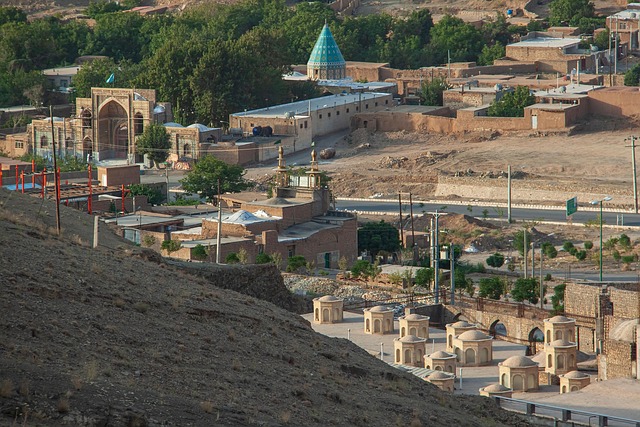
Historically, Isfahan holds the title “Nesf-e Jahan” or “Half of the World.” This nickname originated during the 16th-century Safavid Dynasty when the city became a global center for art, commerce, and Islamic intellect. The architectural grandeur of the city, including the iconic bridges over the Zayandeh Rud River, highlights a civilization that once led the world in innovation.
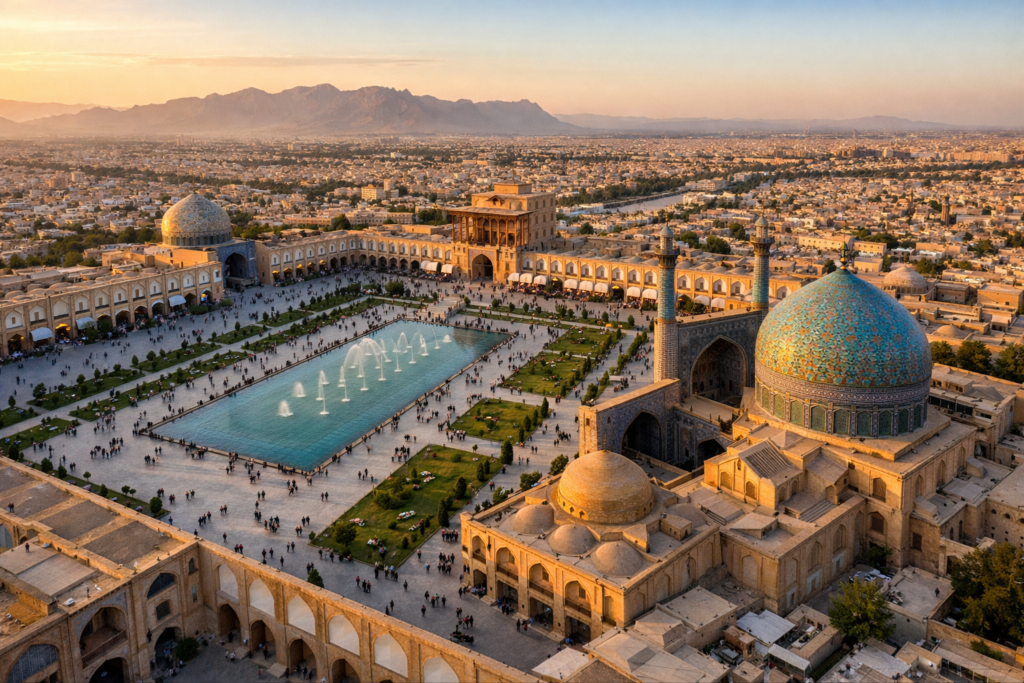
Today, the Naqsh-e Jahan Square stands as a UNESCO World Heritage site and one of the largest city squares on the planet. Surrounded by the Imam Mosque and the Ali Qapu Palace, the square represents the cultural soul of Iran. Military analysts argue that striking a city with such deep historical roots sends a psychological message to the Iranian population, targeting their pride as much as their infrastructure.
3. The 2,500-Year Jewish History in Isfahan
Contrary to many Western perceptions of Iran, Isfahan maintains a significant and ancient Jewish population. This community has resided in the region for over 2,500 years, dating back to the Sassanid era. Information from The New York Times suggests that while many fled after the 1979 Islamic Revolution, a resilient minority remains.
The Iranian constitution officially recognizes these residents as a protected religious minority. This unique demographic creates a complex political dynamic. Ayatollah Khomeini famously issued a fatwa distinguishing Iranian Jews from “Zionists,” allowing the community to maintain synagogues and cultural identity within the Islamic Republic. The recent strikes by Israel, therefore, create a harrowing situation for a community caught between their national loyalty and their ancestral ties.
4. The Prophecy of the 70,000 Followers
One of the most enigmatic aspects of Isfahan involves its mention in Islamic eschatology. Religious scholars often cite a Hadith from Sahih Muslim regarding the end of days. The prophecy suggests that the Dajjal (a figure similar to the Antichrist) will emerge and find a massive following within this specific city.
The text states that 70,000 Jews from Isfahan, wearing “thayalisah” (traditional Persian shawls), will follow this figure. Observers note that the traditional clothing mentioned in the Hadith—a seamless garment worn over the shoulders—closely resembles the historical attire of the region. This religious context adds a layer of metaphysical tension to the physical conflict, as some groups view the escalating violence through the lens of ancient prophecy.
5. Industrial Dominance and Modern Infrastructure
Beyond history and religion, Isfahan functions as Iran’s third-largest city and a massive industrial powerhouse. It sits at an altitude of 1,600 meters, providing a strategic geographic advantage for military installations. The city’s Grand Bazaar, one of the oldest and largest in the Middle East, remains a vital artery for domestic trade.
As reported by AP News, the recent airstrikes damaged not only military targets but also the logistical networks that sustain the city’s 2 million residents. By hitting Isfahan, the US-Israel coalition effectively disrupts the supply chain for the entire central province. The destruction of public utilities and transportation hubs ensures that the impact of the war is felt by every level of Iranian society, from high-ranking officials to the merchants in the Bazaar-e Bozorg.
The current situation in Isfahan reflects the broader volatility of the Middle East in 2026. As the smoke clears from the latest round of explosions, the world remains on edge. The combination of nuclear ambition, deep-seated history, and religious significance makes Isfahan the ultimate flashpoint in a conflict that shows no signs of slowing down. Analysts at BBC suggest that the next few weeks will determine if this escalation leads to a full-scale regional war or a forced diplomatic retreat.
For more updates on similar news and trending global stories, visit our latest news section.