Coffee Sanger represents more than a caffeinated beverage in the bustling streets of Banda Aceh; it serves as a liquid testament to social solidarity and the resilience of a community. This specific brew emerged from the necessity of austerity, where students and workers sought the luxury of milk coffee without the prohibitive price tag of a full latte. By understanding the historical weight of this cup, one realizes that the flavor profile—robust, slightly sweet, and intensely aromatic—mirrors the spirit of the people who created it.
Coffee Sanger: The Logic of “Sama-Sama Ngerti”
The name of this beverage carries a linguistic weight that defines the Aceh social contract. During the economic shifts of the late 20th century, coffee shop patrons faced a dilemma. They craved the creamy texture of a condensed milk coffee but lacked the funds to pay for a standard kopi susu. This led to a quiet agreement between the customer and the barista. The customer asked for a smaller portion of milk, and the owner obliged with a lower price.
This mutual understanding birthed the phrase “Sama-Sama Ngerti,” which translates to “we both understand.” Locals eventually shortened this to the portmanteau “Sanger.” Today, this drink remains a staple of Related Topic discussions regarding how food adapts to economic reality. While modern coffee culture often prioritizes high margins, the origins of this drink focus entirely on accessibility and community preservation.
The Massive Technique of the Pull
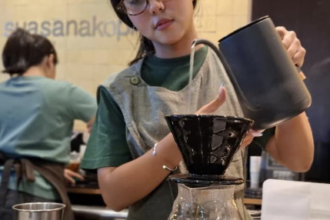
Authentic Coffee Sanger requires a specific performance that mimics the famous teh tarik seen across Southeast Asia. The barista does not simply stir ingredients into a mug. Instead, they use a long, conical cloth filter to house the dark-roasted Robusta grounds. Boiling water passes through the filter into a stainless steel pitcher, and then the “pulling” begins.
The barista pours the coffee from a significant height into a second pitcher. This action aerates the liquid, breaking down the oils and creating a signature froth. According to experts at Food & Wine, aeration significantly alters the mouthfeel of coffee, softening the bitter edges of dark-roasted beans. In Aceh, this technique ensures that every sip of Coffee Sanger feels velvety rather than gritty.
Sourcing the Heartfelt Flavors of Aceh
The foundation of a great Coffee Sanger lies in the beans. Aceh is home to some of the most prestigious coffee-growing regions in the world, specifically the Gayo highlands. While the world often focuses on Gayo Arabica, the Sanger traditionally utilizes a high-quality Robusta. These beans provide the “kick” necessary to stand up against the sweetness of condensed milk.
The Michelin Guide often highlights how Indonesian volcanic soil imparts a distinct earthy and chocolatey note to its coffee. When you brew these beans for a Sanger, you look for a dark roast that borders on smoky. This bitterness creates the necessary contrast. The barista adds just enough condensed milk to turn the liquid into a tawny, caramel hue, but never enough to mask the coffee’s inherent strength.
The Proportions of a Masterpiece
Standard milk coffee usually follows a 1:1 or 1:2 ratio. Coffee Sanger breaks these rules. The secret involves using roughly 80% strong black coffee and only 20% condensed milk and sugar. This ratio ensures that the caffeine remains the protagonist of the story. You taste the earth, the smoke, and the heat first, followed by a gentle, creamy finish.
Why Coffee Sanger Defines Modern Aceh Culture
In a world where global chains dominate the landscape, the persistence of Coffee Sanger is a shocking victory for local tradition. It has transitioned from a “poor man’s coffee” to a cultural icon served in upscale cafes and humble street stalls alike. It represents the “Warung Kopi” (Warkop) culture where people from all walks of life—politicians, students, and laborers—sit at the same wooden tables.
As noted by cultural commentators at Eater, coffee rituals often serve as the primary social lubricant in Islamic cultures like Aceh. The Sanger provides the perfect excuse for “nongkrong”—the Indonesian art of hanging out for hours. The drink does not demand a quick exit; its temperature and sweetness invite slow consumption and long conversation.
5 Massive Secrets to Identifying Authentic Coffee Sanger
1. The Foam: A true Sanger must have a thin layer of brownish foam on top, a result of the pulling process, not a steam wand.
2. The Color: It should never look like a pale latte. The color must resemble dark mahogany or polished teak.
3. The Glass: Tradition dictates that baristas serve it in a small, thick-walled glass, never a ceramic mug or a plastic cup.
4. The Temperature: It arrives at the table piping hot. The pulling process cools it slightly, but it should still radiate heat.
5. The Aftertaste: You should feel a lingering bitterness on the back of your tongue, balanced by a clean sweetness that doesn’t coat the mouth in sugar.
The evolution of this drink proves that some of the best culinary innovations come from the hardest times. Coffee Sanger began as a compromise but ended as a masterpiece. It reminds every traveler that to understand Aceh, one must first understand the “Sama-Sama Ngerti” spirit found at the bottom of a glass.
Discover the latest coffee trends, recipes, and culinary news by exploring our coverage here.