
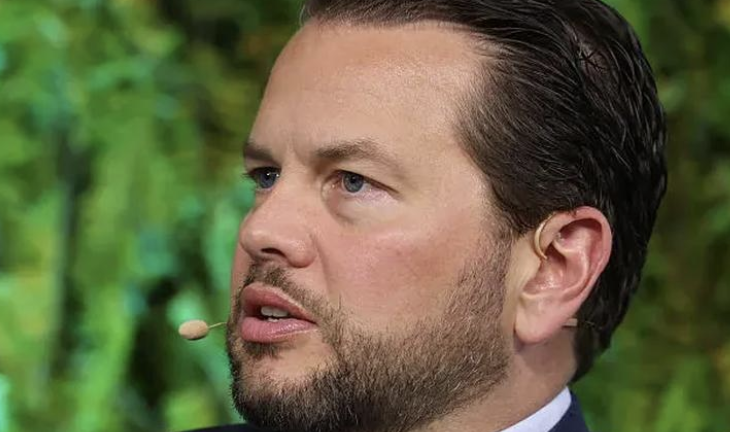
In an era where tech executives usually fight tooth and nail against government intervention, a surprising voice has joined the chorus calling for stricter age limits. Pinterest CEO Bill Ready has publicly signaled his support for a ban on social media use for children under the age of 16. Speaking with a dual perspective as both a Silicon Valley leader and a concerned parent, Ready suggested that the current digital landscape is fundamentally unsafe for young teenagers. His comments come at a pivotal moment as governments worldwide—from Australia to Indonesia—begin to dismantle the “wild west” era of adolescent internet access.
Why Pinterest CEO Bill Ready is calling for stricter laws
The rhetoric used by Ready is notably sharper than that of his peers at Meta or ByteDance. He didn’t just call for “better tools” or “parental dashboards”; he compared the current state of social media to the predatory practices of the 20th-century tobacco industry. According to Ready, the tech industry is currently repeating the “Big Tobacco” playbook, making excuses for inaction while a generation of youth participates in an unsupervised “social experiment.”
“As a tech CEO and a parent, I believe compliance with the law alone is not enough,” Ready stated in a recent interview with the Times. He argued that for over a decade, the industry has allowed children to be exposed to risks ranging from cyberbullying and predatory strangers to severe mental health issues like anxiety and depression. By framing social media as the “new Big Tobacco,” Pinterest CEO Bill Ready is positioning his platform as a different kind of entity—one focused on inspiration rather than the addictive, algorithmic feedback loops found on Engadget‘s most-covered viral platforms.
The global shift: From Australia to the United States
Ready’s stance isn’t occurring in a vacuum. It mirrors a rapidly accelerating global trend toward age-gating the internet. Australia has already moved to implement a landmark ban for those under 16, while several European nations, including the UK and France, are drafting similar legislation. In the United States, the conversation has shifted toward requiring age verification at the app store level—a move that would shift the burden of proof from individual apps to platform giants like Apple and Google.
This shift is largely driven by a growing body of research suggesting that the dopamine-driven design of modern social feeds is inherently incompatible with the developing adolescent brain. According to reports on Wired, the pressure of “digital image maintenance” has contributed significantly to the surge in teen self-harm and body dysmorphia. Ready’s endorsement of a legal ban suggests that he believes the industry has proven it cannot self-regulate.
Indonesia’s aggressive timeline: March 2026
While Western nations debate, Indonesia is moving toward concrete enforcement. The Ministry of Communication and Digital (Komdigi) has officially announced that starting March 28, 2026, social media access for children under 16 will be strictly limited under the “PP Tunas” regulation. Minister Meutya Hafid has emphasized that there is “no compromise” when it comes to the safety of the nation’s youth.
Komdigi has already identified eight high-risk platforms that must comply with these new standards: YouTube, Facebook, Instagram, Threads, X (formerly Twitter), TikTok, Bigo Live, and Roblox. Currently, only X and Bigo Live have shown full compliance with the initial regulatory steps. The ministry has already issued warning letters to TikTok and Roblox, and similar warnings have been sent to Google and Meta. As noted in our previous coverage of global digital safety regulations, this move marks one of the most significant jurisdictional crackdowns on tech giants in Southeast Asia.
The technical and consumer impact
For parents, the endorsement from Pinterest CEO Bill Ready and the subsequent laws in Indonesia represent a double-edged sword. On one hand, it provides a legal mandate to help parents say “no” to their children. On the other, the technical implementation of these bans raises significant privacy concerns. How will a platform verify a user’s age without collecting even more sensitive biometric or government data?
Industry analysts at TechCrunch suggest that the most likely solution involves “zero-knowledge” age verification, where a third party confirms a user is over 16 without sharing the user’s actual identity with the social media company. However, until these systems are perfected, the friction of entering the digital world is set to increase significantly.
A new era of corporate responsibility?
The stance taken by Pinterest CEO Bill Ready may be a strategic one. By supporting a ban, Pinterest—which often describes itself as a “utility” for ideas rather than a “social network” for status—may be trying to distance itself from the toxic reputation of its competitors. If a blanket ban is enacted, Pinterest might find it easier to pivot its marketing toward being a safe, curated space for older teens and adults, while its rivals struggle to scrub their platforms of underage users.
Regardless of the motive, the message is clear: the era of the “unrestricted internet” for children is ending. With government ministers and tech CEOs finally finding common ground on age limits, the “Big Tobacco” moment for social media has arrived. As we head toward 2026, the focus will shift from whether we should ban social media for kids to how we can effectively enforce it without breaking the open nature of the web.
For more updates on how these regulations will affect your favorite apps, stay tuned to The Verge and For more updates on similar news and trending global stories, visit our latest news section.