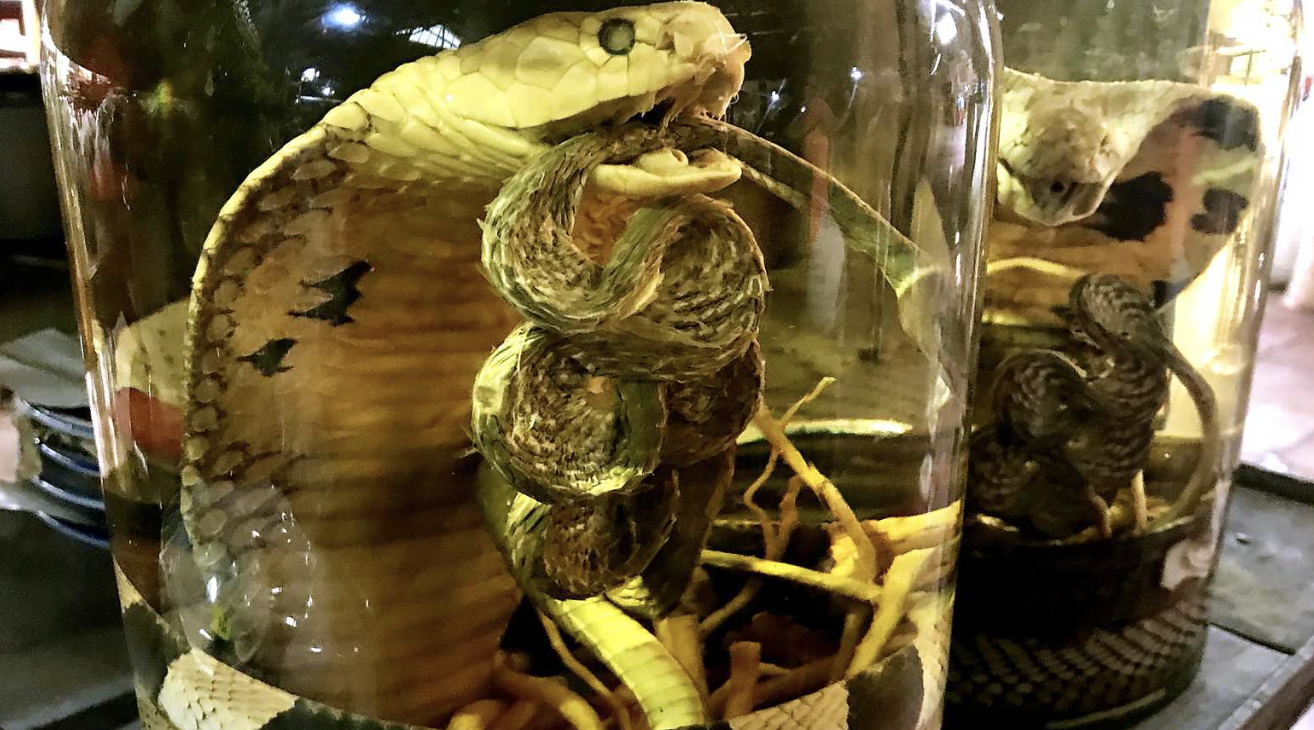
To the uninitiated, the serpent is a symbol of primordial fear, a creature of the shadows to be avoided at all costs. Yet, as I have discovered through years of traversing the vibrant night markets and clandestine back-alley eateries of the East for The Gilded Fork, the snake occupies a far more complex position in the human narrative. In many cultures, the act of consuming the predator is a ritual of reclamation—an attempt to ingest the very cunning, strength, and resilience of the beast. Today, Asian snake delicacies represent a fascinating intersection of ancient medicinal philosophy and daring gastronomy, proving that what we fear, we often find ourselves compelled to feast upon.
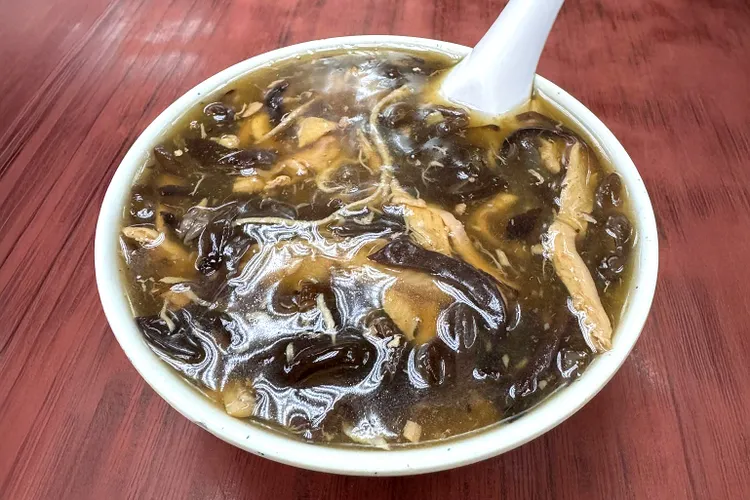
The Imperial Warmth of Hong Kong’s Snake Soup
In the winding, neon-lit streets of Sham Shui Po, the aroma of simmering broth often signals the arrival of winter. Snake soup, or se gang, is perhaps the most refined of all Asian snake delicacies, with a lineage that stretches back over two thousand years to the era of the Warring States. It was once considered a luxury for the elite, a “five-snake” concoction that balanced the various “heats” of the body according to traditional Chinese medicine.
According to reports by Food and Wine, the modern preparation typically utilizes a blend of cobra, rat snake, and Chinese water snake. The meat is meticulously shredded into fine filaments that mimic the texture of tender chicken or abalone. Slow-cooked with ginger, lemon leaves, and often a splash of aged rice wine, the soup is believed to improve circulation and “warm the blood” during the colder months. It is a dish of patience and precision, a culinary artifact of the Qing Dynasty that has survived the breakneck pace of modern Hong Kong.
Spirits and Stamina: Vietnam’s Potent Snake Wine
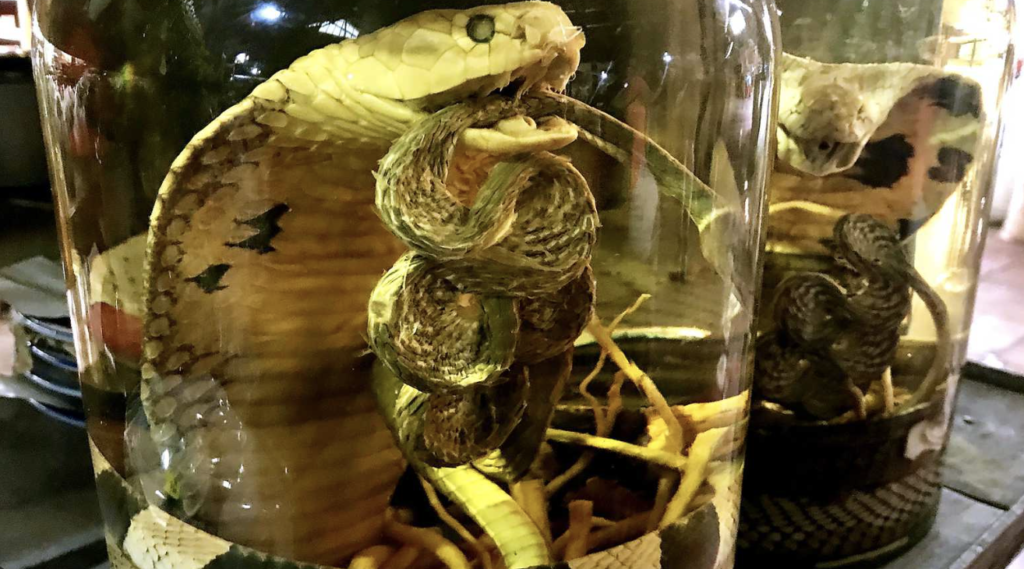
Venturing further south into the heart of Vietnam, the relationship with the serpent takes on a more spirited form. Snake wine (rượu rắn) is less a meal and more a potent elixir, often found in large glass jars where entire cobras are preserved in a state of perpetual, submerged strike. This is a drink steeped in the folklore of the Le Mat “Snake Village,” where hunters have specialized in these reptiles for over nine centuries.
The process involves infusing high-proof rice wine with the snake’s essence over several months. Local tradition suggests that the alcohol denatures the venom while extracting the animal’s perceived vitality. While many tourists view it as a dare, for the locals, it is a functional tonic intended to treat everything from rheumatism to a flagging libido. It is a testament to the belief that the more dangerous the creature, the more powerful its restorative properties.
The Enduring Allure of Traditional Asian Snake Delicacies
While many associate these dishes with the “extreme,” they are deeply rooted in the pragmatic history of agrarian societies. In regions where snakes were a threat to livestock or a byproduct of rice farming, transforming a predator into a protein source was an act of survival that eventually evolved into a specialized craft. This evolution is particularly evident in the street food culture of Southeast Asia, where the lines between extreme Asian street food and cultural heritage often blur.
Indonesia’s Sate Sanca: A Masterclass in Texture
In the bustling warungs of Jakarta and Yogyakarta, the python is not a creature to be feared, but one to be grilled. Sate Sanca (Python Satay) is a remarkable example of how Indonesian cuisine applies its signature spice profiles to exotic proteins. The Reticulated Python, native to the archipelago, provides a thick, muscular meat that, when sliced and skewered, offers a chewiness that far surpasses beef or poultry.
As noted by culinary guides at Michelin, the secret to a great satay lies in the marinade. The snake meat is often bathed in a mixture of kecap manis (sweet soy sauce), coriander, and galangal before being charred over hot charcoal. The result is a smoky, savory treat that challenges the palate while honoring the Indonesian tradition of utilizing every available resource from the surrounding jungle.
Thailand’s Crispy Night Market Snacks
Thailand’s approach to the serpent is perhaps the most accessible for the casual traveler. In the sprawling night markets of Bangkok or Chiang Mai, among the piles of fried scorpions and crickets, one can often find crispy fried snake. Usually made from smaller water snakes or rat snakes, these are seasoned heavily with garlic and white pepper before hitting the deep fryer.
The result, as often described by the adventurous eaters at Eater, is akin to a “land-based pork rind.” It is a snack designed for the modern age—salty, crunchy, and perfect when paired with a cold lager. While it lacks the ceremonial weight of Hong Kong’s soup, it represents the playful, fearless nature of Thai street food culture.
The Ritual of the Cobra’s Blood
Finally, we arrive at the most visceral of all experiences: the consumption of raw snake blood. Found predominantly in Indonesia and parts of Taipei’s “Snake Alley,” this practice is the ultimate expression of the “food as medicine” philosophy. Typically, a kobra is prepared on the spot, and its blood is collected and mixed with honey or a traditional herbal concoction known as jamu.
Proponents, as discussed in features by Bon Appétit, swear by the immediate rush of energy and the long-term health benefits, particularly regarding respiratory issues and skin vitality. However, it remains one of the most controversial practices due to the inherent risks of parasites. It is a dish that sits at the very edge of the culinary map—a raw, unadulterated connection between the hunter and the hunted.
In the end, these Asian snake delicacies are more than just a test of one’s stomach. They are a window into a worldview where the natural world is not something to be conquered from a distance, but something to be understood, respected, and ultimately, tasted. Whether through a refined soup or a charred skewer, the serpent continues to hold its place at the table of history.