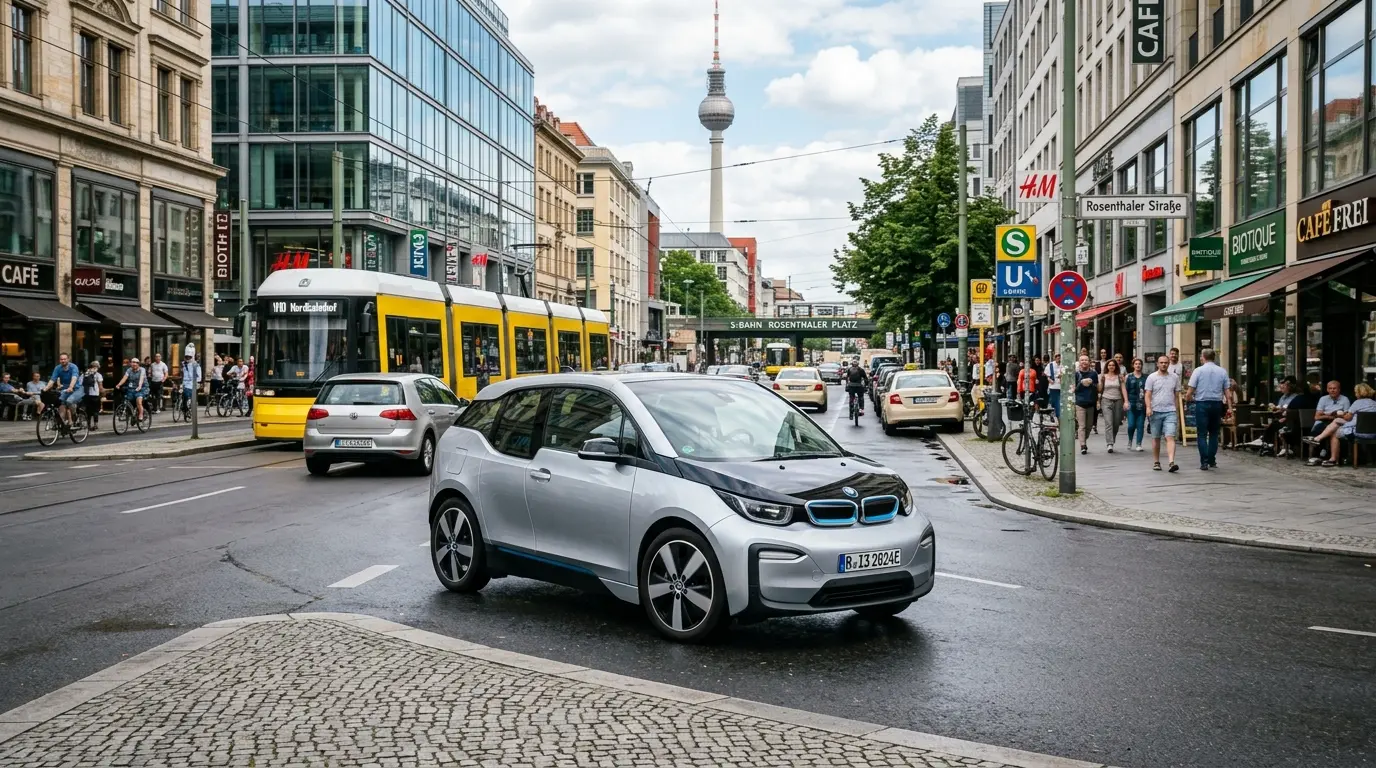
Adrian van Hooydonk recently sat down with us to discuss the monumental shift represented by the new BMW i3 and the overarching Neue Klasse philosophy. As the BMW Group Design Director, he carries the immense responsibility of reinventing the brand’s “heartland” car for an electrified era. This transition marks more than a simple powertrain swap; it represents a fundamental reimagining of what a sports sedan should feel like when the internal combustion engine no longer provides the soundtrack.
Adrian van Hooydonk and the Neue Klasse Revolution
The 3 Series remains the absolute essence of the BMW brand. While the 5 Series handles the high-speed autobahn cruises and the 7 Series offers stately presence, the 3 Series focuses entirely on agility, precision, and a sense of constant motion. Adrian van Hooydonk emphasizes that this specific model must look fast even when standing still. To prepare for this moment, he looked back at his own orange E21 316 and the original 1960s Neue Klasse for inspiration. These “lodestars” guided the team through a four-year development cycle that Hooydonk describes as the most intense period of his 30-year career.
BMW CEO Oliver Zipse recently received a standing ovation at a basketball arena-sized venue, signaling the high stakes involved. Zipse has successfully navigated the “perilous pivot” to electrification by maintaining a “technology open” strategy. Unlike competitors who bet everything on a single horse, BMW continues to develop petrol, diesel, plug-in hybrid, and hydrogen fuel cells alongside their battery-electric vehicles (BEVs). This pragmatic approach ensures that the Autocar reports on the brand’s stability remain accurate despite global market volatility.
1. The 30-Year Preparation Period
Hooydonk claims he spent three decades preparing for the new i3. Every previous generation of the 3 Series served as a stepping stone toward this “bigger leap.” The design team didn’t need to relearn what makes a BMW iconic, but they did need to figure out how to translate those proportions into an electric format. The “i” cars of the past, like the original i3 and the i8, provided the necessary lessons in carbon fiber and experimental aesthetics, but the new i3 aims for the mainstream heart of the market.
2. Digital Integration vs. Driving Purity
The hardest part of the project wasn’t the electric drivetrain; it was the digital interface. Hooydonk focused on how to integrate massive screen real estate and software without distracting from the “joy of driving.” He argues that while charging times and range will naturally improve through engineering, the “digital thing” requires a designer’s touch to ensure it feels human-centric. The goal was to create a cockpit that supports the driver’s focus rather than overwhelming them with notifications.
3. The Reimagined Kidney Grille
The new i3 features a horizontal grille treatment that deviates from the vertical orientation seen on recent X-series SUVs. Hooydonk explains that this choice preserves the car’s low, sporty stance. The grille itself is no longer a simple intake but a glass surface that acts like a modern electronic device. It lights up to “come alive” when the driver approaches. This simplification helps BMW achieve its goals for Top Gear approved sustainability by reducing the total number of parts and utilizing circular manufacturing processes.
4. Defying the AI Hype in Design
While the industry rushes toward artificial intelligence, Adrian van Hooydonk remains skeptical of AI replacing human creativity. He admits that AI tools help speed up the transition from a rough sketch to a 3D animation within a city context, but the “good eye” of a designer remains irreplaceable. Software exists in the background, not the foreground. He believes that a designer’s intuition is what dictates a successful outcome, ensuring the car doesn’t look like a generic product of an algorithm.
5. Learning from Apple and Ferrari
Hooydonk also monitors his competitors closely, specifically the design work of Jony Ive and Marc Newson. When discussing the potential “Apple Car” interior concepts, he noted the interesting mix of soft and hard keys. BMW plans to keep physical toggle switches, similar to those found in the new Mini Cooper, to ensure tactile feedback remains part of the experience. He expresses relief that brands like Ferrari are also maintaining a focus on physical controls, confirming that the industry as a whole is moving away from “screen-only” interiors.
The upcoming product pipeline includes 40 new or revised models, including the iX3 and a refreshed 7 Series. Each will carry the Neue Klasse DNA, proving that BMW’s design strategy is a cohesive vision rather than a series of one-offs. For more technical specifications on the upcoming electric fleet, visit the experts at Car and Driver for the latest testing data.
Market Impact and Production
The shift to the Neue Klasse platform isn’t just an aesthetic choice; it’s a manufacturing overhaul. The plant in Debrecen, Hungary, is already running double shifts to meet the demand for the iX3, proving that the market is ready for high-end German EVs. By focusing on “agility and precision,” Hooydonk ensures that the new i3 will not just be a tool for transportation, but a genuine BMW that honors its 110-year journey while sprinting into the future.