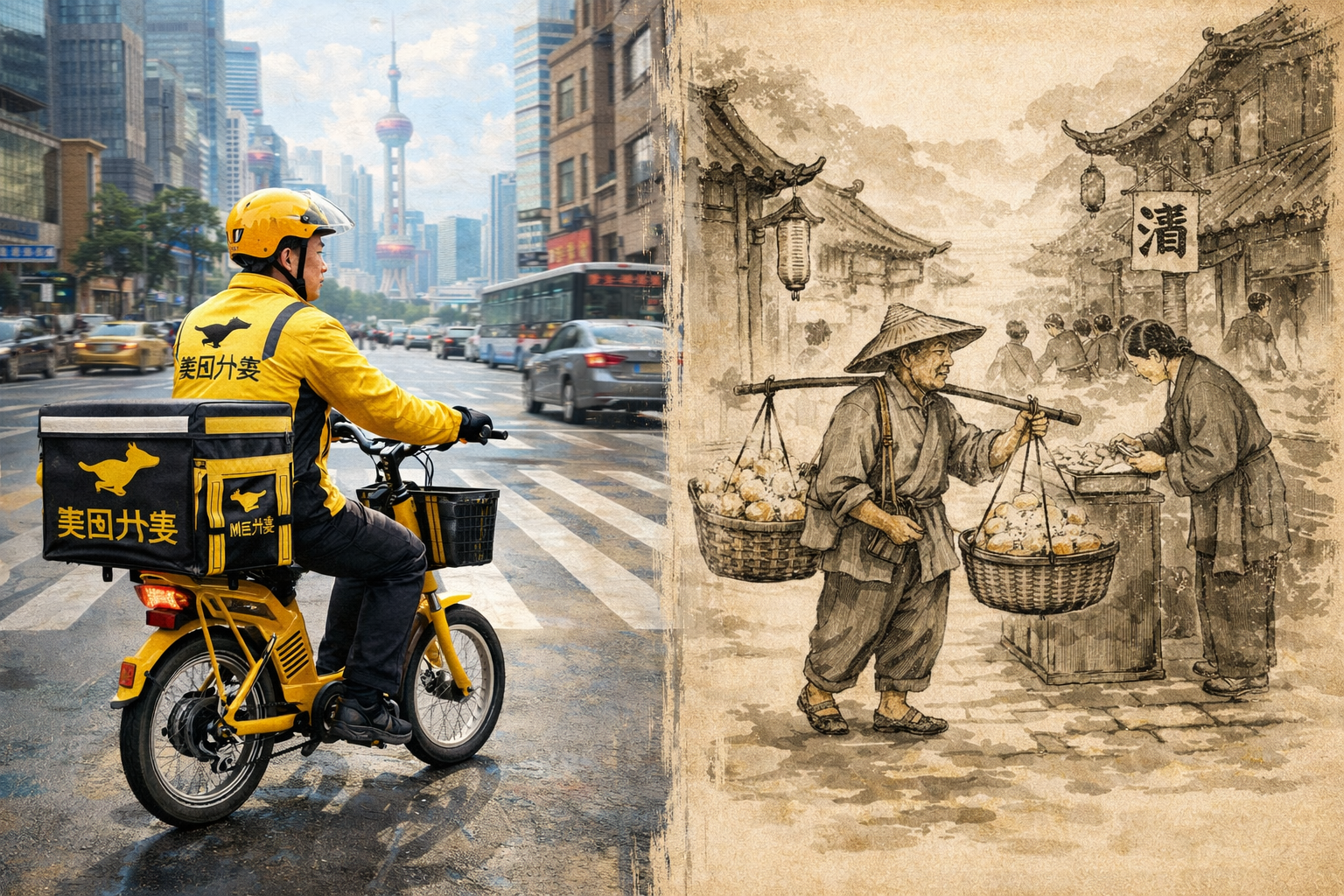
Long before the blue and yellow uniforms of Ele.me and Meituan became the ubiquitous heartbeat of Beijing’s streets, the concept of getting a hot meal brought to your door was already a part of the Chinese urban fabric. While we often view the modern China food delivery market as a byproduct of the smartphone revolution and the aggressive expansion of the startup ecosystem, the historical reality is far more fascinating. New research and historical records suggest that the world’s most sophisticated delivery market didn’t start with an algorithm; it started with an emperor’s curiosity and the entrepreneurial spirit of the “idle” men of the Song Dynasty.
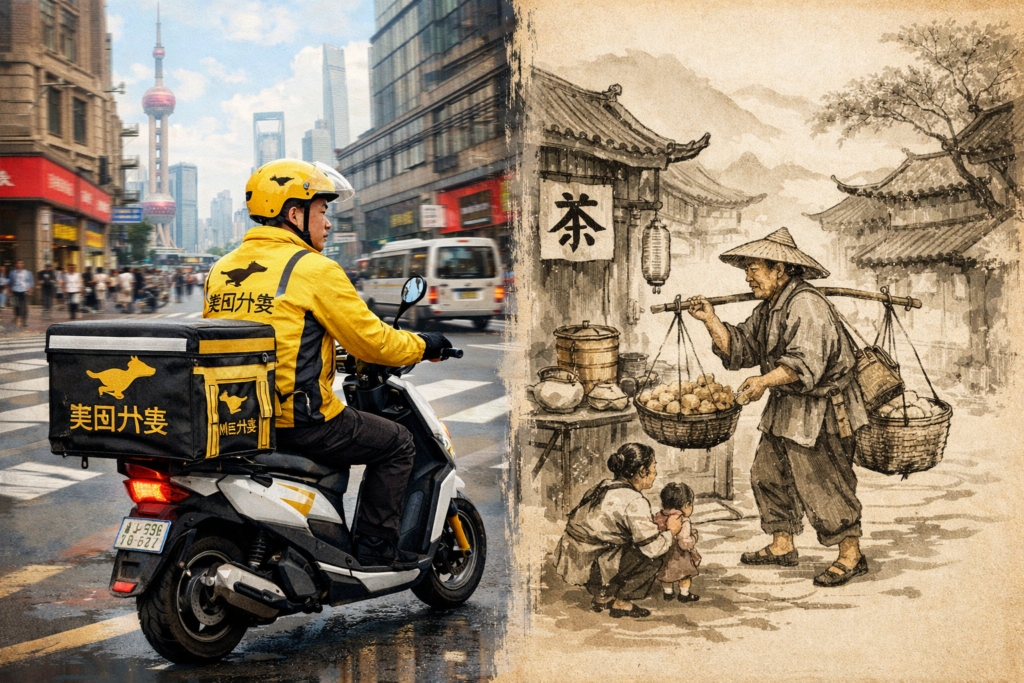
The Ancient Roots of China Food Delivery
The lineage of China food delivery can be traced back over two millennia to the Han Dynasty (206 BC – 220 AD). According to recent reports from the South China Morning Post, one of the earliest recorded instances of “delivery” was actually a political ruse. A palace official, seeking to hide a famine from the emperor, purchased a bowl of meat soup from a local market and presented it as a commoner’s daily meal. While the intent was deceptive, the event confirmed a crucial economic reality: prepared food was already being sold and transported from marketplaces to private residences and even the palace.
By the Tang Dynasty (618–907 AD), the practice had evolved from a necessity for the elite to a burgeoning consumer trend. While initially a status symbol for the wealthy to send meals as gifts, the service began to trickle down to the rising urban merchant class. This era laid the groundwork for what we now recognize as a service-oriented economy, long before the advent of mobile platforms.
The Song Dynasty: The First Gig Economy
If the Han Dynasty saw the birth of the idea, the Song Dynasty (960–1279 AD) saw the birth of the industry. This was a pivotal era for China food delivery because of a major policy shift: the abolition of the city curfew. As night markets began to flourish, the demand for convenience skyrocketed.
During this period, historical records describe a class of workers known as “xian han” (literally “idle people”). These were the original gig workers. They would loiter near popular restaurants, waiting for orders to carry back to customers on foot, by boat, or via sedan chairs. This proto-logistics network was so integrated into society that it was immortalized in the famous painting Along the River During the Qingming Festival by Zhang Zeduan. In the artwork, a man wearing an apron is seen carrying a food box and utensils—a striking 12th-century precursor to the modern courier.
High-Tech Hardware of the 12th Century
To ensure customer satisfaction, the Song Dynasty “platforms” even had their own hardware innovations. They used a device called a “wen pan”—a double-layered porcelain plate filled with hot water to maintain the temperature of the food during transit. This focus on the “last mile” experience shows that the consumer expectations we see in today’s technology trends are not new; they are simply being fulfilled by better tools.
Scaling to a 1.8 Trillion Yuan Digital Empire
The transition from “xian han” couriers to the modern China food delivery landscape is a masterclass in how technology scales existing human desires. By 2025, the digital delivery market in China surpassed a staggering 1.8 trillion yuan (approximately $250 billion USD). This growth hasn’t just been about moving food; it’s about the integration of AI-driven logistics and high-speed mobile payments.
Today’s platforms have replaced the “wen pan” with real-time GPS tracking and big-data algorithms that predict prep times within seconds. However, the core motivation remains the same as it was for the Song Dynasty emperors: the desire for professional-grade cuisine without the need to leave one’s home. As we look toward the future of logistics and automation, including drone deliveries and autonomous ground vehicles, we are essentially seeing the final evolution of a service that has been perfecting itself for 2,000 years.
The Consumer Impact: Convenience at a Cost
As a senior analyst, it’s impossible to ignore the socio-economic parallels between the ancient “idle men” and today’s millions of delivery riders. While the technology has reached a level of sci-fi efficiency, the industry still relies heavily on a massive labor force navigating tight margins. The China digital landscape is currently grappling with the same questions of labor rights and rider safety that have plagued the service industry since the days of the Han Dynasty.
The story of food delivery in China is more than just a history of apps; it is a testament to the country’s long-standing culture of urban convenience and commercial innovation. Whether it’s a servant carrying a porcelain bowl across a 12th-century bridge or a teenager on an electric scooter weaving through Shenzhen traffic, the mission remains unchanged: getting dinner delivered on time.
For more updates on similar news and trending global stories, visit our latest news section.