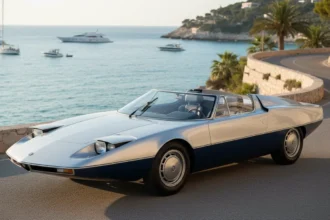
If you’ve ever sat in a Peugeot from the mid-2000s, you’ll understand the specific brand of UI misery present here. In Crimson Desert, basic interactions feel like they’ve been mapped by someone who has only ever heard a description of a controller over a crackling radio. To pick up a simple water container to douse a fire, you have to stand in a spot so precise it feels like you’re trying to park a long-wheelbase van in a motorcycle bay.
The controls are laid out with zero finesse. It attempts to layer MMO-style complexity onto a GTA-style framework, and the result is a total lack of intuition. You’ll find yourself accidentally punching your horse when you meant to check its inventory, or triggering an “abyssal power” when you simply wanted to climb a ladder. It takes nearly a dozen hours to achieve the kind of muscle memory that should take twenty minutes. In the automotive world, we call this “bad secondary switchgear,” and in a 200-hour RPG, it’s the equivalent of having the indicator stalk located in the glovebox.
Performance and Handling: All the Gear, No Idea?
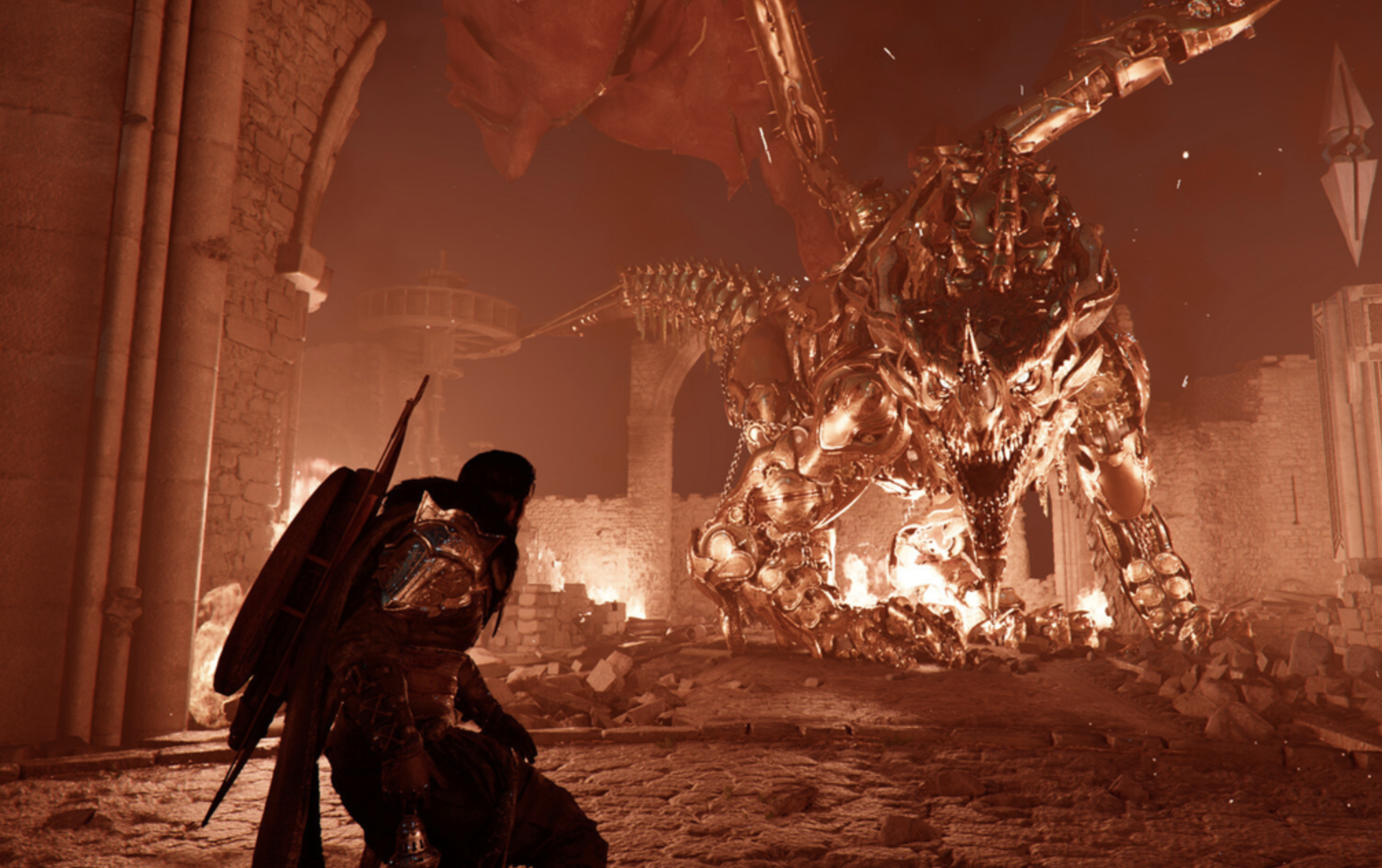
Under the hood, Crimson Desert is powered by an engine that is clearly capable of remarkable things. The world map is incomprehensibly vast, featuring a rich collection of visual wonders that rival the best work seen in The Witcher or Horizon Forbidden West. From a purely aesthetic standpoint, the variation and detail are stunning. However, a car isn’t just its paint job, and a game isn’t just its skyboxes.
The combat, while occasionally satisfying, feels like it’s constantly fighting against the game’s own physics. You can pick up enemies and hurl them at each other—a move that feels as punchy as a Dodge Hellcat launching off the line—but then you’re immediately bogged down by a “light/heavy” attack loop that feels like it’s running on autopilot.
There are flashes of genuine inspiration, though. The way you manage your clan, the Greymanes, adds a layer of strategy that feels like managing a racing team. You aren’t just a lone wolf; you’re responsible for a group of people in a world containing over 100 rival tribes. This tribal warfare is where the game finds its pulse, offering a compelling reason to keep exploring even when the main narrative stalls.
The RX-8 of Horses
One of the most bizarrely brilliant features is the ability to level up your horse. Eventually, you unlock the ability to drift your steed around corners. It’s essentially a Mazda RX-8 with a mane and a tail. Is it realistic? Absolutely not. Is it the most fun we had in ten hours? Indisputably. It’s these “emergent gameplay” moments that suggest there is a great game buried somewhere under the layers of clutter.
A Disjointed Narrative Journey
The biggest “mechanical failure” in Crimson Desert is the storytelling. While games like Breath of the Wild succeed by stripping away the narrative to let the player breathe, this title tries to have it both ways. It introduces characters with heavy dialogue in the prologue, then promptly forgets them for hours at a time. You play as Kliff, a resurrected warrior with “abyssal powers,” but the game never quite decides if he’s a defined character or a blank slate for the player to inhabit.
The result is a narrative that feels like a GPS system that keeps recalculating. You’re sent on errands for people you don’t know, for reasons that are never explained, to achieve goals that don’t seem to matter. It’s a “fascinating mess” because you can see the ambition—the desire to create an epic on the scale of Skyrim—but the execution lacks the narrative glue to hold it together. For more on how the industry is shifting toward these massive, system-heavy titles, check out our look at gaming tech trends for the coming year.
The Verdict: A Concept Car in Need of a Recall?
As we look at the design trends of modern open-world games, it’s clear that “more” is often mistaken for “better.” Crimson Desert has more systems, more landmass, and more “stuff” than almost any other game this year. But it lacks the refinement of a finished product.
The recent controversy surrounding AI-generated placeholder assets being left in the final build only adds to the “unfinished” feel. It’s a game that ticks every box on a shareholder’s wishlist—open world, sandbox tools, 80-hour main quest—but fails to provide the basic tactile joy of playing.
Is it worth the “sticker price”? If you are a fan of sprawling, experimental messes and have the patience of a saint, there is much to admire here. But for the average gamer looking for a polished experience, this is one vehicle that might be better left on the lot until the first few major service updates arrive.
Pros:
* Stunning visual fidelity and world-scale.
* Horse drifting is genuinely hilarious and fun.
* Clan management adds a unique strategic layer.
Cons:
* Horrendous control mapping and UI.
* Narrative is disjointed and lacks impact.
* Feels like a collection of systems rather than a cohesive game.