
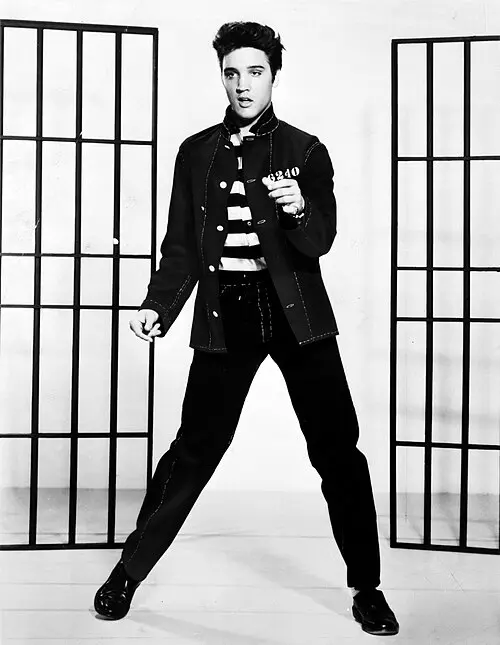
Elvis Presley remains the most significant cultural icon of the 20th century, yet the circumstances surrounding his departure from this world continue to spark fierce debate among historians and fans alike. While the official record attributes his death to a heart attack, a darker narrative has emerged from those within his inner circle. His stepbrother, David Stanley, recently brought forward allegations that shift the perspective from a tragic medical accident to a calculated choice driven by personal turmoil.
The Hidden Truth Behind Elvis Presley and His Final Moments
The world stood still on August 16, 1977, when news broke from Memphis. According to a historical report by the The New York Times, the King of Rock and Roll died at the age of 42. Emergency responders found him unresponsive on his bathroom floor at the Graceland estate. While the public mourned a musical genius, his family grappled with the chaotic reality of his final days. David Stanley, who lived at Graceland, asserts that Elvis Presley deliberately consumed a lethal cocktail of prescription medications to end his life.
Stanley claims that the singer’s obsession with young women played a pivotal role in his mental decline. The King frequently pursued romantic interests with girls as young as 15 or 16 years old. This pattern of behavior created a mountain of guilt that Presley could no longer carry. Stanley expresses deep distaste for these relationships, noting that the fear of public exposure drove his stepbrother into a deep, pharmaceutical-induced depression.
The Looming Threat of Public Exposure
In the months leading up to his death, Elvis Presley faced a significant threat to his carefully curated image. Three of his former bodyguards—Red West, Sonny West, and Dave Hebler—prepared to release a tell-all book titled “Elvis: What Happened?”. This publication promised to expose the singer’s drug use and his private life in grueling detail. Stanley believes this book served as the final catalyst. The thought of his fans and the world seeing the man behind the curtain terrified the singer.
Prescription drug abuse dominated Presley’s later years. He relied on a rotating supply of codeine, Valium, morphine, and Demerol. As BBC notes in their retrospective of the star’s health, his physical condition had deteriorated significantly by 1977. His heart, enlarged and strained by years of substance intake, eventually failed. However, the distinction between an accidental overdose and a intentional act remains the center of the controversy.
The “Elvis is Alive” Conspiracy Theories
Despite the medical evidence, a massive portion of the population refuses to believe Elvis Presley ever died. This theory suggests that the King faked his death to escape the pressures of fame and the impending scandal involving his young girlfriends. Proponents of this theory point to various “sightings” at airports and remote locations across the United States. They argue that the coffin at his funeral appeared suspiciously heavy or that the name on his tombstone, “Elvis Aaron Presley,” contains a misspelling of his middle name, “Aron.”
Some conspiracy theorists link his disappearance to his alleged involvement with the FBI. They claim he entered the witness protection program after testifying against a criminal organization known as “The Fraternity.” While AP News often covers the annual vigils at Graceland, they maintain that no credible evidence supports the survival theory. The reality likely resides in the tragic intersection of addiction and the crushing weight of global stardom.
The Medical Reality of 1977
Medical professionals who conducted the autopsy initially kept the findings private to protect the family’s reputation. This lack of transparency fueled decades of rumors. The Reuters archives highlight how the toxicology reports eventually surfaced, showing high levels of several pharmaceutical drugs. The sheer volume of substances in his system suggested a tolerance level that few could survive.
David Stanley remains firm in his stance. He describes a man who had lost his will to live, haunted by his choices and the young women he left behind. The internal conflict between his religious upbringing and his lifestyle created a fracture in his psyche. You can read more about similar Related Topic cases where fame led to tragic ends.
Elvis Presley’s legacy survives through his music, but the shadows of Graceland never truly dissipated. The combination of David Stanley’s testimony and the forensic evidence paints a picture of a man trapped by his own success. Whether he died of a broken heart, a failed body, or a deliberate choice, the King’s final act remains one of the most analyzed events in entertainment history. The hair, the clothes, and the voice stay etched in history, but the man himself remains an enigma.