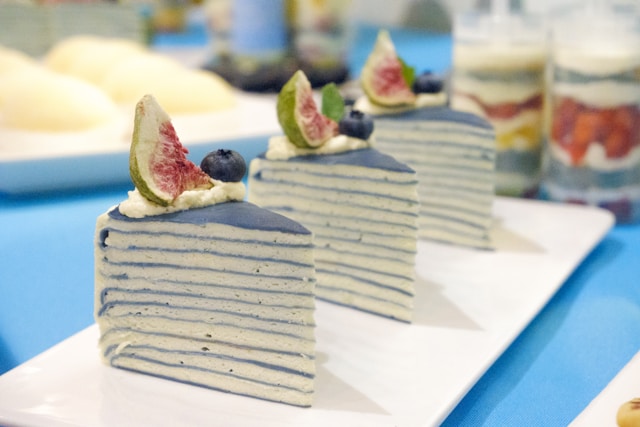
In the rarefied world of high-end patisserie, where gold leaf and rare chocolates often dictate the price tag, a humble-looking loaf from Borneo is currently shattering expectations. The Cake Lapis Sarawak, specifically the ultra-premium “Kek Lapis Sultan” crafted by Malaysian baker Adhar, has recently made headlines for its staggering price point of RM 1,800 (approximately Rp 7.8 million) per tray. To the uninitiated, this might seem like an exercise in excess. However, for those of us at The Gilded Fork, food is never just about the cost of ingredients; it is a ledger of human labor, historical migration, and the pursuit of geometric perfection.
The Geometric Mastery of Cake Lapis Sarawak
What separates a standard layer cake from a true Cake Lapis Sarawak is the sheer architectural ambition required to build it. Unlike its cousin, the Indonesian Lapis Legit, which focuses on horizontal layers, the Sarawakian iteration is a kaleidoscope of kaleidoscopic patterns. To achieve the “Sultan” grade, a baker must commit to a process that lasts anywhere from four to eight hours of continuous labor.
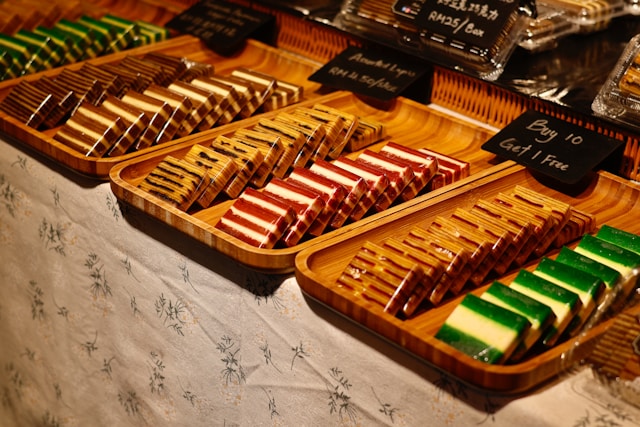
The process is rhythmic and punishing. A single layer of batter is poured and grilled for precisely ten minutes. Then, another is added. This continues until the baker has a stack of 12 to 20 layers—or more. But the work doesn’t end at the oven. The cake is then sliced into precise strips and reassembled using condensed milk or jam as a culinary adhesive to create intricate diamonds, squares, and cross-hatches. As noted by experts at Food & Wine, the precision required in such bakes rivals that of high-end watchmaking. One wrong cut, and the entire eight-hour investment is visually ruined.
Cake Lapis From Betawi Roots to Sarawakian Identity
To understand why this cake holds such a prestigious place in Malaysian culture, one must look back to the 1970s and 80s. History suggests that the precursor to the Cake Lapis Sarawak was introduced to the region by the Betawi people of Indonesia. While the Indonesian version remains famous for its rich, spice-heavy profile (often featuring cardamom and cinnamon), the people of Sarawak transformed it into a visual art form.
This evolution is a testament to the cultural exchange within Southeast Asia. While the base ingredients—flour, high-quality butter, and an astronomical number of egg yolks—remain similar to traditional Asian desserts found across the archipelago, the Sarawakian “motif” is entirely unique. It has moved from being a simple snack to a “must-have” centerpiece for major celebrations like Idul Fitri (Hari Raya), where the complexity of the cake’s pattern often reflects the host’s hospitality and status.
Why a Single Loaf Costs Thousands
The RM 1,800 price tag of Adhar’s “Cake Lapis Sultan” is not merely a marketing gimmick. It is a reflection of the “Premiumization” trend currently sweeping the global culinary scene, a topic often explored by the Michelin Guide when evaluating artisanal craftsmanship.
Several factors contribute to this luxury pricing:
1. The Ingredient Quality: These cakes utilize massive quantities of premium butter (often imported) and egg yolks to ensure a texture that is moist, dense, and fragrant.
2. Additions: High-end variants incorporate expensive inclusions like macadamia nuts, pistachios, and organic flavorings that drive up the raw cost.
3. The Labor Tax: If a master baker spends eight hours on a single tray, the cost of expertise and time becomes the primary driver.
4. The Engineering: Designing the pattern requires a blueprint. Bakers often sketch their designs on paper before ever touching the batter, ensuring that the cross-section reveals a perfect symmetrical map.
A Cultural Icon Under the Microscope
While the average Cake Lapis Sarawak in Malaysian markets might retail for a more modest price, the existence of the “Sultan” variant highlights a growing appreciation for heritage foods as luxury goods. According to reporting by Eater, regional specialties are increasingly being elevated to “couture” status, allowing local artisans to compete with Western luxury brands.
For the critic, the experience of eating such a cake is sensory overload. There is the initial buttery richness that coats the tongue, followed by the subtle sweetness of the binding jam. But the true joy is visual. To eat a piece of Kek Lapis Sarawak is to consume a piece of history—a narrative of Indonesian influence, Malaysian innovation, and the tireless patience of the artisan.
In an era of mass-produced, machine-made sweets, the RM 1,800 Sarawak layer cake stands as a defiant reminder that some things simply cannot be rushed. It is a slow-food manifesto wrapped in a vibrant, geometric skin. Whether you view it as a dessert or a piece of edible art, there is no denying that the Kek Lapis Sarawak has earned its place at the pinnacle of the global pastry stage.
Discover the latest food trends, recipes, and culinary news by exploring our coverage here.