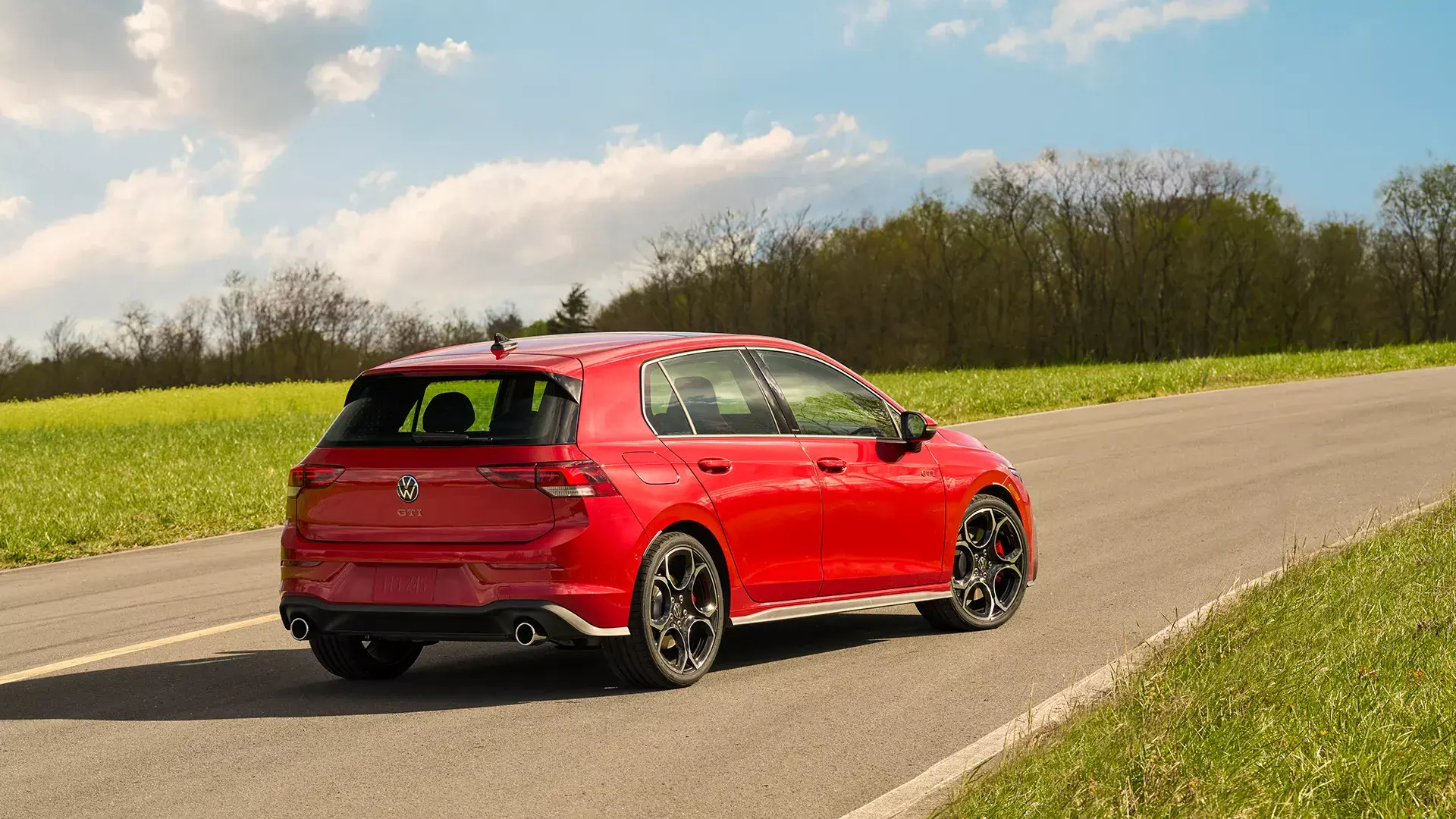
In the pantheon of automotive madness, few cars occupy a pedestal as high—or as wide—as the Volkswagen Golf GTI W12-650. Originally unleashed upon an unsuspecting public at the 2007 Wörthersee festival, it was a middle finger to physics and a love letter to excess. Now, as the iconic GTI nameplate celebrates its 50th anniversary, the German giant has decided to wheel out its most unhinged creation once again. Only this time, it has traded its clinical white paint for a coat of provocative, “look-at-me” red.
A Relic of Glorious Over-Engineering
To understand why the W12-650 matters in 2024, you have to look back at the era that birthed it. This was the age of Ferdinand Piëch’s Volkswagen—a company so obsessed with engineering dominance that it built the Phaeton luxury saloon and the Bugatti Veyron simultaneously. The W12-650 was essentially a “what if” scenario brought to life by a team of engineers given a blank check and a very short deadline.
The recipe was simple but terrifying: take a standard Mk5 Golf GTI, gut it, and shove a 6.0-litre bi-turbo W12 engine where the rear seats used to be. This wasn’t just any engine; it was the same titan of power found in the Bentley Continental GT and the over-engineered Volkswagen Phaeton.
The Numbers That Still Defy Logic
By modern standards, 641bhp (650PS) is still a monumental figure. In 2007, it was supernatural. Channelling 553lb ft of torque through a six-speed Tiptronic gearbox to the rear wheels alone, the GTI W12-650 was designed to hit 62mph in just 3.7 seconds. If you had enough courage and a long enough stretch of Autobahn, it would theoretically top out at 201.8mph.
As reported by Autocar during its initial reveal, the car wasn’t just a straight-line hero. The body was widened by 160mm, and the roof was crafted from carbon fiber to lower the center of gravity. Perhaps most impressively, the engineers avoided adding a massive, unsightly rear wing. Instead, they used the C-pillars to funnel air into the mid-mounted radiator and utilized a massive rear diffuser to keep the car glued to the tarmac.

Why Red, and Why Now?
The reappearance of the W12-650 in red is more than just a fresh coat of paint. It serves as a reminder of the GTI’s soul at a time when the automotive industry is pivoting toward electrification. While the new 2025 Volkswagen Golf GTI is a masterclass in daily-driver refinement, the W12-650 represents the “unhinged” DNA that enthusiasts fear might be lost in the transition to EVs.
Volkswagen has been quiet about any mechanical updates for this “Redux” version, but the visual impact is undeniable. The red paint highlights the aggressive cooling scoops and the sheer girth of the 19-inch wheels—which, as we noted in our original coverage, look almost quaint by today’s “bigger is better” standards. It’s a nostalgic nod to the GTI’s 50-year journey, proving that even a company known for sensible family hatchbacks can occasionally go completely mad.
The Clarkson Legacy
No discussion of the W12 Golf is complete without mentioning the time Jeremy Clarkson attempted to tame it on the Top Gear test track. It was a car that famously hated corners, preferring to swap ends the moment you looked at the throttle mid-bend. It was a “handful” in the same way a live grenade is a “handful.” Yet, that was the charm. It wasn’t a polished production car; it was a “bespoke design study” that showed what happens when you stop worrying about trunk space and start worrying about how to keep a Bentley engine from melting a Golf chassis.
As Jalopnik once described it, the car was the ultimate “flex” of the mid-2000s. Seeing it return today suggests that VW isn’t quite ready to let go of its wild side.
Conclusion: A Birthday Gift to the Fans
The return of the W12-650 is a calculated move by Volkswagen to shore up its enthusiast credentials. By bringing back its most famous concept in a striking new color, they are bridging the gap between the internal combustion legends of the past and the performance-oriented future.
Whether we will ever see another factory-backed project this insane is doubtful. With emissions regulations and the push for sustainability, a 6.0-litre bi-turbo hatchback is a dinosaur. But as this red beast proves, some dinosaurs still have a very loud roar.
For now, we can simply appreciate the W12-650 for what it is: a glorious, mid-engined reminder that the GTI badge stands for more than just a red stripe on a grille. It stands for the pursuit of driving joy, even when—especially when—it makes absolutely no sense at all.