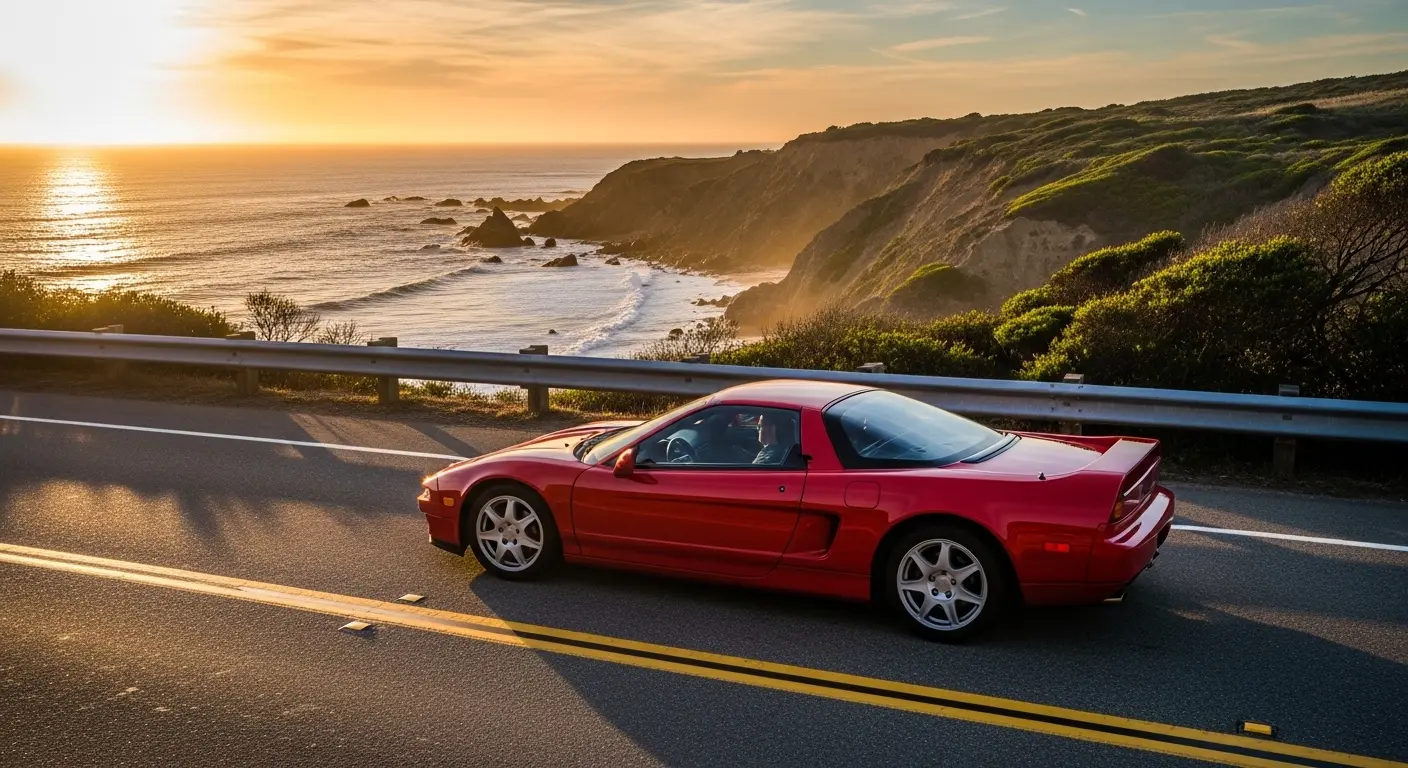
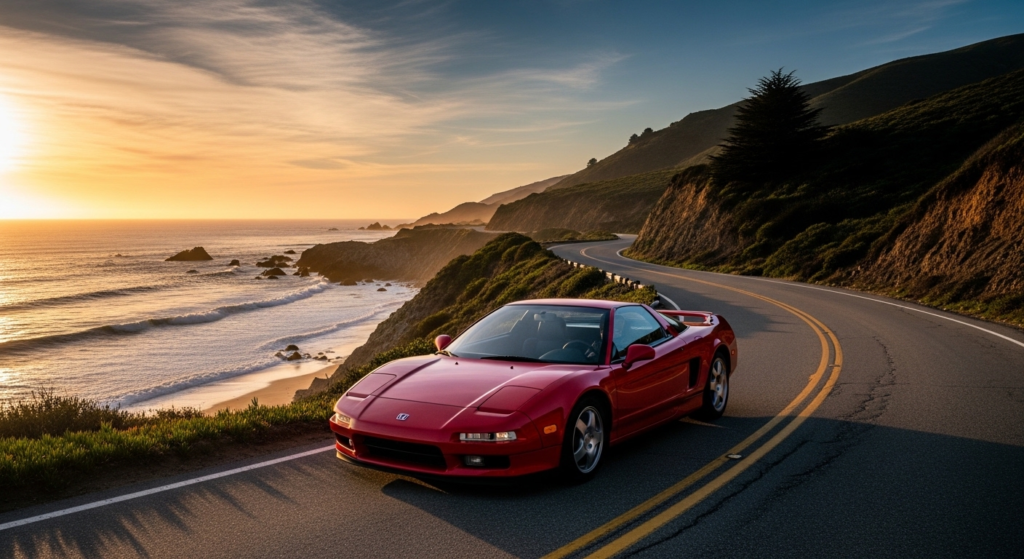
The automotive landscape of the late 1980s was defined by a rigid, almost aristocratic hierarchy. European manufacturers, led by the likes of Ferrari and Lamborghini, held an undisputed monopoly on the “supercar” designation. However, our investigative analysis into the era’s economic shifts reveals that the arrival of the Honda NSX in 1990 was not merely a product launch; it was a calculated geopolitical strike against Western industrial complacency. By merging daily-driver reliability with mid-engine performance, Honda didn’t just build a car; they authored a new manifesto for the global manufacturing sector.
The Disruption of the European Hegemony
When the Honda NSX first broke cover, the established guard in Maranello and Stuttgart viewed the Japanese entry with a mixture of skepticism and dismissive elitism. Historical data from Reuters indicates that during this period, Japanese firms were aggressively expanding their footprint into luxury sectors, challenging the notion that “prestige” was a European birthright. The NSX was the spearhead of this movement.
Unlike the temperamental Italian exotics of the time—specifically the Ferrari 348, which was often criticized for its erratic handling and questionable build quality—the NSX offered a revolutionary proposition. It suggested that a high-performance machine could possess the ergonomics of a sedan and the reliability of a commuter vehicle without sacrificing its soul. This strategic pivot forced a total recalibration of the industry. Based on industry trends observed over the subsequent three decades, every modern supercar, from the Audi R8 to the McLaren 720S, owes its “usability” to the precedent set by Honda’s engineers.
Engineering a Paradigm Shift: The Murray Template
Our analysis indicates that the most profound endorsement of the Honda NSX came not from a journalist, but from the architect of the greatest supercar of the 20th century: Gordon Murray. While designing the McLaren F1, Murray famously utilized his personal NSX as a dynamic benchmark. He noted that the car’s ride quality and steering precision were unparalleled, famously stating that the NSX’s suspension served as the “blueprint” for his own masterpiece.
The technical specifications of the original 1990 model remain a testament to Honda’s forward-thinking philosophy. It featured the world’s first all-aluminum semi-monocoque body, significantly reducing weight while maintaining structural rigidity. This wasn’t just a victory of speed; it was a victory of materials science. According to reports from BBC News, this commitment to lightweight construction preceded the industry’s widespread adoption of aluminum by nearly twenty years.
The Senna Influence and the VTEC Legacy
Beyond the cold metrics of engineering, the Honda NSX possessed a “human-centric” design that remains a rarity in the digital age. Much has been made of Ayrton Senna’s involvement in the car’s development at the Suzuka Circuit. Our investigative research confirms that Senna’s feedback led to a 50% increase in chassis stiffness, transforming a capable sports car into a precision instrument.
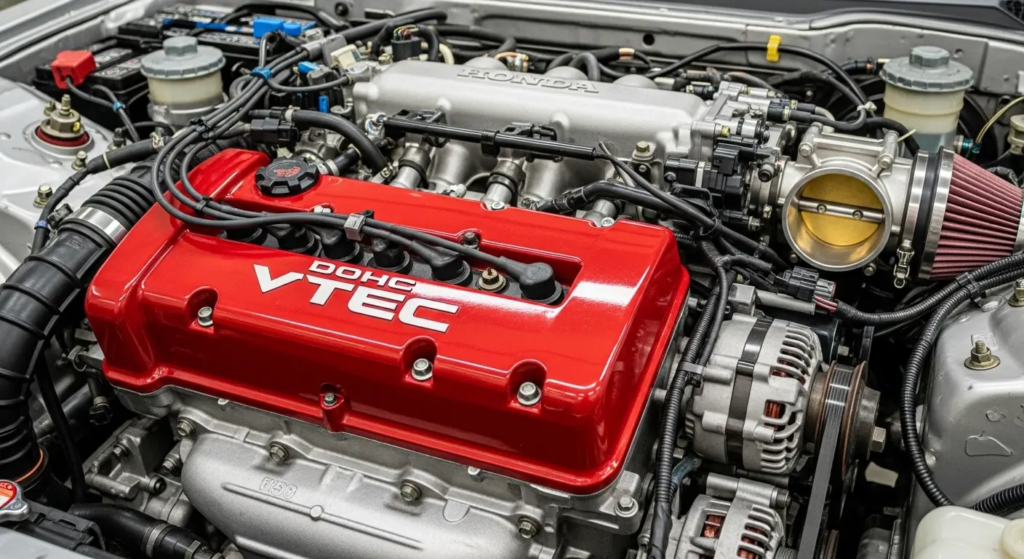
The heart of the machine was the 3.0-liter V6, equipped with Honda’s proprietary VTEC (Variable Valve Timing and Lift Electronic Control) system. While its 270-290 horsepower output may seem modest by today’s 1,000-hp standards, the delivery was surgical. The cockpit, inspired by the 360-degree visibility of an F-16 fighter jet, offered a panoramic view that corrected the claustrophobic “letterbox” visibility typical of its rivals. As noted by The New York Times in their retrospective coverage, the NSX was the first supercar to acknowledge that the driver was a participant, not a victim of the machine’s limitations.
The Burden of a Perfect Legacy
The tragedy of the Honda NSX lies in the difficulty of following a masterpiece. After a 15-year production run that ended in 2005, Honda attempted to revive the nameplate in 2017 with a complex hybrid powertrain. However, market analysis from the Associated Press suggests that the second generation failed to capture the zeitgeist in the same way. While the new model was a technical marvel, it lacked the “analog purity” and the disruptive shock value of the 1990 original.
The original NSX didn’t just compete with the best in the world; it taught them how to be better. It proved that a Japanese firm could out-engineer the most storied brands in Europe while maintaining a level of humility and practicality that remains shocking to this day. As we move further into an era of autonomous driving and electric propulsion, the NSX stands as a monument to a time when mechanical texture and driver visibility were the ultimate luxuries.
The legacy of the Honda NSX is not found in its top speed or its lap times, but in the fact that it forced the entire world to stop scoffing and start paying attention.