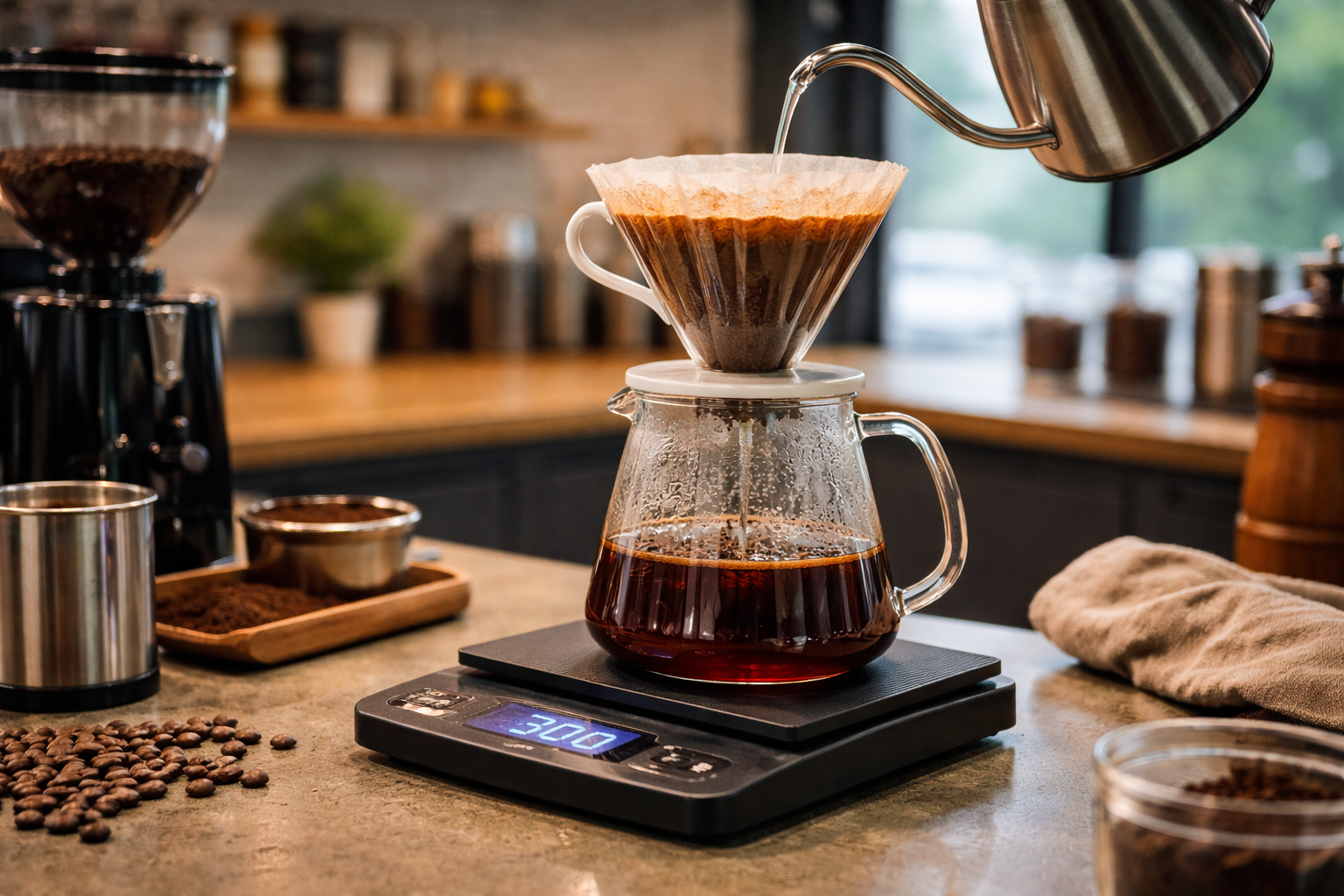
For decades, we have treated the morning pour-over like a high-stakes lab experiment. We measure and weigh every bean with intense focus. We obsess over the “Golden Ratio.” This fabled mathematical sweet spot promises to unlock the hidden soul of the bean. However, a quiet revolution is brewing in the world’s most progressive cafes. Experts are now pushing back against the scale. They suggest that our devotion to Golden Ratio coffee brewing might blind us to our own joy.
The Mathematical Obsession of the Morning Cup
The term “Golden Ratio” sounds perfect. It evokes the Parthenon or the divine proportions of a Da Vinci sketch. In specialty coffee, this term describes a specific weight-to-volume relationship. According to the Specialty Coffee Association (SCA), the ideal standard sits between 15:1 and 20:1. This means you provide fifteen to twenty grams of water for every gram of coffee.
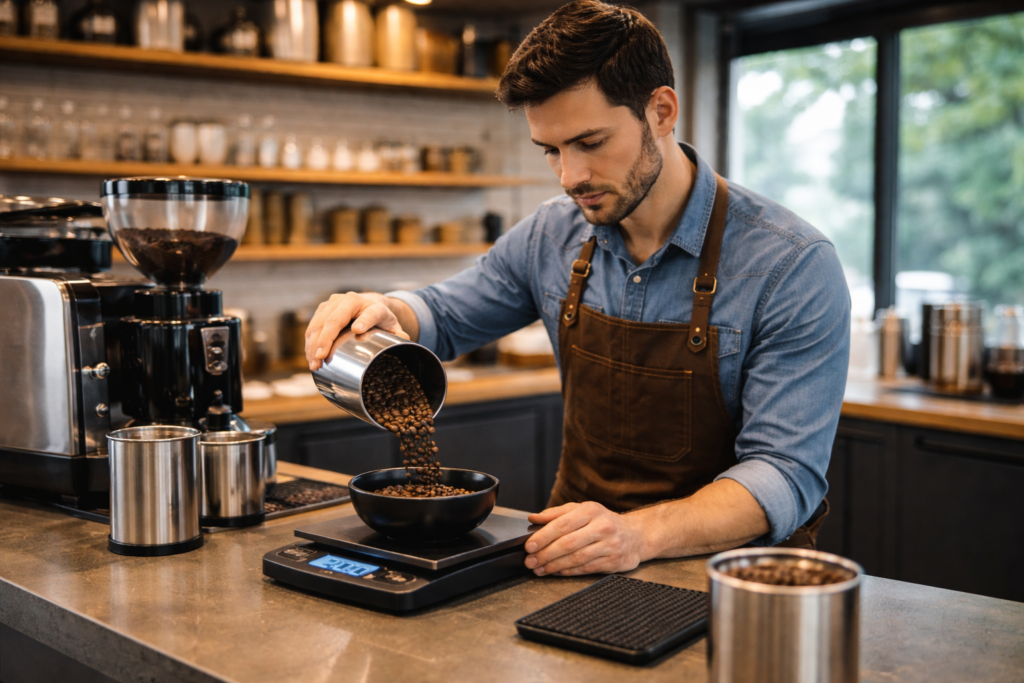
This image was generated using artificial intelligence (AI) for illustrative purposes only.
To many, this seems like a narrow window of perfection. Baristas and enthusiasts often plant their flag at the 16:1 mark. They claim it offers the best balance of sweetness and body. This precision requires high-precision digital scales. It also demands meticulous data entry before you take your first sip. However, these numbers can become a cage for the connoisseur. You can read more about our [guide to essential coffee brewing gear] to see which tools actually matter.
Precision vs. Perception: The Expert Dissent
Artisans at Coffee Project New York lead the charge toward an intuitive approach. They acknowledge that measurement is a vital foundation. Yet, they argue that the Golden Ratio is only a starting point. The quality of the bean often dictates a change in the rules. Factors like origin, roast profile, and freshness are critical.
For example, a floral Ethiopian bean might sing at a higher ratio. This allows the water more room to tease out delicate compounds. Conversely, a chocolatey Sumatran roast benefits from a tighter, lower ratio. This emphasizes its thick, viscous mouthfeel. When we stick dogmatically to 16:1, we risk flattening the coffee’s personality. We turn a unique bean into a standardized shadow of its potential.
Extraction as an Art, Not an Equation
The chemistry of coffee extraction is complex. Factors like grind size and water temperature play huge roles. Even the minerals in your tap water change the flavor. Because of this, a simple ratio cannot tell the whole story. Manual brewing depends heavily on a uniform grind. If your grinder produces uneven dust, no ratio can save your cup. It will taste both sour and bitter at the same time.
Furthermore, your equipment creates its own set of rules. A French Press has a long immersion time. It demands a different philosophy than the intensity of an AeroPress. You can explore our [top-rated burr grinder recommendations] to improve your grind consistency. Each method interacts with the ratio differently. A 1:15 ratio in a French Press creates a different experience than in a V60 dripper. The “Golden” standard is really a spectrum, not a single point.
The Cultural Shift Toward Subjective Excellence
The move away from rigid ratios reflects a broader cultural trend. People are reclaiming subjectivity in food and drink. In an era of algorithms, trusting your own tongue is a radical act. Coffee has evolved from a 1950s commodity to a 21st-century medium for expression.
If you prefer a strong, dark cup, a lower ratio is your ally. Do not worry about what the SCA handbooks suggest. If you desire a tea-like, ethereal experience, push those boundaries higher. The true “Golden Ratio” is not found in a textbook. It is the specific measurement that aligns with your mood and your palate.
We must remember that pleasure is the end goal. While the Golden Ratio is a great compass, it should never replace experimentation. The next time you stand over your kettle, consider the math, but do not be a slave to it. Taste, adjust, and find the magic. Stop brewing by the numbers and start brewing for the soul.
FAQ
What is the best coffee-to-water ratio for brewing?
There is no single “best” ratio for everyone. While many baristas recommend a range between 15:1 and 20:1, the ideal coffee-to-water ratio depends on your taste preference, bean origin, roast level, and brewing method. The Golden Ratio is a helpful starting point, not a strict rule.
Is 16:1 really the Golden Ratio for coffee?
The 16:1 ratio is commonly cited as the standard because it offers a balanced extraction for many medium-roast beans. However, lighter roasts may benefit from a higher ratio, while darker roasts often taste better with slightly less water. The “golden” number changes depending on context.
Should beginners use a digital scale?
Yes — especially at the beginning. A digital scale helps build consistency and teaches you how ratio affects flavor. Once you understand how extraction works, you can start adjusting more intuitively.
Does coffee ratio matter for milk-based drinks like latte?
Yes, but in a different way. Espresso for milk drinks typically uses a much tighter ratio, such as 1:2. If you’re curious about how traditional coffee cultures approach milk-based drinks, you can explore our guide to authentic Italian latte traditions to see how balance works beyond strict formulas.
Can I ignore the Golden Ratio completely?
Not entirely. The Golden Ratio is a useful foundation. But once you understand it, the real improvement comes from tasting, adjusting, and trusting your palate.