The geopolitical landscape of the Middle East has entered a volatile new chapter as the Shahed-136—the low-cost “suicide drone” that has become a hallmark of the conflict in Ukraine—is now being deployed in mass waves across the Persian Gulf. In a staggering 48-hour escalation, Tehran has launched hundreds of these loitering munitions toward regional allies of the United States, including Bahrain, Kuwait, and the United Arab Emirates. This aggressive maneuver follows recent joint military actions by the U.S. and Israel against Iranian territory, signaling that the “drone terror” once localized to Eastern Europe has officially arrived on the doorsteps of the world’s most critical oil transit points.
The Strategic Deployment of the Shahed-136 in the Gulf
Reports from the ground indicate a scale of aerial bombardment rarely seen in the region. According to official statements from the UAE, the nation was targeted by a staggering 689 drones in a single wave. While Emirati air defense systems, bolstered by Western technology, managed to intercept 645 of the incoming threats, approximately 44 drones—or 6% of the total—managed to breach the perimeter. This “saturation” tactic is a known doctrine of the Iranian Revolutionary Guard Corps (IRGC), designed to overwhelm even the most sophisticated radar systems through sheer volume.
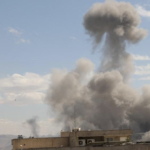
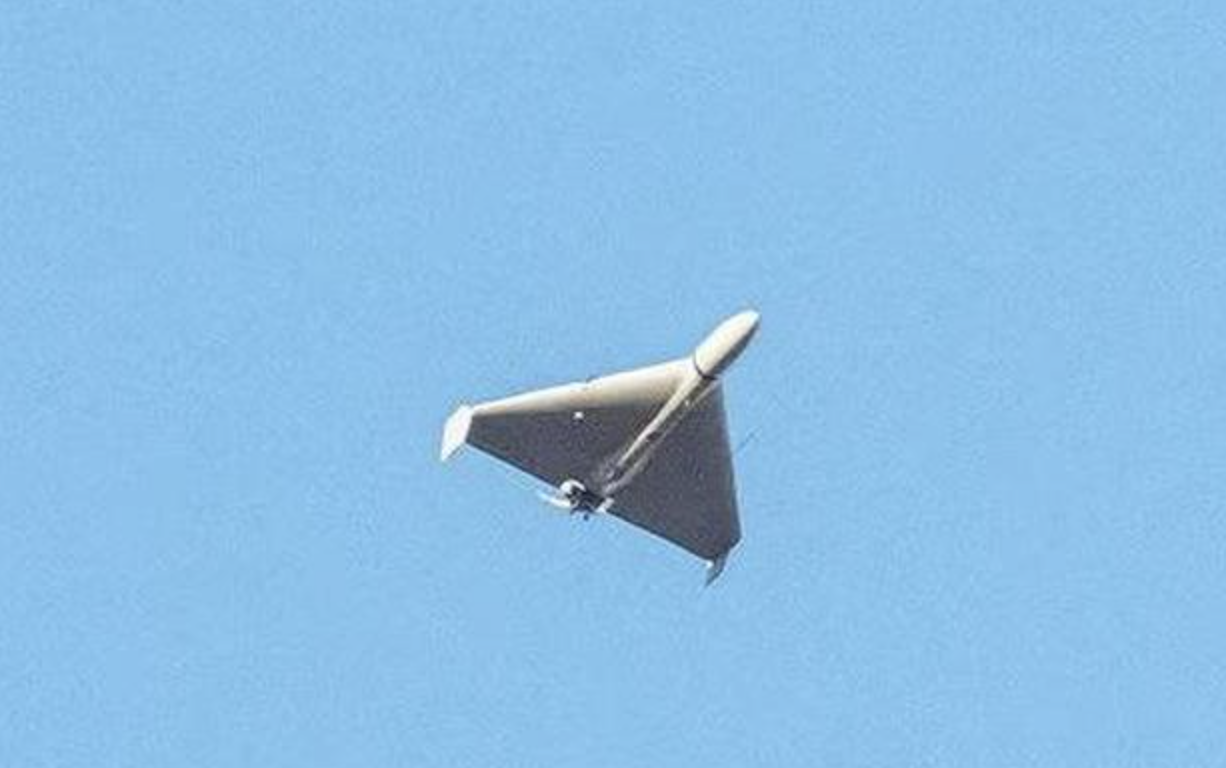
In Bahrain, the psychological impact of the attacks has been profound. Local footage captured the eerie, moped-like drone of the Shahed-136 engines as they descended upon urban centers under the cover of darkness. One particularly chilling video shows a delta-winged craft striking a high-rise tower, resulting in a localized but intense inferno. Unlike ballistic missiles, which are costly and limited in number, these drones allow Iran to sustain a high-tempo offensive at a fraction of the price.
Analyzing the Lethal Simplicity of the Shahed-136
What makes the Shahed-136 such a formidable tool for asymmetric warfare is its blend of simplicity and range. Measuring roughly 3.5 meters in length with a 2.5-meter wingspan, the drone is built using off-the-shelf components, making it remarkably easy to manufacture in bulk. According to reporting by Reuters, the estimated cost of a single unit is approximately $50,000—a pittance compared to the multimillion-dollar interceptor missiles, such as the Patriot or THAAD, used to shoot them down.
While the drone’s 50kg warhead is generally insufficient to collapse a modern skyscraper, it is more than capable of destroying sensitive infrastructure, such as radar installations, oil refineries, and power substations. The drone’s 2,000km range allows Tehran to strike targets as far as the RAF Akrotiri base in Cyprus or deep into the Arabian Peninsula. Its ability to follow pre-programmed, low-altitude flight paths helps it hug the terrain, often staying below the “blind spots” of traditional long-range radar.
Targeting the US Fifth Fleet
Perhaps the most provocative aspect of the recent campaign was the direct targeting of military infrastructure. In Bahrain, a Shahed-136 was filmed loitering over the heart of the naval installation that houses the U.S. Fifth Fleet. The drone successfully executed a steep terminal dive, impacting and destroying a critical radar dome. This specific strike highlights a shift from indiscriminate “swarm” tactics to precision targeting, suggesting that Iranian operators may now be using real-time remote-control capabilities—a feature previously observed in the evolution of drone warfare in Ukraine.
From Ukraine to the Gulf: A Proliferation of Design
The global community first became intimately familiar with the Shahed-136 through its extensive use by Russian forces. Originally developed by the Shahed Aviation Industries Research Center—an entity the U.S. Treasury Department identifies as being controlled by the IRGC—the design was eventually shared with Moscow for mass domestic production.
As noted by the Associated Press, the tactics seen in the Gulf this week differ slightly from the Russian “swarm” model. While Russia often uses hundreds of drones to “mask” more lethal cruise missiles, the recent Gulf attacks have seen single drones or small groups successfully penetrating defenses. This suggests that the regional air defense networks of U.S. allies, while robust, may be struggling with the sheer persistence and low-radar-profile nature of these “suicide” craft.
The Road Ahead: A New Era of Regional Insecurity
The utilization of the Shahed-136 as a tool of regional intimidation marks a significant escalation in the “shadow war” between Tehran and the West. By proving that it can hit high-value targets like the Fifth Fleet’s radar or Emirati urban centers, Iran is signaling that the cost of any further strikes on its soil will be met with persistent, difficult-to-stop aerial harassment.
For the United States and its allies, the challenge is now two-fold: they must find a more cost-effective way to neutralize these $50,000 threats and address the manufacturing pipelines that allow Iran to churn out thousands of these drones every year. As the buzzing of the Shahed becomes a permanent fixture of Middle Eastern skies, the era of traditional air superiority is being challenged by the era of the “expendable” machine.