Nio just shattered every preconceived notion regarding electric vehicle utility during the Lunar New Year rush. While Western manufacturers struggle to build a reliable fast-charging corridor, this Chinese powerhouse managed to facilitate 146,649 battery swaps in a single 24-hour window on February 15. This milestone occurred during the Spring Festival, the world’s largest annual human migration, proving that Nio possesses a logistical advantage that legacy automakers simply cannot match.
Nio Battery Swap Technology Dominates the Chinese Market
The sheer volume of these swaps highlights a massive shift in consumer behavior. On February 6, Nio celebrated its 100 millionth battery swap, a figure that dwarfs any other automated energy replenishment system on the planet. Critics often dismiss battery swapping as an overly complex solution to a temporary problem, yet the data suggests otherwise. When millions of motorists hit the road simultaneously, the gridlock at traditional charging piles becomes a nightmare. Nio avoids this by treating the battery as a modular component rather than a fixed asset.
According to reports from Top Gear, the brand’s ability to cycle through nearly 150,000 units in one day demonstrates a level of operational maturity that challenges the “charge-at-home” mantra. The current future of electric cars depends heavily on reducing downtime, and Nio has effectively reduced the “refueling” process to three minutes.
The Three-Minute Engineering Marvel
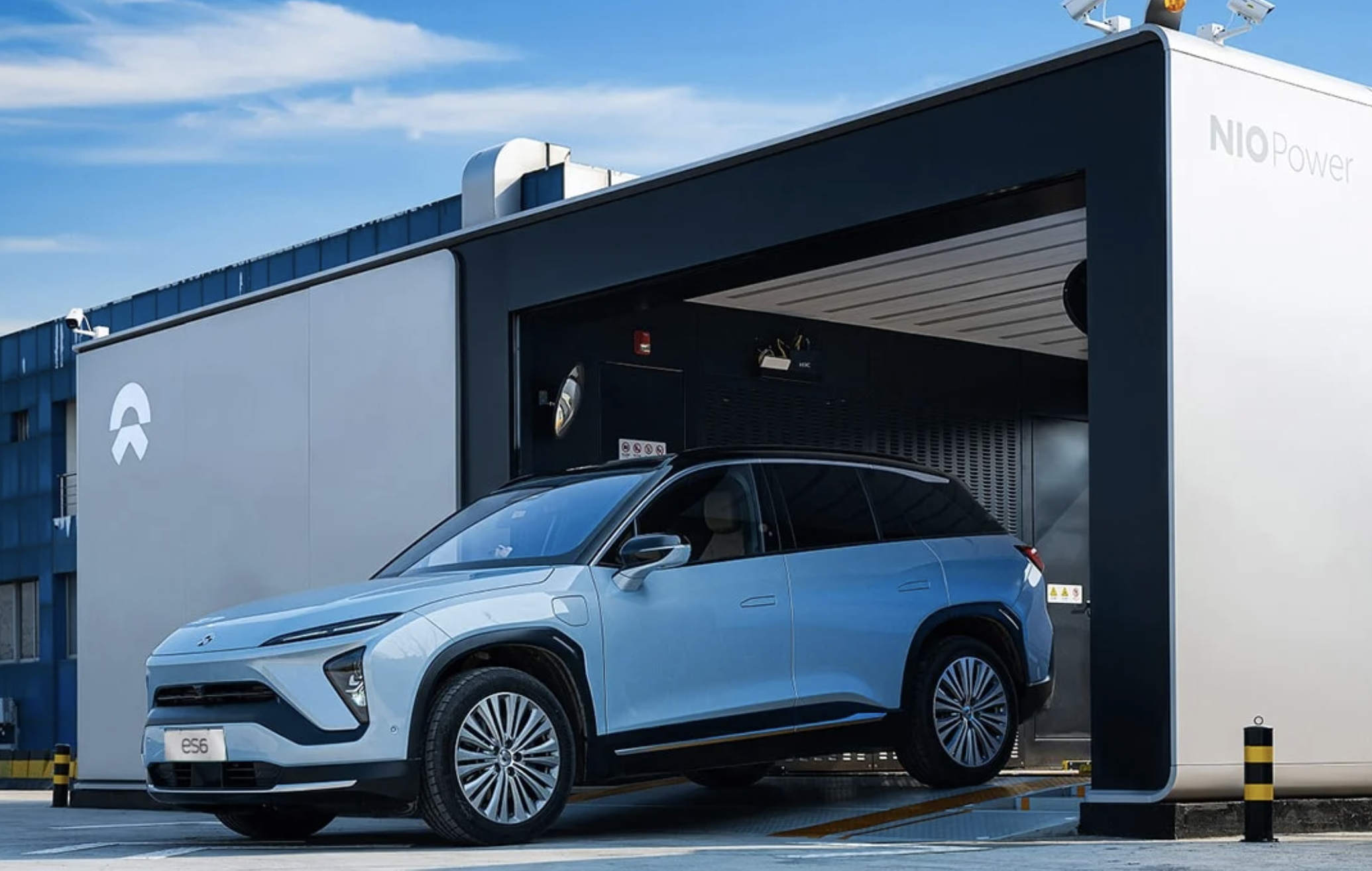
Nio currently operates a network of 3,700 battery swap stations across China. These aren’t just sheds with a mechanic; they are fully autonomous robotics hubs. When a driver pulls in, the car aligns itself using high-precision sensors. The station then unbolts the depleted battery from the chassis, lowers it into a subterranean charging rack, and installs a fresh, 100-percent charged unit.
This process eliminates the primary pain point of EV ownership: the 30-to-60-minute wait at a DC fast charger. While a standard Tesla Supercharger or Ionity station might provide an 80-percent charge in 20 minutes under ideal conditions, Nio delivers a full range in the time it takes to buy a coffee. Industry analysts at Autocar note that this infrastructure also allows for “Battery as a Service” (BaaS) models, where customers buy the car but rent the battery, significantly lowering the initial purchase price.
Comparing Nio to the European Giants
While Nio expands, European giants like Stellantis have flirted with similar concepts before retreating into traditional charging strategies. The difference lies in commitment. Nio built its entire vehicle architecture around the swap-ready chassis. If the car isn’t designed for it from day one, retrofitting the technology becomes a financial disaster.
The technical benefits extend beyond speed. By swapping batteries, Nio can monitor the health of every cell in a controlled environment. If a battery shows signs of degradation, the system pulls it from circulation for repair or recycling without the owner ever knowing. This solves the “dead battery” anxiety that plagues the second-hand EV market. As Car and Driver points out, this modularity also enables easy upgrades. A customer could daily-drive a 75kWh battery and swap it for a 150kWh long-range unit for a weekend road trip.
The Firefly and the Australian Expansion
Nio recently confirmed plans to enter the Australian market in 2026. However, the strategy involves a calculated risk. The brand will lead with its “Firefly” sub-brand, a small hatchback aimed squarely at the BYD Dolphin and MG4. Curiously, the Firefly will lack battery swap capabilities.
Instead, the Firefly utilizes a 42kWh Lithium Iron Phosphate (LFP) battery. This unit offers a 330km WLTP range and supports a 10-to-80 percent charge time of roughly 29 minutes. This move suggests that while Nio views swapping as the gold standard for its premium lineup, it recognizes the infrastructure hurdles in new markets like Australia. Without a dense network of 3,700 stations, a swappable car becomes an expensive piece of hardware with no place to play.
Overcoming the Infrastructure Barrier
For battery swapping to work outside of China, Nio needs massive capital investment. In Australia, the early stages of development for such infrastructure remain stagnant. Local power grids must support the high-load demands of these stations, which charge dozens of batteries simultaneously.
Furthermore, Nio must convince other manufacturers to adopt its standard. We are seeing the first signs of this in China, where Geely and Changan have signed agreements to utilize Nio’s swapping network. If Nio can turn its proprietary technology into a global industry standard, it will control the most valuable energy network in the automotive world. Until then, the 146,649 swaps in a single day serve as a proof-of-concept that the rest of the world ignores at its own peril.
The performance of the Nio network during the Lunar New Year proved that when the demand is highest, swapping scales in ways that cables cannot. While Western drivers wait in queues at highway service stations, Nio owners are already back on the road.
For more breaking automotive news and exclusive updates, click here to explore our latest coverage.