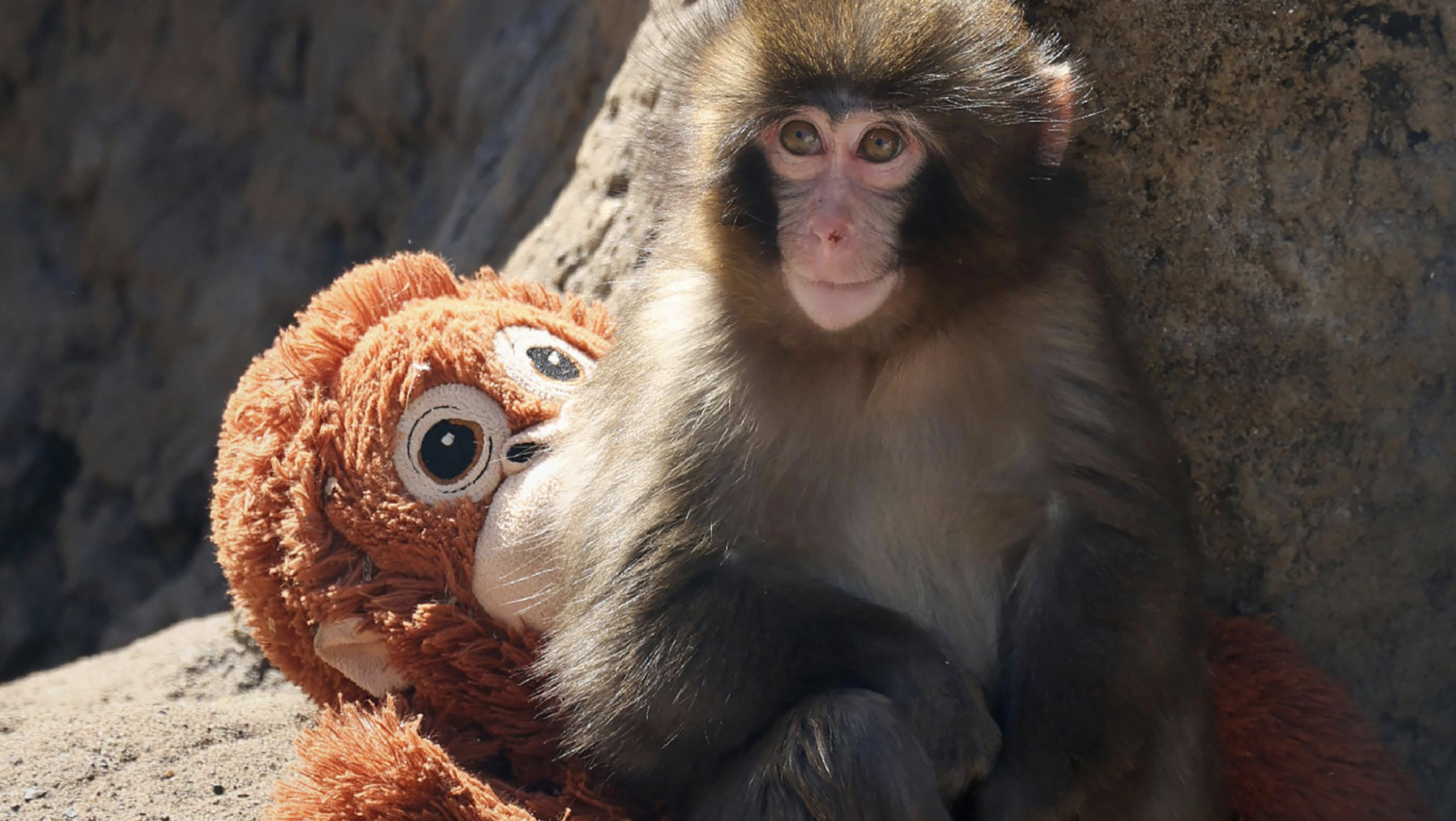
Punch the Macaque recently became a global sensation after heartbreaking footage surfaced showing the infant monkey clinging to a stuffed toy for comfort. While millions of viewers find the imagery “cute,” primatologists warn that the viral fame masks a deep psychological trauma within the animal. The infant Japanese macaque currently resides at the Ichikawa City Zoo in Japan, where staff provide round-the-clock care following a tragic maternal rejection.
5 Punch the Macaque Secrets Experts Want You to Know
The scientific community views the situation with a mixture of clinical interest and profound sadness. According to The New York Times, primates require intricate social bonds from birth to develop normal neurological pathways. Michael Stern, a Harvard-educated primatologist with decades of experience studying gorillas in Uganda, emphasizes that Punch experiences the same basic emotions as a human child.
1. The Science of Maternal Deprivation
Every mammal possesses fundamental emotional needs that only a biological mother or a living surrogate can truly fulfill. Stern notes that while the stuffed toy provides a tactile substitute, it lacks the reciprocal warmth and movement essential for primate development. Scientific studies consistently prove that primates need something to love and, more importantly, need to feel love in return. The sight of Punch running toward a lifeless doll highlights a “massive” deficit in his emotional environment that humans cannot easily replicate.
2. The Dangers of Viral Humanization
Social media often distorts the reality of animal suffering. When videos of Punch went viral, the “shocking” contrast between his small stature and his dependency on a toy triggered a massive wave of sympathy. However, experts at BBC News suggest that humanizing these animals can lead to dangerous outcomes, such as the illegal pet trade. Punch does not view the toy as a “friend” in the human sense; he views it as a survival mechanism in a world where his primary source of security—his mother—abandoned him.
3. Corporate and Celebrity Interference
The fame of Punch the Macaque reached the ears of controversial figures like Andrew Tate and his brother Tristan. The duo publicly offered to purchase the monkey from the zoo, a move that professional conservationists strongly discourage. Instead of private ownership, which often results in further trauma, experts suggest directing funds toward Related Topic initiatives that support natural habitat preservation.
On a more constructive note, IKEA Japan President Petra Fare stepped in to assist. Mayor Ko Tanaka of Ichikawa confirmed that IKEA donated several orangutan plushies and other soft toys to serve as comfort objects for Punch. While these donations help the zoo manage the infant’s immediate stress, they remain temporary fixes for a biological problem.
4. The Social Integration Challenge
Critics often point to the “bullying” Punch receives from his troop as a sign of zoo negligence. Stern clarifies this misconception, stating that integration into a social group remains the most “massive” hurdle for any rejected primate. Despite the perceived cruelty of the other macaques, Punch must learn the social hierarchy of his species. Being surrounded by his own kind, even with the occasional conflict, provides more long-term benefits than isolation with human handlers.
5. Record-Breaking Zoo Attendance
The “shocking” popularity of the monkey resulted in unprecedented crowds at Ichikawa City Zoo. According to Reuters, the facility experienced a surge in visitors never seen in its history. While the increased revenue helps fund better facilities, the noise and presence of thousands of humans add another layer of stress to a developing macaque. Zoo officials continue to express gratitude for the support but urge visitors to maintain a respectful distance to allow Punch to bond with his fellow monkeys.
The Biological Reality of Primate Grief
Michael Stern maintains that the “secrets” of Punch’s behavior lie in the evolutionary history of primates. A baby monkey needs the specific stimulation—the grooming, the carrying, and the vocalizations—that only a mother provides. Human caretakers at Ichikawa City Zoo work tirelessly to bridge this gap, but they acknowledge the limitations of their intervention.
Reports from AP News indicate that Punch’s health remains stable, yet his psychological journey is just beginning. As he grows, his reliance on the IKEA plush toys must decrease to allow for successful troop integration. The goal for any reputable zoo remains the eventual total socialization of the animal, ensuring he learns to be a macaque rather than a viral attraction.
The global community continues to watch Punch’s progress on platforms like X, where users share updates on his growth. One user noted that even with the “shocking” start to his life, the resilience of the young monkey offers a lesson in survival. The zoo continues to monitor the troop dynamics closely, hoping that an adult female might eventually “adopt” Punch into her social circle, providing the living warmth he so desperately seeks.