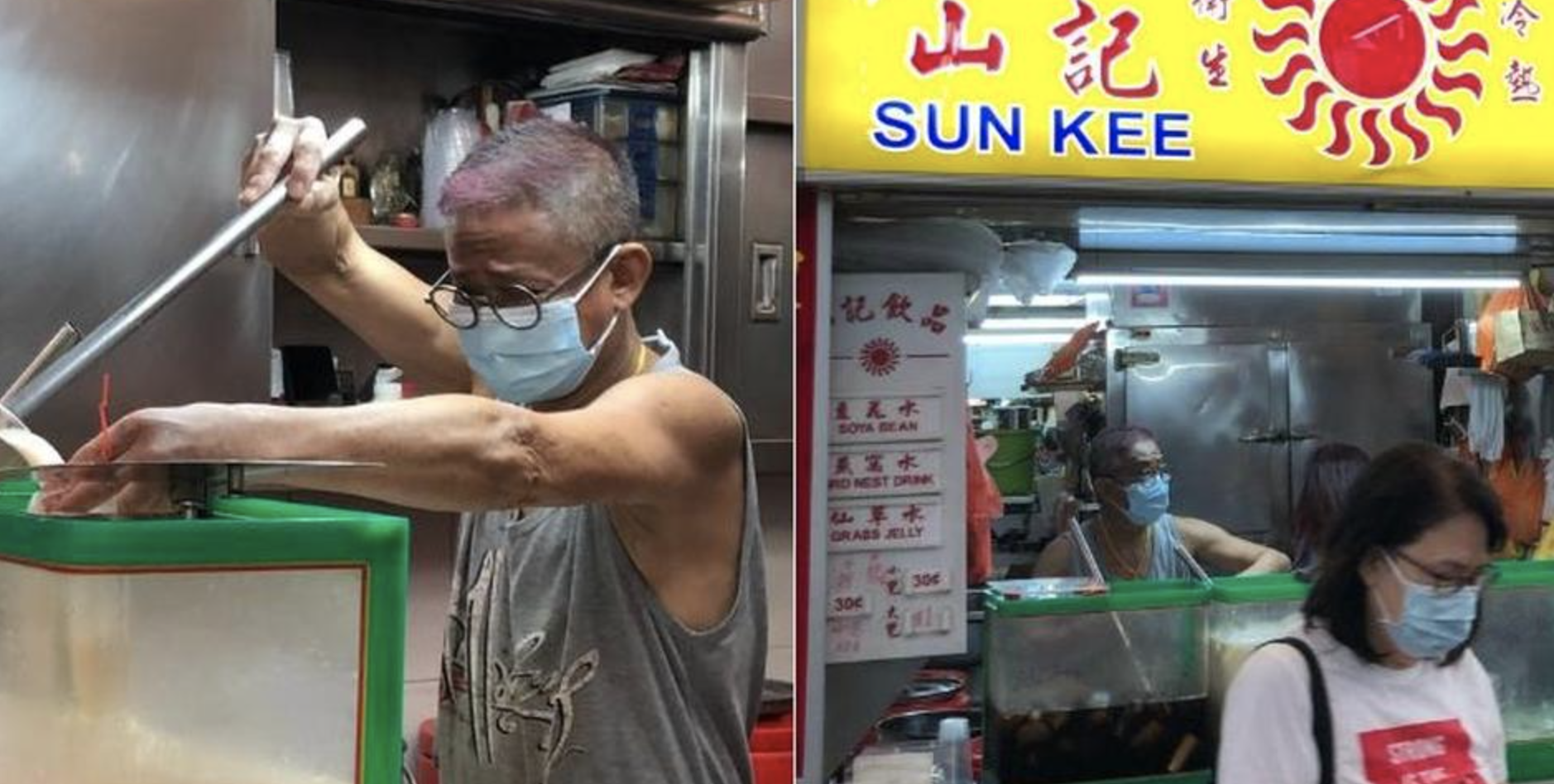
In an era where global metropolitan centers are grappling with unprecedented inflationary pressures, a modest beverage stall in Singapore is making international headlines for its refusal to succumb to market trends. Sun Kee Drinks, located within the bustling Kovan Food Market, has become a symbol of resilience and community spirit by maintaining beverage prices that have remained largely unchanged since the mid-1980s. While the city-state is frequently cited as one of the world’s most expensive places to live, this stall offers a stark, refreshing contrast, serving traditional drinks for as little as S$0.30 (approximately $0.22 USD).
The Legacy of Sun Kee Drinks: Defying Four Decades of Inflation
The story of Sun Kee Drinks began in 1985, a year when Singapore was cementing its status as an “Asian Tiger” economy. Operated by a dedicated husband-and-wife duo for nearly forty years, the stall has served generations of residents in the Hougang and Kovan neighborhoods. Despite the rapid appreciation of the Singapore dollar and the rising costs of raw materials, the couple has opted to keep their prices at levels that seem frozen in time.
Their menu is a testament to traditional Singaporean “kopitiam” culture, featuring staples such as soy milk, grass jelly (cincau), and bird’s nest drinks. The pricing structure is remarkably straightforward: a small cup costs a mere S$0.30, a medium size is S$0.50, and a large portion is priced at S$1.00. In a landscape where a standard iced coffee at a modern cafe can easily exceed S$6.00, the value proposition at Sun Kee is almost anomalous.
According to recent reports on the economic climate of Southeast Asia, core inflation in Singapore has remained a primary concern for policymakers. However, the owners of Sun Kee Drinks prioritize community service over profit maximization, a philosophy that has earned them a loyal following that spans decades.
The Economics of the S$0.30 Cup
How does a business remain viable while selling products at 1980s prices in 2025? The answer lies in the unique socio-economic infrastructure of Singapore. Sun Kee Drinks operates within a hawker center managed by the Housing & Development Board (HDB) or the National Environment Agency (NEA). These stalls often benefit from regulated rents that are significantly lower than those in private commercial malls.
Political analysts at The Global Ledger note that these subsidized spaces are a critical component of Singapore’s social compact. By keeping overhead costs manageable for hawkers, the government ensures that the working class has access to affordable nutrition. This system is a cornerstone of Singapore’s UNESCO-recognized hawker culture, providing a buffer against the rising cost of living that is currently affecting major cities globally, as reported by BBC News regarding global urban expenses.
However, even with lower rent, the margins at S$0.30 are razor-thin. The owners have indicated that their primary goal is no longer wealth accumulation but staying active and serving the “uncles and aunties” (local elderly residents) who rely on the market for their daily social interactions.
Social Media and the Viral “Nostalgia Factor”
The stall recently saw a surge in popularity after being featured by the “Singapura Channel” on Facebook. The post triggered a wave of nostalgia among Singaporeans, many of whom shared stories of visiting the stall as children. One regular patron noted, “I have been coming here since 1987. The soy milk might not be the thickest in the city, but at 30 cents, it is a gesture of kindness to the community.”
This sentiment reflects a broader trend in global consumer behavior where “value” is being redefined. In a report by AP News on consumer trends, there is a growing appreciation for “legacy” businesses that maintain a human connection in an increasingly digitized and expensive world.
Community Impact and Social Stability
Beyond the novelty of the price, Sun Kee Drinks plays a vital role in local social stability. For retirees on fixed incomes, the ability to purchase a drink and sit in a communal space for less than the price of a bus fare is essential for mental well-being and social cohesion.
1. Accessibility: Ensures the most vulnerable populations are not priced out of public spaces.
2. Heritage: Preserves the authentic taste and experience of 1980s Singapore.
3. Resilience: Demonstrates that small-scale entrepreneurship can survive through community loyalty rather than aggressive scaling.
A Political Perspective on Singapore’s Food Security
From a political standpoint, the survival of stalls like Sun Kee is often used as a benchmark for the success of government-led cost-of-living interventions. The New York Times has previously highlighted how Singapore’s government uses “Community Development Council” (CDC) vouchers to help citizens cope with inflation, but the existence of naturally affordable options like Sun Kee reduces the overall burden on the state.
As the founders of Sun Kee Drinks continue their work into their fourth decade, they represent a dwindling generation of hawkers who view their trade as a public service. While market forces suggest that prices must eventually rise, for now, the residents of Kovan can still enjoy a taste of the past for just 30 cents.
In the grander scheme of global economics, Sun Kee is a reminder that while “The Global Ledger” usually tracks billions in trade, it is the small, 30-cent transactions that often define the heart of a nation’s economy.
For more updates on similar news and trending global stories, visit our latest news section.