
High-net-worth individuals and global strategists now view the World War III Safest Countries as the ultimate luxury commodity. As geopolitical tensions simmer in the Middle East and beyond, the definition of a “prime destination” has shifted from vibrant city centers to isolated, self-sustaining sanctuaries. True opulence in the modern age is no longer just about infinity pools and Michelin stars; it is about geographic isolation, resource independence, and the peace of mind that comes from being thousands of miles away from the nearest fallout zone.
World War III Safest Countries and the Geometry of Isolation
The World War III Safest Countries share a common trait: they exist outside the primary crosshairs of global military powers. When analyzing the safest havens, experts look for nations that can survive a total collapse of global supply chains. These locations offer a unique blend of natural defenses, such as mountain ranges or vast oceanic buffers, alongside the ability to generate their own energy and food. For the discerning traveler, these destinations represent the final frontier of security.
Fiji: The Oceanic Fortress of the South Pacific
Fiji remains a premier choice for those seeking total disconnection from northern hemisphere conflicts. Located over 4,000 kilometers from the nearest major landmass of Australia, this archipelago sits in a “blind spot” for most strategic military planning. The nation possesses an abundance of minerals and some of the world’s most fertile fishing grounds. Travelers visiting CN Traveler often highlight the luxury resorts, but the real value lies in the island’s deep-sea resources and its sheer distance from global flashpoints.
New Zealand: The Southern Sanctuary
New Zealand frequently tops the list of survivalist retreats for the global elite. The country’s Southern Alps provide a rugged, natural barrier against any potential land invasion, though its primary defense is its extreme southern latitude. New Zealand maintains a robust agricultural sector, ensuring it can feed its population indefinitely without international imports. The local government has historically maintained a firm stance on nuclear-free zones, making it a moral and physical fortress.
Switzerland: The Gold Standard of Neutrality
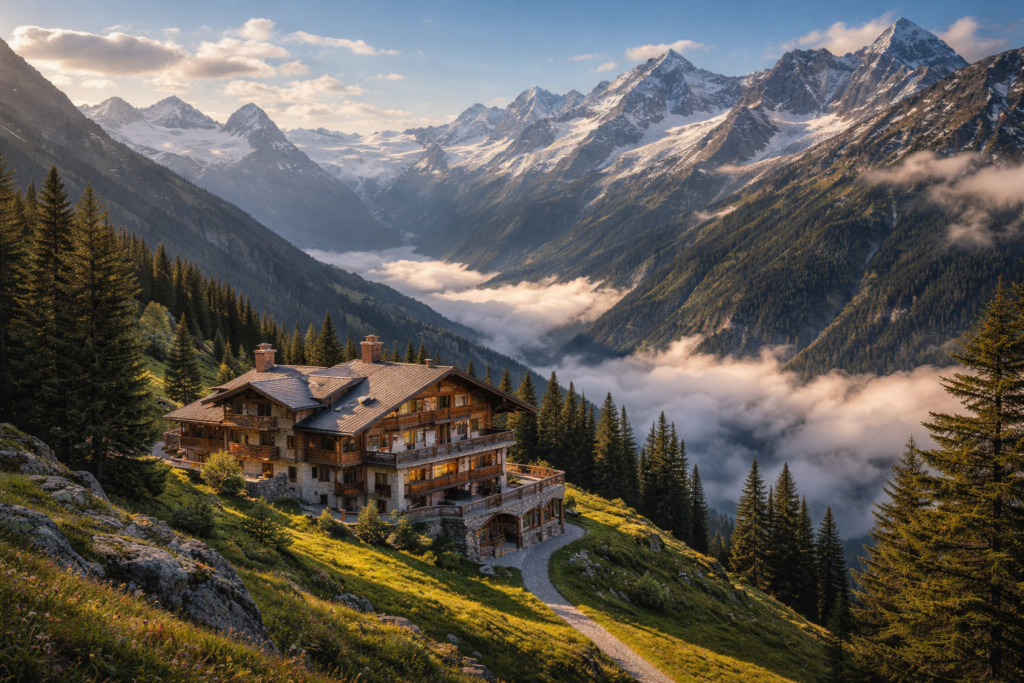
No discussion of safety is complete without mentioning the Swiss Confederation. Switzerland has maintained a policy of armed neutrality since the 19th century. Beyond its political stance, the country is a literal fortress; the Swiss government famously built enough nuclear fallout shelters to house its entire population. The rugged Alpine terrain provides a natural defense that has deterred invaders for centuries. According to Lonely Planet, the country’s infrastructure is among the best in the world, ensuring that even in a global crisis, the lights stay on and the trains run on time.
Tuvalu: The Invisible Island
Tuvalu offers a different kind of safety: insignificance. Located between Hawaii and Australia, this tiny nation lacks the strategic military infrastructure that attracts modern warfare. It is a place the world often forgets, which is exactly what one desires during a global conflict. Its isolation is its greatest asset, providing a low-profile existence amidst the vast blue expanse of the Pacific.
Chile: The Agricultural Powerhouse of the South
Chile boasts a coastline that stretches over 6,000 kilometers, offering a diverse range of climates and resources. Its unique geography—sandwiched between the Andes Mountains and the Pacific Ocean—makes it incredibly difficult to invade. Chile produces a massive surplus of crops and possesses significant natural wealth, allowing for total domestic sustainability. For those looking at Luxury Bunker Real Estate, the southern regions of Chile offer some of the most secure and fertile land on the planet.
South Africa: The Cape of Stability
South Africa stands out due to its modern infrastructure and relative detachment from the rivalries of the Northern Hemisphere. The nation possesses vast tracts of fertile land and easy access to fresh water, which are the two most critical assets in a prolonged global conflict. Its position at the tip of the African continent keeps it far removed from the primary theaters of war in Europe and Asia.
Antarctica: The Frozen Treaty Zone
While not a nation, Antarctica represents the ultimate retreat. The Antarctic Treaty mandates that the continent remains a place of peace and scientific research. Its extreme environment and remote location make it nearly impossible for military forces to sustain a presence there. As noted by National Geographic, the sheer hostility of the climate serves as the world’s most effective defensive wall.
Greenland: The Arctic Shield
Greenland’s vast ice sheets and remote northern position offer a unique layer of protection. While the island has recently seen increased interest from global powers due to its mineral wealth, its rugged environment remains a significant barrier to any conventional military occupation. It is a land where nature dictates the terms of survival.
Iceland: The Peace of the North Atlantic
Iceland consistently ranks as one of the most peaceful nations on Earth. It has no standing army and maintains a geography that is both remote and naturally fortified by volcanic terrain. Its reliance on geothermal energy means it can power its society without a single drop of imported oil, a critical advantage if global energy markets fail.
Bhutan: The Himalayan Stronghold
Bhutan’s safety stems from its “High Value, Low Impact” philosophy. Surrounded by the highest mountains on Earth, the kingdom has remained largely untouched by global conflicts. Its neutrality is bolstered by its membership in the United Nations and its lack of strategic military targets, making it a peaceful enclave in a turbulent world.
Argentina: The Breadbasket of the South
Argentina provides a massive landmass with a surplus of food production capabilities. In the event of a global supply chain collapse, Argentina’s ability to sustain its population through domestic agriculture is unmatched in the region. Its distance from the “hot zones” of the Northern Hemisphere adds an extra layer of security for those seeking long-term stability.
Indonesia: The Archipelago of Abundance
Indonesia has emerged as a surprisingly resilient candidate among the World War III Safest Countries. As a key player in the Board of Peace and a champion of non-aligned diplomacy, Indonesia maintains friendly relations with both Western and Eastern powers. Its geographic spread across thousands of islands makes it difficult to target or occupy effectively. Furthermore, Indonesia’s wealth of natural resources—ranging from nickel to palm oil and massive coal reserves—ensures it can remain self-sufficient. The nation’s commitment to internal stability and its strategic distance from the primary corridors of global conflict make it a hidden gem for security-conscious travelers. Visitors often consult TripAdvisor for its beauty, but its true strength lies in its geopolitical balance.
Discover more in-depth coverage and related articles by visiting our latest updates here.