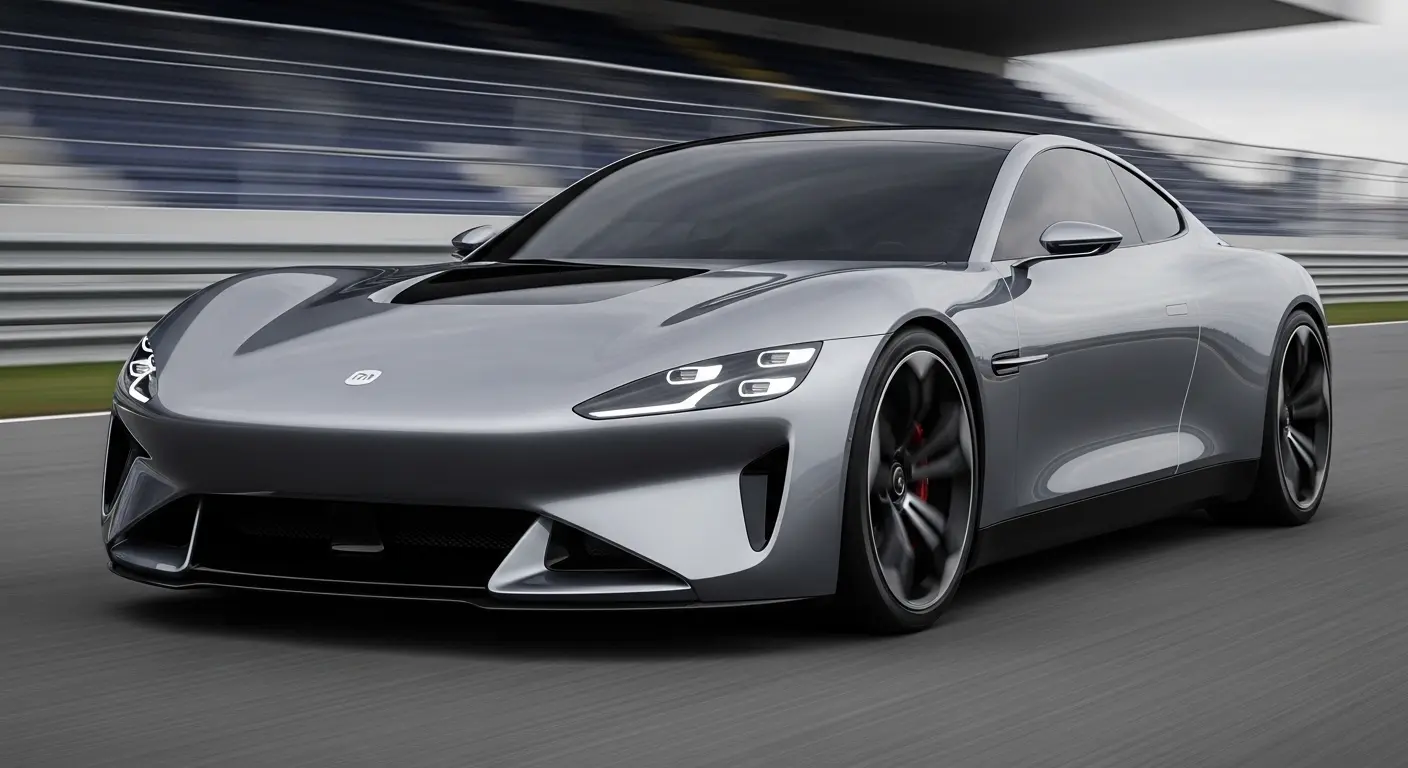
The Xiaomi Vision Gran Turismo represents a seismic shift in how technology giants approach high-performance automotive engineering. While traditional manufacturers spend decades building racing pedigree, Xiaomi leveraged its massive R&D resources to leapfrog the industry, transitioning from smartphones to a virtual hypercar in record time. This digital concept serves as a manifesto for the brand’s future, proving that the leap from the pocket to the pavement—or at least the virtual track—is shorter than critics once thought.
Why the Xiaomi Vision Gran Turismo Changes Everything
The Xiaomi Vision Gran Turismo shatters the traditional barrier between Silicon Valley and the Nürburgring. For years, the Vision Gran Turismo project remained the exclusive playground of legacy titans like Ferrari, Mercedes-Benz, and TopGear favorites like Aston Martin. Xiaomi’s inclusion signals a changing of the guard, where software-defined vehicles take center stage over mechanical heritage.
Xiaomi didn’t just build a digital skin; they engineered a philosophy. The design team, spread across Munich, Beijing, and Shanghai, focused on a concept they call “Sculpted by the Wind.” Unlike traditional hypercars that rely on massive, unsightly rear wings to generate downforce, this electric beast utilizes advanced underbody geometry. Giant venturi channels funnel air beneath the chassis, creating a vacuum effect that sucks the car to the tarmac.
Aerodynamics Without the Clutter
The rear of the vehicle features the “Active Wake Control System,” a piece of technology that sounds like science fiction but draws from real-world fluid dynamics. Instead of moving physical flaps, the system utilizes high-pressure air blasts to manipulate the turbulent wake trailing the car. By pushing this “dirty air” further away from the rear, Xiaomi reduces drag significantly while maintaining stability at triple-digit speeds.
This focus on aero-efficiency isn’t just for show. According to reports from Autocar, Xiaomi’s real-world SU7 Ultra already produces a staggering 1,527bhp. The Vision GT concept takes those performance benchmarks and applies them to a weightless, virtual environment where the only limit is the designer’s imagination. The halo-shaped taillight isn’t merely a design flourish; it acts as a structural frame for the massive rear diffuser, ensuring the car remains balanced during high-speed cornering.
A Radical Departure in Interior Design
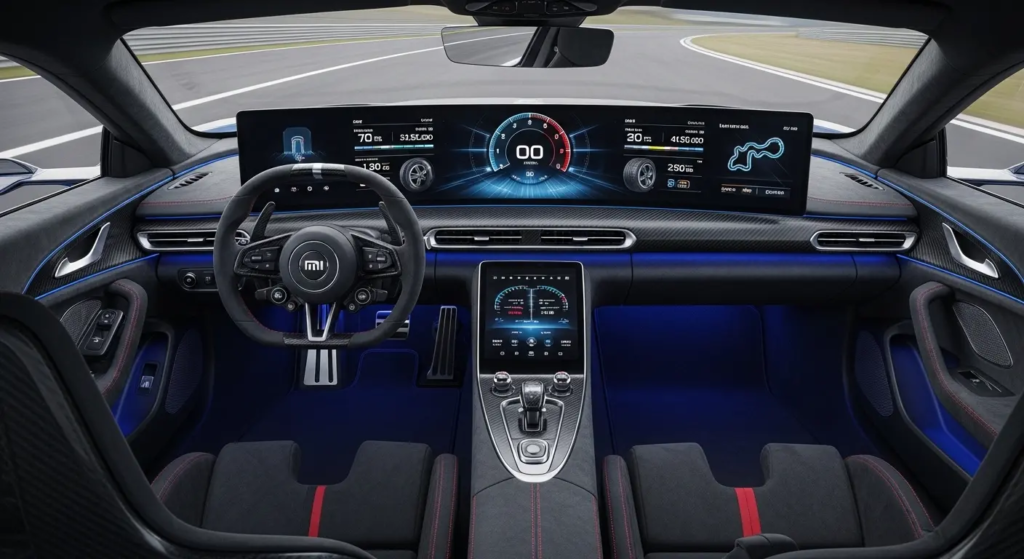
Inside the cockpit, Xiaomi ignores the standard bucket seat trope. Instead, designers opted for a single-piece, sofa-style bench. This choice highlights the company’s background in consumer electronics and lifestyle products, emphasizing comfort and “AI-driven intelligence” over the spartan, bone-shaking interiors of traditional racers.
A massive panoramic screen stretches across the bottom of the dashboard, providing a head-up display that rivals the latest iDrive systems discussed by MotorTrend. The interface integrates AI to predict racing lines and monitor battery thermals in real-time, offering a glimpse into how Xiaomi plans to dominate the smart-cabin market.
The Magnetic Wheel Revolution
One of the most striking visual details involves the wheel covers. Xiaomi implemented semi-transparent covers that use magnetic levitation to remain perfectly stationary while the wheel spins behind them. This ensures that the Xiaomi branding and aerodynamic fins stay in the optimal position at all times, regardless of velocity. It is a level of detail that traditional car companies often overlook, but one that a tech company obsessed with “cool factor” excels at executing.
The invitation to join the Vision Gran Turismo project acknowledges Xiaomi’s rapid ascent. Design boss Tianyuan Li noted that the collaboration allowed their global teams to push boundaries without the constraints of mass production. This “limitless” design process often yields the best innovations for future road cars.
Market Implications for the SU7 Ultra
While the Vision GT stays within the pixels of Gran Turismo 7, its DNA directly informs the SU7 Ultra. Xiaomi is currently testing the Ultra at the Nürburgring, aiming for the title of the fastest four-door electric sedan. The lessons learned in virtual wind tunnels regarding the “Active Wake Control System” and underbody suction will undoubtedly find their way into the production hardware.
Xiaomi’s entry into the hypercar space proves that the “smartphone on wheels” era has arrived. They aren’t just building a car; they are building a high-speed ecosystem. As legacy brands struggle with software integration, Xiaomi moves in the opposite direction, mastering the digital world before perfecting the physical one. This concept car isn’t a toy—it’s a warning shot to every manufacturer in Stuttgart and Maranello.