
Nio just shattered the electric vehicle status quo by executing 146,649 battery swaps in a single 24-hour window. This milestone occurred on February 15, coinciding with the massive travel surge of China’s Spring Festival and Lunar New Year. While western manufacturers struggle with charging infrastructure anxiety, this Chinese disruptor proves that “refueling” an EV can mirror the speed of a traditional petrol stop.
Why Nio Battery Swapping Outpaces Traditional Charging
The core appeal of the Nio ecosystem lies in its ruthless efficiency. A standard high-speed charger requires roughly 30 minutes to bring a modern EV battery from 10% to 80% capacity. In contrast, a Nio Power Swap station completes a full replacement in just three minutes. This 900% increase in time efficiency fundamentally changes the ownership proposition for long-distance drivers.
Nio currently operates a network of 3,700 battery swap stations across China. These automated hubs allow owners to rent batteries rather than own them outright, creating a flexible “Battery as a Service” (BaaS) model. This structure allows drivers to upgrade to larger capacity units for road trips or downgrade for city commuting, ensuring they never carry more weight—or cost—than necessary. According to TopGear, the brand recently surpassed 100 million total swaps, signaling that this isn’t a pilot program but a mature, scalable solution.
Global Ambitions and the Firefly Expansion
While Nio dominates its domestic market, its eyes remain fixed on global expansion. The brand recently confirmed plans to enter the Australian market in 2026. However, the tip of the spear for this expansion isn’t a luxury sedan, but the Firefly—a small hatchback designed to compete directly with the BYD Dolphin and the MG4.
Interestingly, the Firefly deviates from the flagship’s swappable architecture. It utilizes a 42kWh Lithium Iron Phosphate (LFP) battery, delivering approximately 330km of range under WLTP testing. While it lacks the swap capability, it supports 29-minute fast charging. This strategic shift suggests Nio recognizes that building a swap network in new territories like Australia or Europe requires massive capital investment that must follow vehicle sales, not precede them.
The Industrial Pivot Toward Swapping
Nio no longer stands alone in its belief in modular energy. Industry giants are taking note of the data coming out of China. European powerhouse Stellantis previously explored heavy investment in battery swapping trials, though it later pivoted its primary EV strategy. Despite this, the logic of swapping remains sound for fleet operators and high-mileage users who cannot afford 30-minute downtimes.
Reports from Autocar highlight that Nio has begun forming alliances with other manufacturers like Geely and Changan to standardize battery packs. Standardization is the “holy grail” of this technology. If multiple brands utilize the same battery dimensions and connection points, the utility of each swap station triples. This collaborative approach mirrors the early days of the petrol station, where a single pump served every brand on the road.
Performance and Design Implications
From a design perspective, Nio’s commitment to swapping forces a specific engineering philosophy. The chassis must accommodate a quick-release mechanism that maintains structural rigidity and waterproof sealing through thousands of cycles. This adds weight and complexity compared to a “cell-to-pack” design where the battery acts as a stressed member of the frame.
Critics often argue that solid-state batteries will eventually render swapping obsolete by offering 5-minute charge times. However, Nio’s recent performance proves that the infrastructure for swapping exists now, while solid-state tech remains years away from mass-market price parity. As noted by Car and Driver, the partnership between Nio and Geely suggests the industry is preparing for a multi-pronged approach to energy delivery.
The Australian Infrastructure Hurdle
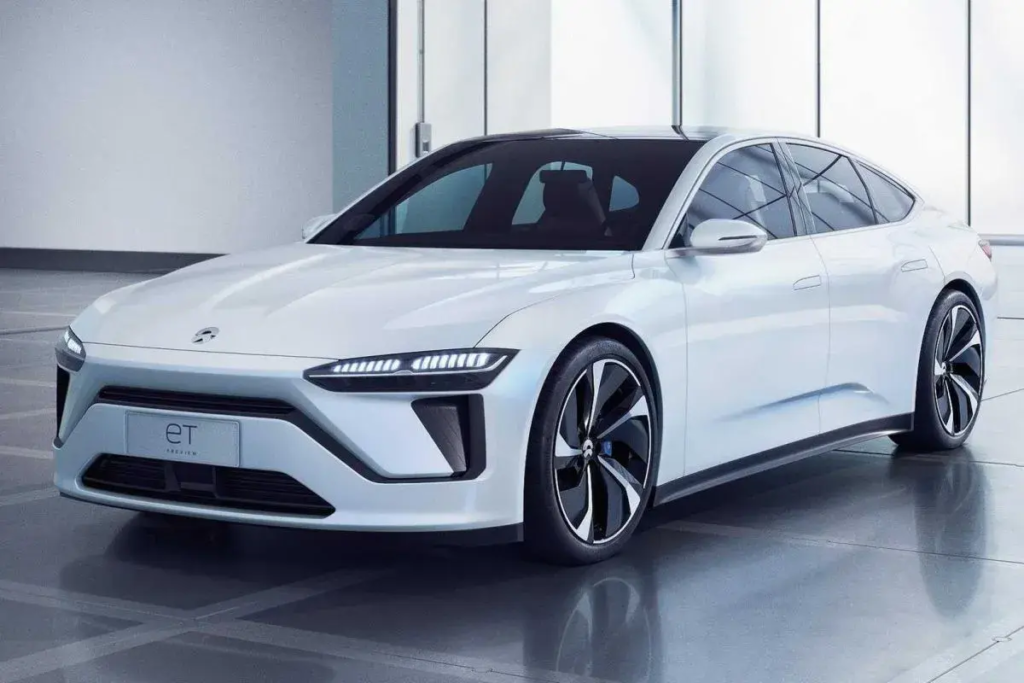
For Australian enthusiasts, the 2026 launch date brings a mix of excitement and skepticism. Australia’s vast distances make the swap concept incredibly attractive, yet the “chicken and egg” problem remains. Without a dense network of stations, a swappable Nio ET7 is just a heavy EV with a complicated floor pan.
Nio must decide whether to lead with infrastructure or follow with the Firefly. Current indicators suggest the brand will focus on the hatchback to build volume before committing the millions of dollars required to dot the East Coast with swap stations. Until that infrastructure arrives, Australian motorists will continue to rely on traditional fast-chargers, watching with envy as Chinese drivers swap and go in the time it takes to buy a coffee.
Nio’s record-breaking day isn’t just a marketing win; it’s a proof of concept. Swapping 146,649 batteries in 24 hours proves that the technology handles peak load better than any current plug-in solution. As the brand prepares its 2026 Australian assault, the automotive world waits to see if this “swap secret” can translate to a global stage.