Manchester United has once again demonstrated that in modern football, financial decisions are rarely as simple as profit or loss. The club’s reported £16.7 million compensation payout to Ruben Amorim initially raised eyebrows, but recent developments suggest it may be one of the smartest investments in their recent history.
What seemed like a costly managerial exit has quickly evolved into a calculated move that delivered both sporting success and financial upside.
The True Cost Behind the Managerial Change
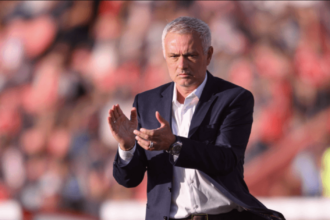
According to the club’s latest financial disclosures, the £16.7 million payout covered the remaining contract obligations of Amorim and his coaching staff following his departure in January.
In isolation, this figure appears steep. However, within the context of the Premier League, such compensation packages are increasingly common. Clubs operating at the elite level are often forced to make decisive—and expensive—choices to remain competitive.
At the time of Amorim’s departure, Manchester United were struggling in sixth place, lacking consistency and drifting away from Champions League qualification. The season risked becoming another costly failure both on and off the pitch.
The Michael Carrick Turnaround
The appointment of Michael Carrick—initially on an interim basis—proved to be the turning point.
Under Carrick’s leadership, Manchester United experienced:
- A significant tactical reorganization
- Improved dressing room morale
- Greater midfield balance and control
The result was a remarkable climb up the table, culminating in a third-place finish and automatic qualification for the UEFA Champions League.
This turnaround not only reshaped the season but also redefined the narrative around the Amorim payout.
Why £16.7 Million Is Actually a Bargain
To understand why Manchester United views the payout as a “bargain,” it’s essential to look at the financial power of the UEFA Champions League.
Participation in Europe’s elite competition can generate:
- £70 million to £100 million in revenue per season
- Broadcasting income through the “market pool”
- Performance-based prize money
- Increased global exposure and commercial opportunities
Even in a conservative scenario—early elimination in the group stage—the club is still guaranteed revenue that far exceeds the £16.7 million spent on Amorim’s exit.
From a business standpoint, the return on investment (ROI) becomes clear. Had the club failed to secure a top-four finish, the financial losses would have significantly outweighed the cost of the managerial change.
Protecting Commercial Strength and Global Brand Value
Beyond direct revenue, Champions League qualification plays a critical role in maintaining Manchester United’s global stature.
Many of the club’s commercial partnerships include performance-related clauses tied to European participation. Missing out on the Champions League could result in reduced sponsorship income and diminished global reach.
By securing qualification, the club has:
- Protected high-value sponsorship agreements
- Sustained its global commercial appeal
- Increased matchday revenue at Old Trafford
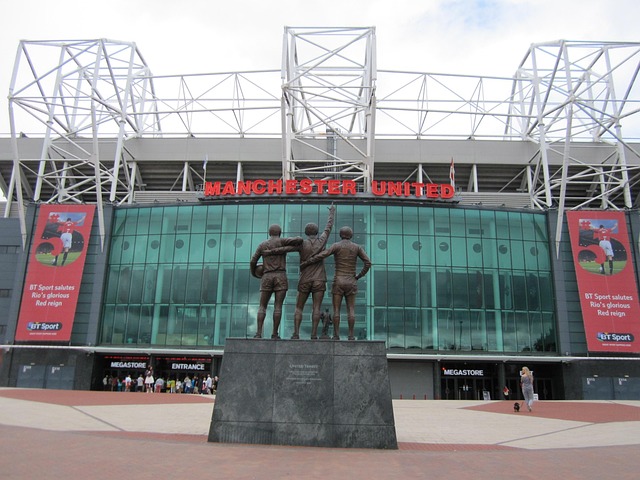
European nights at Old Trafford remain among the most valuable assets in world football, blending sporting prestige with global entertainment appeal.
Impact on Squad Stability and Player Ambitions
The return to the Champions League has also reinforced belief within the squad. Elite players are far more likely to commit to a project that consistently competes at the highest level.
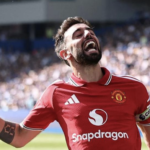
Bruno Fernandes, for instance, has repeatedly emphasized his ambition to bring major trophies back to Manchester United. His leadership reflects a broader shift in mentality within the squad—one that prioritizes long-term success over short-term fixes.
This renewed ambition is closely tied to the club’s improved competitive position, as Champions League football not only attracts top talent but also helps retain key players. The growing confidence within the dressing room signals that Manchester United are no longer in a rebuilding phase, but are instead preparing to challenge at the highest level once again. For a deeper look at Fernandes’ vision and his determination to deliver silverware, you can explore our full analysis here: https://nexomagz.com/bruno-fernandes-manchester-united-trophy-ambition/
A Long-Term Financial Outlook
Looking ahead, Manchester United’s financial trajectory appears increasingly positive.
A deep run in the Champions League—reaching the quarter-finals or beyond—could push total revenue beyond £100 million. This would provide additional resources for:
- Squad reinforcement
- Infrastructure improvements
- Long-term strategic stability
Such growth creates a sustainable cycle where on-field success directly fuels financial expansion.
Conclusion: The Cost of Action vs. Inaction
The £16.7 million payout to Ruben Amorim ultimately serves as a compelling example of modern football economics.
While the figure initially appeared excessive, it highlights a key principle: the cost of inaction can often be far greater than the cost of decisive change.
By making a bold managerial decision, Manchester United not only salvaged their season but also positioned themselves for both financial and competitive success.
As the club prepares for another Champions League campaign, the Amorim payout is no longer viewed as a loss—but as a calculated investment that has already delivered significant returns.