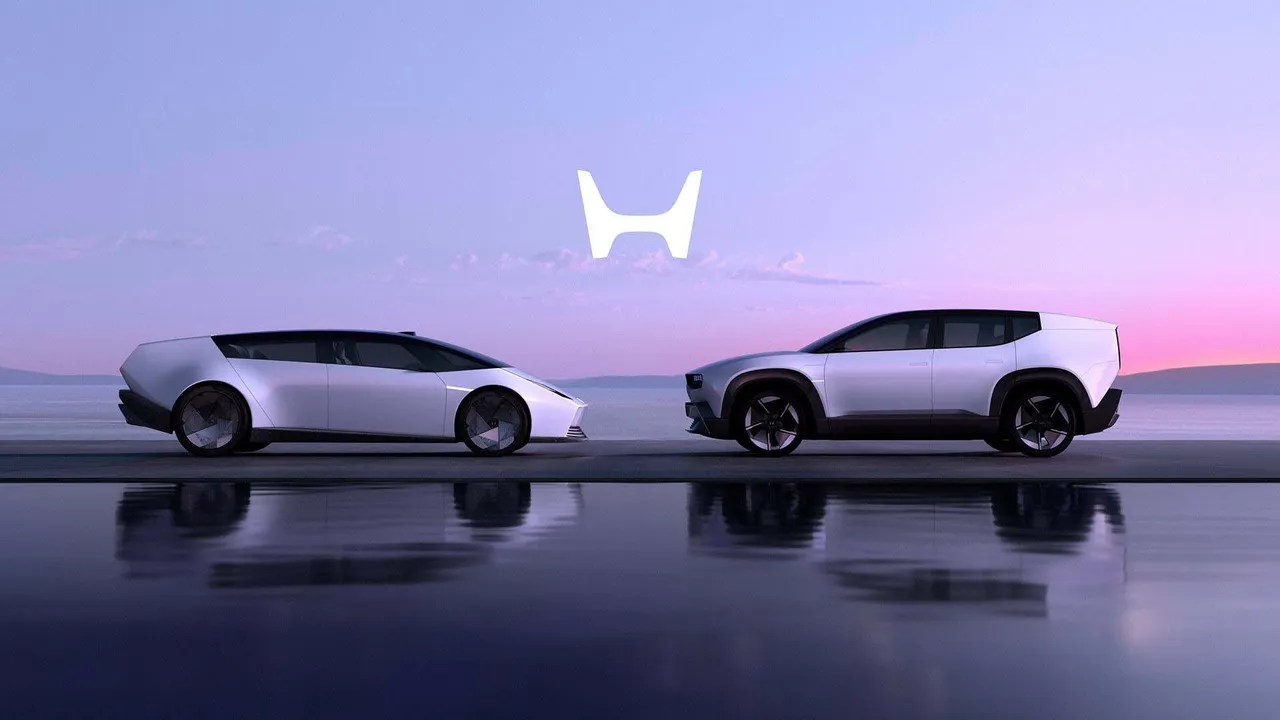
In late 2024, I stood in a high-tech Japanese facility watching Honda engineers demonstrate the future of the automobile. It was a masterclass in the “thin, light, and wise” philosophy—a radical departure from the heavy, bloated electric vehicles currently clogging our roads. But eighteen months later, that vision has evaporated. Honda has stunned the automotive world by pulling the plug on its ambitious 0 Series electric car project, a move that signals a seismic shift in the global transition to electrification and leaves a multi-billion-pound hole in the company’s balance sheet.
Why the Honda 0 Series was meant to be the ultimate reset
The 0 Series wasn’t just another product line; it was a manifesto. Named after the legendary 0 Series Shinkansen bullet train—the tech that effectively reset public transport in the 1960s—this family of EVs was designed to bypass the “bigger is better” battery race. While rivals were stuffing 1,000kg batteries into 2.5-tonne SUVs, Honda was focusing on efficiency.
The mantra was simple: “Thin, Light, Wise.” Engineers showed us revolutionary mega-casting techniques, using colossal robotic presses to create battery cases that were 6% thinner than anything else on the market. These weren’t just incremental gains. By shrinking the inverters by 40% and reducing motor friction by 17%, Honda claimed they could achieve competitive range with much smaller, lighter batteries. It was the kind of virtuous engineering circle that makes TopGear writers weak at the knees.
However, the technical brilliance of the 0 Series seems to have been its undoing. The investment required to tool up brand-new factories with these specialized mega-presses was astronomical. We are talking about a “space program” level of commitment. As the automotive landscape shifted toward more affordable hybrids, the business case for a bespoke, high-tech EV platform began to crumble under its own weight.
The staggering £11.5 billion cost of Honda’s electric retreat
The scale of this U-turn is almost impossible to wrap one’s head around. Honda is reportedly writing off approximately 2.5 trillion Yen—roughly £11.5 billion. To put that into perspective, that is enough to fund several entire Formula 1 seasons or develop three generations of a world-class supercar. For a company known for its fiscal discipline, this isn’t just a pivot; it’s a catastrophe.
Why now? The company points to a “perfect storm” of geopolitical and economic factors. Between the threat of new tariffs in the US market and a general cooling of consumer demand for pure EVs, the risk of launching a premium-priced, tech-heavy electric range became untenable. Reports from Autocar and other industry insiders suggest that even with the 0 Series’ advanced tech, the projected EPA range of 300 miles was already looking “average” compared to what Tesla and the Chinese giants are achieving today.
Is the car industry facing a “too big to fail” moment?
The news from Japan doesn’t exist in a vacuum. We are seeing a broader contraction across the board. As noted by Car and Driver, even heritage brands like Porsche have seen significant profit dips, while Volkswagen is contemplating historic factory closures in Germany. The narrative that the transition to EVs would be a smooth, linear climb has been well and truly shattered.
The most terrifying thought for car enthusiasts and industry analysts alike is the survival of the household names we grew up with. If a giant like Honda, with its immense R&D capability and engineering heritage, decides that an £11 billion loss is “safer” than trying to sell its next-generation EVs, what does that say about the rest of the industry?
The Chinese manufacturers—BYD, Geely, and Xiaomi—continue to move at a pace that seems to defy the current market gloom. As Jalopnik often points out, the agility of these new players is making the traditional “Tanker-like” movements of Japanese and European giants look dangerously slow.
For now, Honda will likely double down on its hybrid offerings—a segment where it still excels with the Civic and CR-V. But the dream of the 0 Series, the “Thin, Light, Wise” future that felt so tangible in that Japanese lab just months ago, is dead. In the fiercely unforgiving landscape of 2026, it seems no brand is truly too big to fail.
The question remains: will Honda be remembered for its bravery in cutting its losses, or will this be the moment the sun began to set on one of Japan’s greatest automotive icons? Only time, and perhaps the success of their upcoming hybrid fleet, will tell. For more on the changing tides of the industry, check out our deep dive on Motor Trend regarding the global EV slowdown.
Discover the latest car news, reviews, and automotive trends by exploring our coverage here.