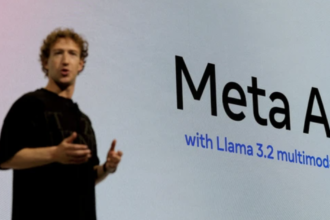

Meta is reportedly preparing to slash its workforce by 20% as Mark Zuckerberg pivots the social media giant toward a future dominated by artificial intelligence. This move represents a tectonic shift in how Big Tech balances human capital against compute power. While the prospect of 15,000 workers losing their jobs typically triggers market anxiety, Wall Street responded with a 3% surge in share price. Investors clearly prefer GPUs over headcounts in the current economic climate.
Why Meta is Cutting 15,000 Jobs for AI Efficiency
The reported plan involves senior leaders drafting strategies to reduce the current workforce of 79,000 by more than one-fifth. This would eclipse the TechCrunch report of the 2022 purge, where Meta cut 11,000 roles. Zuckerberg is no longer just “trimming fat”; he is re-architecting the entire company around the “Year of Efficiency” 2.0. By eliminating layers of middle management and non-essential roles, Meta aims to free up billions for the most expensive arms race in tech history.
The internal mandate focuses on integrating AI into every workflow. Zuckerberg believes that a leaner team, augmented by high-level automation, can outpace the bloated structures of legacy social media. This isn’t just about saving money; it’s about survival in a landscape where “super personal intelligence” is the new product standard.
The $135 Billion Compute Gamble
Building the infrastructure for artificial intelligence requires staggering capital. Meta revealed in its latest earnings report that capital expenditure for 2026 will hit between $115 billion and $135 billion. This is nearly double the previous year’s spend. This massive investment places Meta in a direct collision course with other “hyperscalers” like Amazon and Alphabet, who are collectively pouring $700 billion into the AI vacuum.
As noted by Wired, the cost of the H100 chips and the energy required to run them is forcing CEOs to make ruthless choices. For Zuckerberg, the choice is clear: sacrifice the stability of 15,000 employees to ensure Meta owns the underlying foundation of the next computing platform. The company is even pivoting its hardware focus, likely impacting future Related Topic developments as AI-driven software takes priority over experimental metaverse hardware.
Efficiency Over Empathy: The New Tech Playbook
Meta is not the only company following this grim blueprint. Jack Dorsey’s Block recently announced it would shed 4,000 employees to leverage AI automation. Similarly, Engadget detailed how Amazon cut 16,000 positions in early 2026 to flatten its hierarchy. Data from Challenger, Gray & Christmas confirms a brutal trend: AI is cited as the primary driver for over 12,000 layoffs across the US tech sector this year alone.
Analysts at Jefferies suggest that Meta’s willingness to cut staff while increasing investment signals a broader market shift. AI is no longer a “future” project; it is actively driving productivity and rendering specific human-led processes obsolete. When a company like Meta increases its valuation while firing 20% of its staff, it sends a clear message to Silicon Valley: human capital is a liability, and compute is the only asset that matters.
The Scale AI Talent Raid
To lead this new era, Meta is aggressively poaching top-tier talent from the companies it once partnered with. Zuckerberg recently made waves by effectively “acquiring” the leadership of Scale AI, including CEO Alexandr Wang and several key researchers. Last year, Meta invested $14.3 billion into Scale AI, only to eventually strip the company of its most valuable intellectual assets.
This talent raid underscores the desperation for “super intelligence” expertise. Meta is no longer looking for generalist engineers; it wants the architects of large language models who can build proprietary systems that don’t rely on third-party APIs. By bringing these experts in-house and clearing out the administrative bloat, Meta hopes to deliver a version of AI that feels truly personal to its billions of users.
As The Verge previously noted, the market rewards companies that prioritize AI-driven margins over workforce morale. For the consumers using Instagram, WhatsApp, and Facebook, the impact will likely manifest as more aggressive algorithmic curation and AI-generated content. For the workers, the message is far more chilling: your role is only as safe as the next AI breakthrough.
For more updates on similar news and trending global stories, visit our latest technology section.