
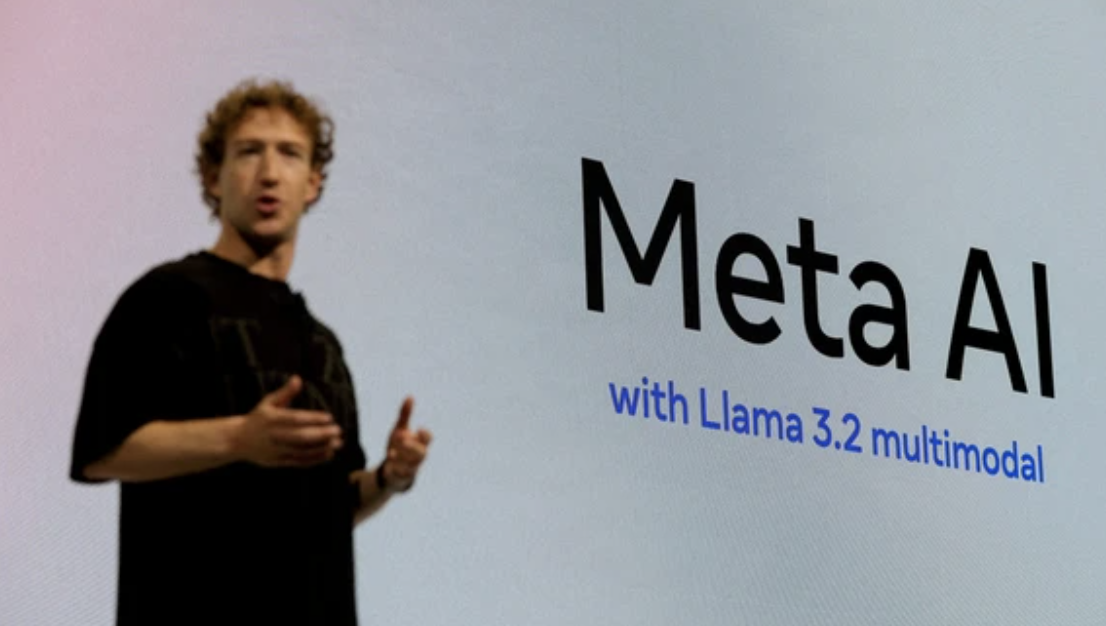
Mark Zuckerberg is tired of Meta playing catch-up. After a year of watching OpenAI, Anthropic, and Google dominate the cultural zeitgeist with their respective LLMs, the social media giant is finally ready to strike back. Today, the company officially unveiled Muse Spark, the first major artificial intelligence model to emerge from the newly formed Meta Superintelligence Labs. This release marks a pivotal moment for the company, coming just nine months after Meta made waves in the industry by poaching Alexandr Wang from Scale AI in a deal linked to a staggering $4.3 billion investment. For consumers, Muse Spark isn’t just another backend update; it represents a fundamental shift in how Meta’s billion-user ecosystem will interact with intelligence, moving away from third-party dependencies toward a vertically integrated future.
Meeting Muse Spark: Meta’s New Superintelligence Foundation
Unlike the sprawling, massive models we’ve seen from competitors, Meta is positioning Muse Spark as a “small and fast” contender. According to internal reports and early briefings, the model was built from the ground up by Meta Superintelligence Labs to prioritize efficiency without sacrificing the “reasoning” capabilities required for complex tasks. While previous iterations of Meta’s AI struggled to gain traction among developers, Zuckerberg’s new strategy focuses on a leaner, more agile architecture.
“The last nine months have been about rebuilding our AI stack from scratch,” Meta representatives told CNBC. The goal was to move faster than any previous development cycle at the company. While Muse Spark is the entry-point model, it is reportedly capable of handling sophisticated queries in fields like mathematics, health, and science. This foundation is designed to be the bedrock for a new generation of consumer-facing tools that feel less like a chatbot and more like a proactive assistant.
How Muse Spark Will Change Your Instagram and WhatsApp
The most immediate impact of Muse Spark will be felt within the apps millions of people use every day. Meta plans to integrate the model into the standalone Meta AI assistant and across its entire family of apps—Facebook, Instagram, WhatsApp, and Messenger—within the coming weeks. Perhaps most exciting for hardware enthusiasts is the integration into Ray-Ban Meta AI glasses, where the speed of Muse Spark could significantly reduce the latency currently found in voice-activated queries.
One of the standout features of this rollout is the introduction of specialized “modes” for different user needs:
* Contemplating Mode: A high-reasoning state designed for deep-dive queries, such as document analysis or complex problem-solving.
* Shopping Mode: A consumer-focused feature that helps users decorate rooms or find clothing items based on visual and textual prompts.
* Vibes AI Integration: Meta is also planning to use Muse Spark to eventually power its “Vibes AI” video features, replacing current third-party models from The Verge-reported partners like Black Forest Labs.
By bringing these capabilities in-house, Meta is following a path similar to Apple’s “Apple Intelligence” strategy, as detailed in recent Wired analyses, focusing on the intersection of hardware, software, and private data.
The Billion-Dollar Pivot: Meta’s High-Stakes Gamble
The release of Muse Spark comes at a time when the financial stakes for AI have never been higher. Meta’s latest earnings reports indicate that the company is nearly doubling its capital expenditure, with AI infrastructure spending projected to hit between $115 billion and $135 billion by 2026. This massive investment is a direct response to the market dominance of OpenAI and Anthropic, who are now collectively valued at over $1 trillion.
While Meta has historically championed the “open source” movement with its Llama models, Muse Spark is launching as a proprietary, closed system. This is a notable departure from the company’s previous rhetoric, though Meta suggests that future iterations might return to an open-source framework. For now, keeping the technology “in the kitchen” allows Meta to fine-tune the user experience and ensure that the model is perfectly optimized for its own advertising and commerce ecosystems.
Industry analysts at TechCrunch suggest that this shift toward proprietary models is a defensive move to protect Meta’s massive user data advantage. By controlling the model, Meta controls the data loop, ensuring that every interaction with a “Shopping Mode” prompt feeds back into its core business of targeted advertising.
Why the Efficiency of Muse Spark Matters for Consumers
In the race for AI supremacy, the “bigger is better” mantra is starting to show its cracks. Large models are expensive to run and slow to respond. By focusing on a “small and fast” model, Meta is betting that consumers value responsiveness over raw, encyclopedic knowledge. If you are asking your Ray-Ban glasses to identify a landmark or your WhatsApp assistant to summarize a group chat, you don’t want to wait five seconds for a server in Oregon to process the request.
This focus on efficiency also hints at Meta’s long-term goal of on-device AI. As discussed in our previous analysis of Meta’s silicon strategy, the ultimate goal is to run models like Muse Spark directly on your phone or glasses, bypassing the cloud entirely to improve privacy and speed.
Can Meta Catch Up?
The debut of Muse Spark is a clear signal that the “experimentation phase” of Meta’s AI journey is over. With Alexandr Wang at the helm of Superintelligence Labs and a war chest of over $100 billion, Meta is no longer just a social media company; it is an AI infrastructure powerhouse.
However, the competition isn’t standing still. Google’s Gemini is becoming more deeply integrated into Android, and OpenAI continues to push the boundaries of what is possible with multimodal reasoning. As noted by Engadget, the real test for Meta will be whether users actually find these new “Shopping” and “Contemplation” modes useful, or if they will remain gimmicks in an already crowded digital landscape.
For now, Muse Spark represents a bold, expensive, and necessary step for Meta. If Zuckerberg wants to own the next platform—be it the metaverse, smart glasses, or the AI assistant in your pocket—he needs a foundation that he owns and operates. Today, he just laid the first brick.
For more updates on similar news and trending global stories, visit our latest technology section.