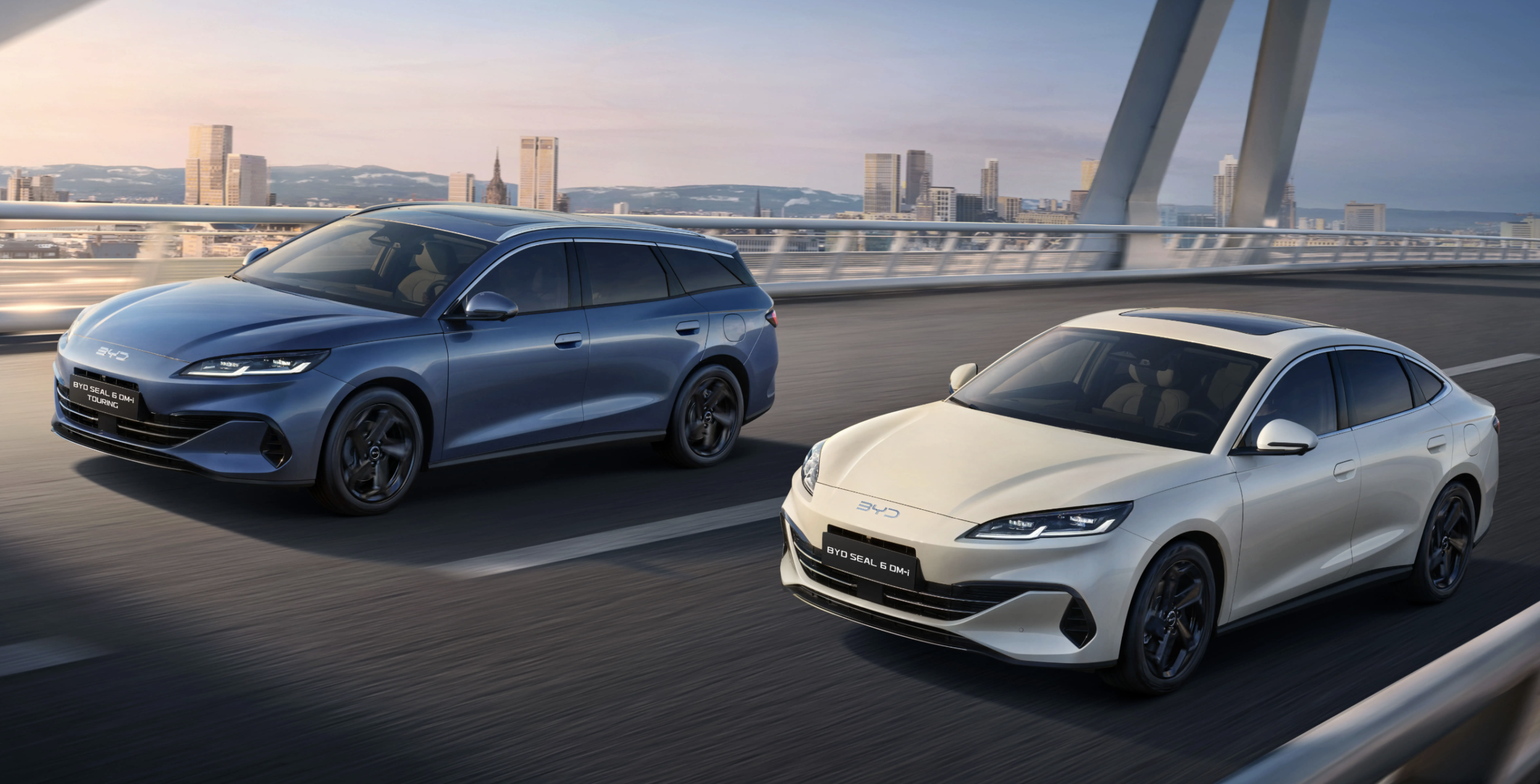
The moment the 2026 BYD Seal 6 touched down in Australia, it stopped being just another car launch—it became a statement. A bold, calculated strike aimed directly at one of the most untouchable nameplates in the segment: the Toyota Camry.
For decades, the Camry has been the default choice for buyers who value reliability over excitement. But BYD isn’t playing by those rules. With aggressive pricing, plug-in hybrid technology, and a wagon variant that the Japanese giant abandoned years ago, the Seal 6 isn’t here to compete—it’s here to disrupt.
A Direct Hit at the Camry’s Comfort Zone
At a starting price of $34,990, the Seal 6 undercuts most mid-size competitors while offering something the Camry still doesn’t at this price point: plug-in hybrid capability.
That alone changes the conversation.
Instead of choosing between fuel efficiency and electrification, buyers now get both—without stepping into premium territory. And BYD knows exactly what it’s doing. This is not accidental pricing. This is market pressure, engineered.
The addition of the Touring wagon ($39,990) makes the strategy even sharper. While Toyota walked away from wagons, BYD is leaning into them—targeting buyers who want SUV practicality without SUV inefficiency.
1300km Range Changes the Game
On paper, the Seal 6 sounds impressive. On the road, it could be transformative.
- 1.5L petrol engine + electric motor
- Up to 163kW combined output
- EV-only range up to 100km (wagon)
- Total range exceeding 1300km
That last number is the headline.
This isn’t just about efficiency—it’s about freedom. Daily commuting on electric power, long-distance driving without charging anxiety. It’s the kind of flexibility traditional hybrids can’t match.
And with DC fast charging up to 48kW, this isn’t your typical slow-charging PHEV. It’s built for real-world use, not just lab figures.
Interior: Tech-First, But Still Practical
Step inside, and the Seal 6 feels like it’s punching above its price bracket.
The centerpiece is BYD’s signature 12.8-inch rotating touchscreen, paired with a digital cluster and a clean, modern layout. It’s tech-forward, but not overwhelming.
More importantly, it’s practical:
- 550L boot (sedan)
- 670L boot (wagon)
- Flat floor thanks to Blade Battery packaging
This is where BYD quietly wins. It’s not just about flashy screens—it’s about usable space.
Why This Car Actually Matters
The Seal 6 arrives at the perfect moment.
Fuel prices remain volatile. Buyers are more cost-conscious than ever. And EV adoption, while growing, still comes with hesitation.
BYD sits right in the middle of that gap.
It offers:
- EV-like daily driving
- Petrol backup for long trips
- Lower upfront cost than many hybrids
That combination is dangerous—for competitors.
It’s no surprise BYD is aggressively expanding its lineup. If you’ve followed their recent moves, including the evolution of their SUV strategy in this breakdown:
👉 https://nexomagz.com/byd-sealion-6-secrets-upgrades/
you’ll notice a clear pattern: dominate every segment, fast.
The Real Question: Is the Camry in Trouble?
For years, the Camry has survived because it was the safest choice.
But “safe” doesn’t win markets forever.
The Seal 6 challenges that mindset by offering:
- More tech
- More flexibility
- Lower price entry
- A fresh design language
If BYD can deliver reliability to match its ambition, this won’t just be competition—it will be a shift.
📸 IMAGE PLACEHOLDER
Alt text: Interior view of BYD Seal 6 highlighting rotating display and cabin layout
Final Verdict: Disruptor, Not Contender
The 2026 BYD Seal 6 doesn’t feel like a follower trying to catch up.
It feels like a product designed to force change.
And that’s the real story here.
Because if this car succeeds, the question won’t be “Is BYD catching Toyota?”
It will be:
“How long can Toyota hold its ground?”