
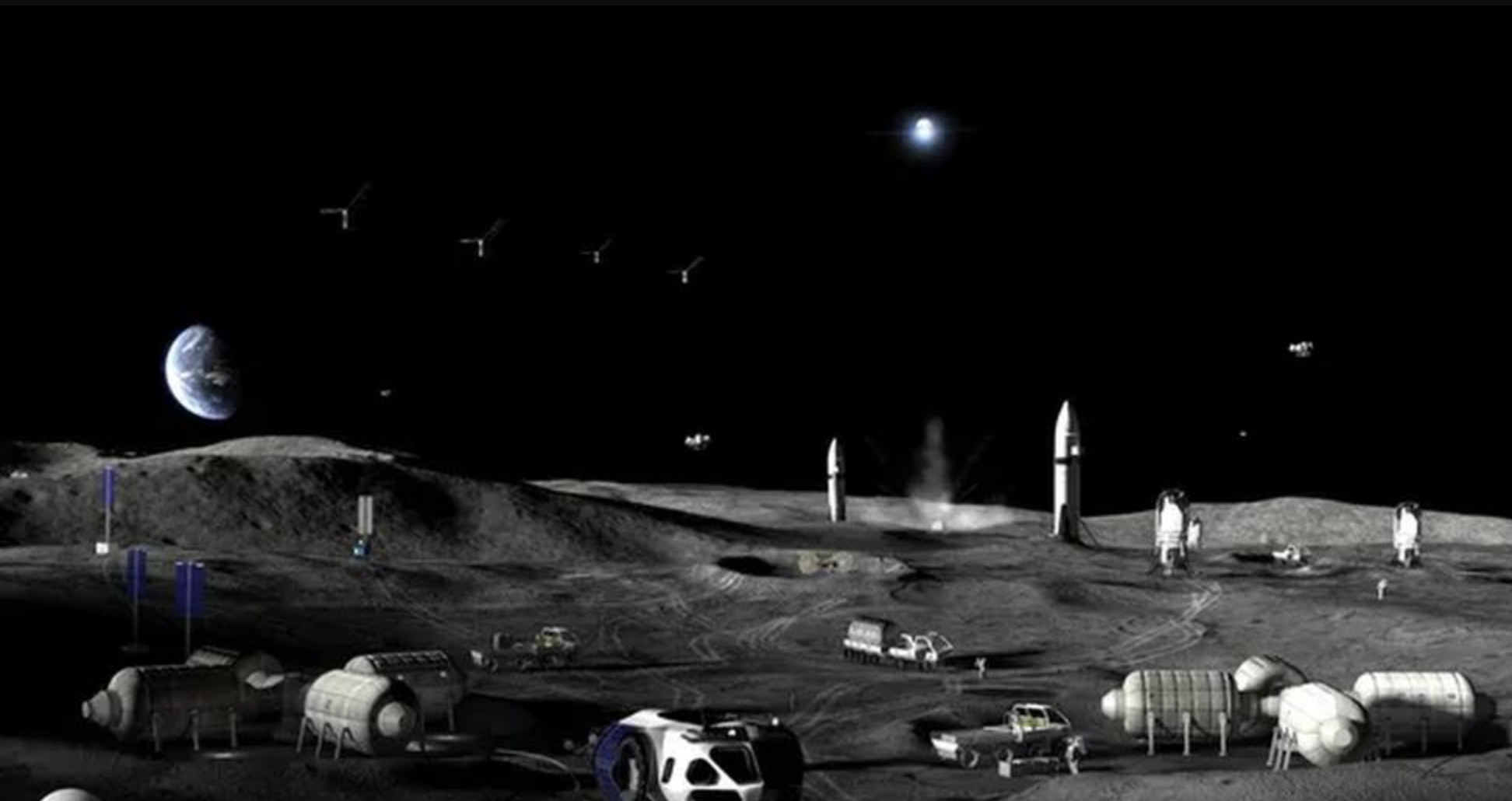
The dream of a permanent human presence beyond Earth is no longer confined to the realms of science fiction. NASA has officially accelerated its timeline for the NASA Moon Base, announcing that the foundational construction phase will commence as early as 2026. This ambitious endeavor represents a paradigm shift from temporary lunar visits to long-term habitation, signaling a new era for the “Sportainment” of space exploration—where high-stakes engineering meets the ultimate frontier of human endurance. By leveraging a network of private sector titans, NASA is positioning the lunar surface as the next great arena for technological supremacy and scientific discovery.
The Three Pillars: NASA Moon Base Missions I, II, and III
The roadmap to a functional lunar habitat is divided into three critical preliminary missions, each designed to test specific logistics and deployment capabilities. According to recent updates, the sequence will begin in the autumn of 2026 with Moon Base I. This mission is primarily a cargo run, tasked with delivering essential hardware, including the Lunar Plume-Surface Studies instruments. The heavy lifting for this phase will be handled by Blue Origin’s Blue Moon Mark 1 Endurance lander, marking a significant milestone for the company founded by Jeff Bezos.
Following closely, Moon Base II will utilize the Griffin lander, developed by Astrobotic. Its primary objective is the deployment of the FLIP rover, a specialized vehicle created by Astrolab. This rover is designed to scout the terrain and provide data necessary for designing future vehicles that will navigate the rugged lunar landscape.
Finally, Moon Base III will see the Nova-C Trinity lander from Intuitive Machines touch down. This mission carries a global flavor, transporting instruments from the European Space Agency (ESA) and the Korea Astronomy and Space Science Institute (KASI) to study “lunar swirls”—mysterious light and dark patterns on the Moon’s surface. These missions are being watched closely by global analysts, much like the lead-up to a major international sporting event, given the prestige and technical difficulty involved.
The Business of Space: Multi-Million Dollar Rover Contracts
The construction of the NASA Moon Base is not just a scientific feat; it is a massive economic engine. NASA has distributed substantial contracts to ensure that by 2028, the infrastructure is ready for human occupancy. The financial scale of these partnerships reflects the high stakes of the modern space race:
* Astrolab: Secured a $219 million contract for the CLV-1 rover.
* Lunar Outpost: Awarded $220 million for the development of the Pegasus rover.
* Blue Origin: Received $280.4 million specifically for transport and delivery logistics using the Mark 1 lander.
These rovers are marvels of modern engineering. Each vehicle is expected to have a range of up to 200 kilometers, capable of being operated autonomously from Earth or driven manually by astronauts. The integration of such technology suggests a future where lunar “rallies” or long-distance exploration could become a televised spectacle, blending the lines between rigorous science and elite performance, much like the coverage found on ESPN regarding extreme endurance sports.
Blue Origin’s Dual Role in Lunar Logistics
Jeff Bezos’ Blue Origin has emerged as a cornerstone of the NASA Moon Base strategy. While the Mark 1 lander focuses on the immediate need for cargo and equipment transport, the company is concurrently developing the Mark 2 lander. The Mark 2 is a significantly more complex vessel designed for human transport.
The synergy between NASA’s public mission and Blue Origin’s private innovation is a prime example of the growing “Sportainment” sector within the aerospace industry. Much like the NBA relies on diverse franchises to build a league, NASA is relying on a “league” of private companies to build a colony. This partnership ensures that while NASA provides the oversight and scientific goals, the private sector provides the competitive drive and rapid innovation necessary to meet the 2026 deadline.
Mapping the Unknown: High-Resolution Lunar Exploration
One of the biggest hurdles remaining is our lack of granular knowledge regarding the lunar surface. NASA Administrator Jared Isaacman has noted that current imagery often lacks the detail required for precise construction. To solve this, the NASA Moon Base program includes the development of the “MoonFall” drone.
Currently, the best lunar imagery has a resolution of about one meter. The MoonFall drone aims to improve this to a staggering one centimeter. This high-definition mapping is essential for the safety of the Artemis IV mission, which is scheduled to bring the first group of astronauts to the surface in 2028. For those interested in how these technological leaps compare to terrestrial innovations, you can read our deep dive into the future of the lunar economy.
As we approach 2026, the world will be watching the Moon with renewed intensity. The NASA Moon Base is more than a cluster of buildings; it is a testament to human ingenuity and the new frontier of global business and entertainment. With the combined power of NASA and private industry, the “Man on the Moon” is about to become “Man living on the Moon.”
For more updates on the intersection of space technology and global business, stay tuned to NexoMagz, your home for the latest in Sportainment and elite industry trends. Additional technical details on lunar missions can also be found on international news hubs that track global collaborative efforts.