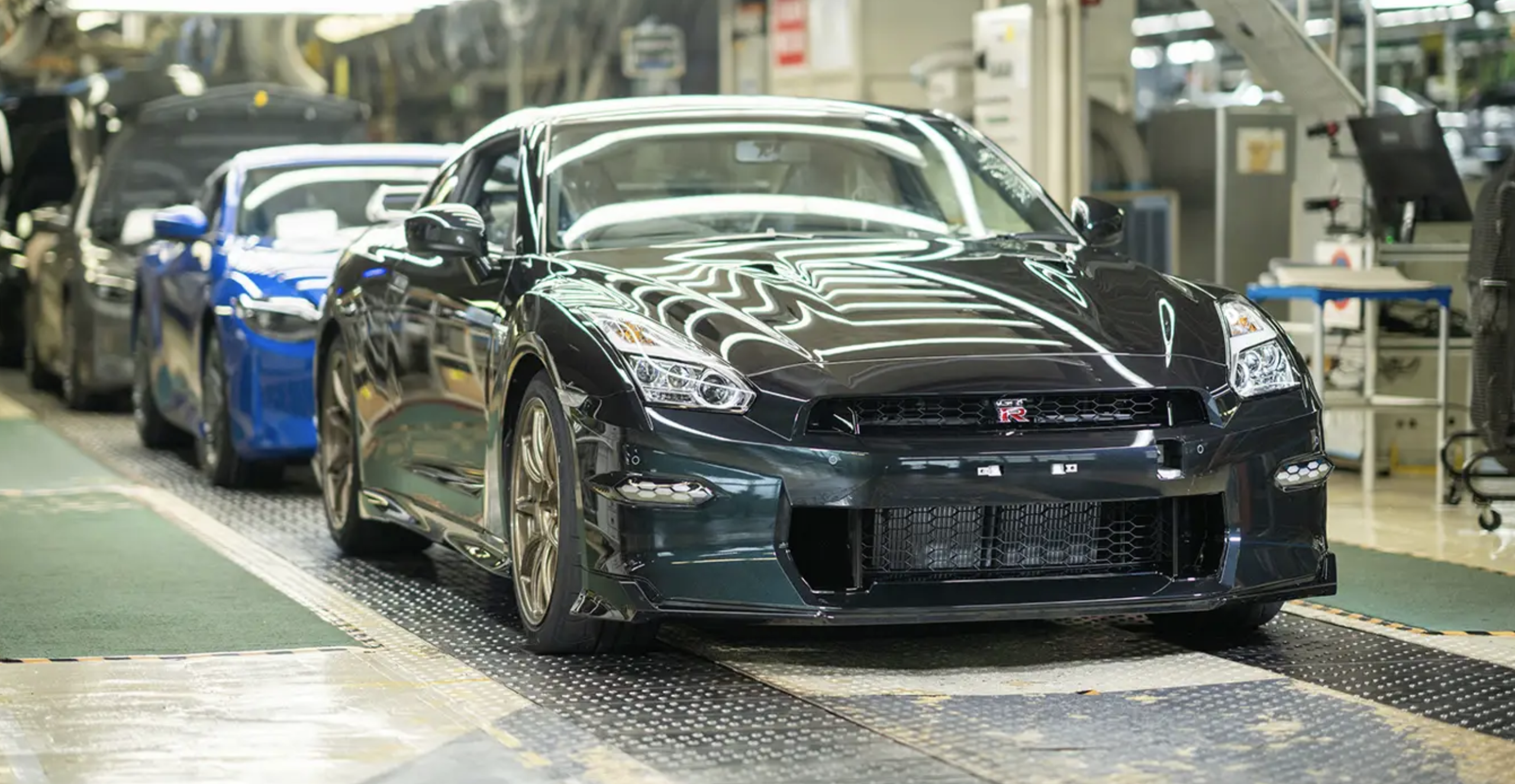
The automotive world can breathe a collective sigh of relief: the Nissan R36 GT-R will not be a silent, soulless electric appliance. Following months of speculation that the next “Godzilla” would follow the industry’s trend toward full electrification, high-ranking officials have confirmed that the internal combustion engine is staying—albeit with a high-tech, electrified twist. As the sun sets on the current R35 generation, Nissan is preparing a successor that promises to marry the legendary mechanical grit of its predecessors with the instant torque of modern hybrid systems.
The Heart of Godzilla: Why the Nissan R36 GT-R is keeping its internal combustion
For nearly two decades, the VR38DETT twin-turbo V6 has been the benchmark for tunability and raw performance. According to Ponz Pandikuthira, Nissan North America’s Vice President and Chief Planning Officer, the company isn’t ready to throw away that heritage. In a recent interview with the enthusiasts over at TopGear.com, the executive hinted that the “block” of the current engine is far too good to abandon.
However, don’t expect a simple carry-over. To meet increasingly stringent global emissions standards, the Nissan R36 GT-R will require “some level of electrification.” Pandikuthira suggested that while the core block might remain, the top-end engineering—including the heads, pistons, and combustion cycle—will likely undergo a massive overhaul. This hybrid approach allows Nissan to maintain the visceral exhaust note and mechanical connection that defines the GT-R brand, while using electric motors to fill in the torque gaps and provide the “warp-speed” acceleration the model is known for.
A New Chassis for a New Era
While the engine might share DNA with the outgoing model, the platform will be entirely new. The R35 GT-R, which first debuted in late 2007, was a marvel of its time but has reached the absolute limit of its structural development. Analysts at Autocar suggest that the R36 will utilize a multi-material chassis designed specifically to house a battery pack and electric motors without compromising the car’s legendary handling balance.
The shift to a hybrid powertrain isn’t just about saving fuel; it’s about staying competitive. With rivals like the Porsche 911 entering the hybrid space with the new T-Hybrid system, Nissan knows that the R36 must be more than just a fast car—it must be a technological tour de force. By moving to a dedicated new platform, Nissan can optimize the center of gravity and weight distribution, mitigating the “weight penalty” usually associated with hybrid batteries.
The Road to 2030: When Can We Buy It?
The timeline for the Nissan R36 GT-R is now coming into clearer focus. With the legacy of the R35 officially concluding in August 2025, there will be a noticeable “Godzilla-shaped” hole in the market for several years. Pandikuthira noted that fans should expect “concrete announcements” by 2028, with a full production reveal slated before the decade turns in 2030.
This five-year hiatus is intentional. Nissan’s global CEO, Ivan Espinosa, has gone on record stating that the GT-R will only return when it can truly move the needle for the brand. This gap allows the engineering teams at NISMO to perfect the integration of the hybrid system, ensuring that it doesn’t just meet emissions targets but actually enhances the driving experience.
Impact on the Supercar Market
The decision to avoid a full EV powertrain for the R36 is a bold move that has already sparked debate at Jalopnik and MotorTrend. While some critics argue that Nissan should have leapfrogged directly to solid-state battery technology, the reality of the current market suggests that enthusiasts still crave the “pop and bang” of a high-performance engine.
By sticking with a V6 hybrid, Nissan is following a path similar to the one taken by the latest Ferrari and McLaren supercars. It’s a strategy that prioritizes driver engagement over sheer laboratory efficiency. As reported by Car and Driver, the hybrid supercar segment is currently the most exciting area of automotive development, offering the best of both worlds: zero-emission city crawling and track-shredding internal combustion fury.
What to Expect from the R36 Specs:
* Powertrain: 3.8L Twin-Turbo V6 with Integrated Electric Motors
* Estimated Output: 750hp – 850hp
* Transmission: Updated 8-speed Dual-Clutch (DCT)
* Drivetrain: Advanced ATTESA E-TS All-Wheel Drive
* Target Release: Late 2029 / Early 2030
Ultimately, the Nissan R36 GT-R represents a bridge between two eras. It acknowledges that the future is electric, but refuses to let the fire of the internal combustion engine go out without one last, massive fight. For the fans who have spent decades idolizing “Godzilla,” 2030 cannot come soon enough.