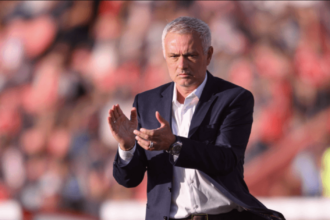
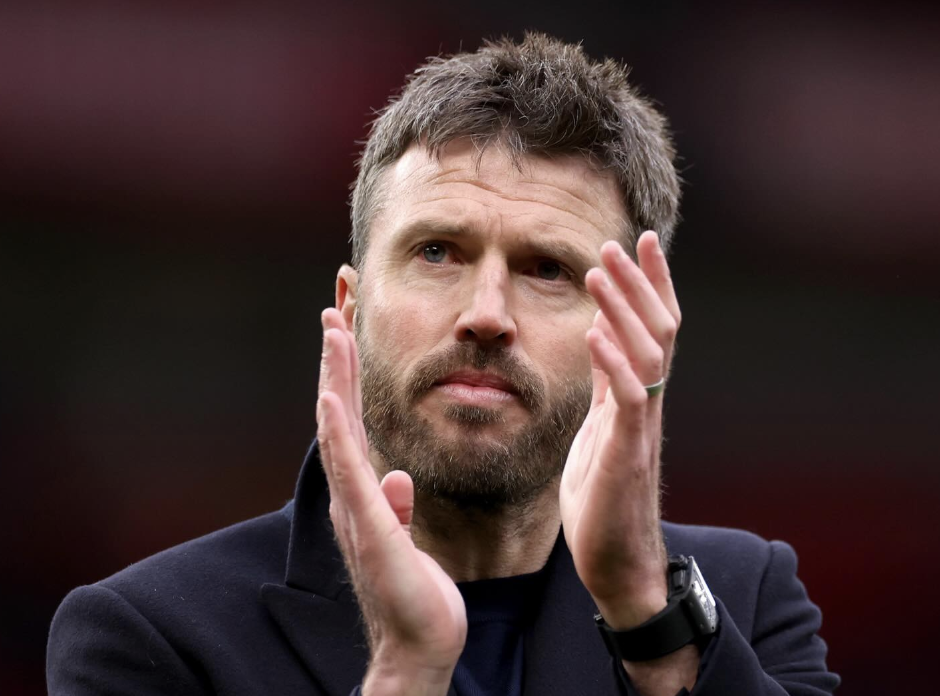
Michael Carrick has done the unexpected—lifting Manchester United into third place at a crucial stage of the season. But despite the results, one question refuses to go away:
Is Carrick building the future — or just buying time? Since stepping into the dugout to replace Ruben Amorim in January, the former midfield maestro has orchestrated a remarkable turnaround at Old Trafford. Under his guidance, the “Red Devils” have shed their inconsistency, climbing the Premier League ladder to secure a firm grip on third place. However, despite the visible progress and a newfound tactical identity, the question of whether Carrick is a long-term solution or merely a high-performing stopgap continues to linger over the Theatre of Dreams.
Michael Carrick and the Tactical Shift at Old Trafford
The statistics behind the “Carrick Era” are difficult to ignore. In just 12 league matches, the team has secured eight wins, two draws, and suffered only two defeats. This run of form has propelled United to 58 points, placing them ahead of several pre-season favorites. Unlike his predecessors, Carrick has implemented a system that balances defensive solidity with the fluid, attacking transitions that fans have long craved.
His deep understanding of the club’s DNA, garnered over 15 years as both a player and a coach, has allowed him to stabilize a dressing room that appeared fractured under previous leadership. According to reports on espn.com, the players have responded positively to his “lead-by-example” philosophy, which mirrors his composed playing style. You can read more about the club’s recent squad developments in our detailed tactical breakdown of the current season.
Quick Summary
- Michael Carrick wins 8 of 12 league matches
- Manchester United climb to 3rd place
- Tactical stability improves significantly
- Champions League qualification within reach
- Future as permanent manager still uncertain
The Business of Management: Interim vs. Permanent
From a business and “Sportainment” perspective, Manchester United finds itself in a familiar quandary. The club’s hierarchy, now influenced heavily by the INEOS sporting department, must decide if Carrick’s success is a “new manager bounce” or a sustainable foundation. History at Old Trafford suggests caution; Ole Gunnar Solskjaer famously earned a permanent contract after a stellar interim run, only for the momentum to eventually stall.
The stakes are incredibly high. Securing a top-five finish and a return to the UEFA Champions League is not just a sporting goal—it is a financial necessity for a club looking to navigate increasingly stringent Profit and Sustainability Rules (PSR). As noted by skysports.com, the revenue difference between Europa League and Champions League participation can exceed £50 million, a figure that significantly impacts summer transfer budgets.
Carrick’s impact becomes even more impressive considering the situation he inherited, with the squad previously dealing with a defensive crisis that disrupted team stability.
👉 Read full analysis:
➡️ Manchester United Defensive Crisis Explained
“I Am Enjoying the Role”: Carrick’s Quiet Confidence
Despite the swirling rumors regarding potential high-profile managerial targets, Michael Carrick remains unfazed. In recent press conferences, he has consistently deflected questions about his contract status, choosing instead to focus on the immediate task of securing European football.
“I am enjoying the role I am in,” Carrick told the club’s official media channel. “We have achieved some good results and we are in quite good condition. I think there is still a lot to be done; we still want to keep improving. There are several things we want to achieve.”
His humility has resonated with the fanbase, yet his ambition is clear. Carrick acknowledges the weight of the badge, stating, “It is an honor to be in the position I am now, but the responsibility we carry will only become greater.” This sense of duty is perhaps what distinguishes him from outside candidates who may view the job through a more transactional lens.
The Road Ahead: Champions League or Bust?
As the Premier League enters its final stretch, the pressure on the United board to make a definitive decision will intensify. While names like Julian Nagelsmann or Zinedine Zidane are frequently linked to the post by bleacherreport.com, the grassroots support for Carrick is growing.
The upcoming fixtures will be the ultimate litmus test. If Michael Carrick can maintain this trajectory and finish the season in the top three, it will be nearly impossible for the board to look elsewhere. For now, the focus remains on the pitch. Whether he is the “manager of the future” or the “savior of the present,” Carrick has undeniably restored hope to a club that, just months ago, seemed lost at sea.
For further updates on global football standings and official club rankings, visit the official fifa.com website or check out the latest domestic schedules on nba.com for cross-sport business comparisons.
The Big Question: Solution or Temporary Fix?
Despite the impressive results, doubts remain.
Manchester United have been in this position before—where short-term success led to long-term uncertainty. The comparison with previous interim success stories is unavoidable.
The real test is not just results—but sustainability:
- Can Carrick maintain performance over a full season?
- Can he handle transfer windows and squad rebuilds?
- Can he deliver trophies—not just stability?
Tactical Identity Under Carrick
What has changed under Carrick is clarity.
- Defensive structure is more compact
- Midfield transitions are faster
- Players show clearer positional discipline
This balance between control and transition is what has allowed Manchester United to stabilize after a chaotic start to the season.
Author Insight
Carrick’s success is not accidental—it’s structural.
What stands out is not just results, but how quickly he has restored clarity to a team that looked directionless. However, modern football rarely rewards short-term stability alone.
If Manchester United want long-term success, the decision they make in the coming months will be just as important as the results on the pitch.