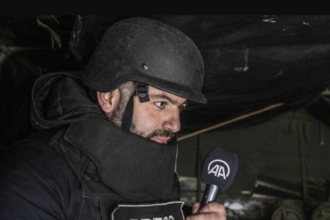

UAE deportation risks escalate as authorities enforce strict bans on filming drone and missile strikes. Learn how regional tensions impact digital privacy.
The thin veneer of normalcy in the Persian Gulf is facing its most rigorous test to date. As the United Arab Emirates continues to position itself as a premier global sanctuary for capital and tourism, a new and formidable legal boundary has been drawn at the intersection of national security and digital expression. The message from Abu Dhabi is unequivocal: the lens of a smartphone can now be as liability-prone as a physical weapon. For the millions of expatriates and visitors who call the Emirates home, the cost of a viral moment has shifted from social capital to state-mandated expulsion.

The Digital Fortress: Security in the Age of Volatility
The regional geopolitical climate, characterized by the escalating shadow war between Iran and Israel, has forced the UAE into a defensive posture that is as much about information control as it is about kinetic defense. Based on industry trends in the Middle East, the government’s recent directives represent a strategic effort to insulate its economic reputation from the visual realities of regional instability.
The Reuters news agency has highlighted that the UAE’s priority remains the maintenance of public order and the prevention of mass panic. When amateur footage of drone interceptions or missile debris begins to circulate, it creates a narrative of vulnerability that the state is desperate to suppress. This is not merely about censorship; it is a calculated move to protect the “safe haven” brand that underpins the nation’s multi-billion dollar real estate and tourism sectors. Our analysis indicates that the authorities view digital documentation of military incidents not as citizen journalism, but as a direct threat to the state’s psychological infrastructure.
Legal Ambiguity and the “Domino Effect” of Sharing
The British Embassy in the UAE recently amplified these concerns, issuing a stark advisory via social media. The warning clarifies that the prohibition is not restricted to the act of recording; the mere distribution of such content constitutes a criminal offense. This includes the sharing of images depicting damage to infrastructure, government buildings, or the trajectory of projectiles.
Perhaps most concerning for the average resident is the breadth of the definition of “sharing.” Under the current UAE cybercrime framework, the law does not distinguish between a public post on TikTok and a private message sent via WhatsApp or Telegram. According to reporting from the BBC, the encryption of these apps offers no shield against local prosecution if the content is flagged or reported.
Radha Stirling, the chief executive of the legal advocacy group “Detained in Dubai,” has characterized these statutes as dangerously vague. Stirling notes that the current environment creates a “domino effect,” where a single video can lead to a cascade of criminal charges for anyone who interacts with the media. This legal volatility means that even a passive observer who forwards a video out of concern or curiosity could find themselves ensnared in a national security investigation.
The Human Cost of Social Media Documentation
The severity of these measures is best illustrated by recent enforcement actions. A 60-year-old British national currently faces the prospect of two years in prison after recording footage of a missile event during his vacation. Despite his defense that he deleted the footage immediately and possessed no malicious intent, he remains one of 21 individuals recently charged under these tightened cybercrime laws.
As AP News has documented, the penalties are tiered to ensure maximum deterrence. Violators face a triad of consequences: astronomical financial fines, lengthy custodial sentences, and the ultimate administrative sanction—permanent deportation. For the expatriate workforce, which makes up nearly 90% of the UAE population, the threat of deportation is the most potent tool in the government’s arsenal, effectively ending careers and uprooting families in a single stroke.
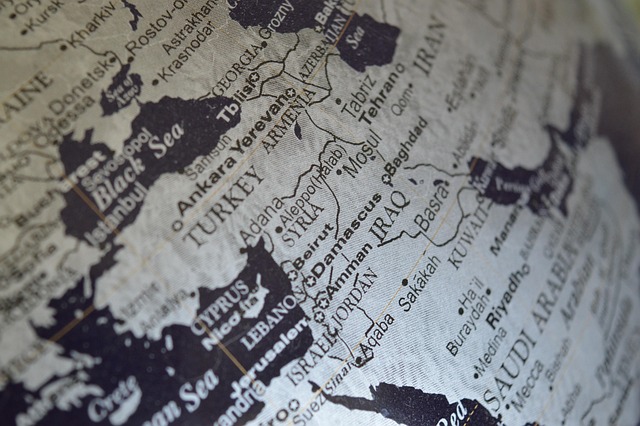
Navigating the New Security Protocols
The current mandate for those within the Emirates is a total moratorium on filming any activity that could be construed as a security incident. This extends beyond the obvious—such as drone strikes—to more mundane remnants of conflict.
* Prohibition of Debris Photography: Capturing images of “shrapnel” or fallen debris in public spaces is strictly forbidden.
* Government Convoys: The photography of military or diplomatic movements remains a high-risk activity that triggers immediate scrutiny.
* Digital Hygiene: Experts recommend deleting unsolicited videos received in group chats rather than archiving or forwarding them, as possession of such material can be used as evidence of a crime.
As the New York Times has observed in similar authoritarian contexts, the tightening of digital borders often precedes broader shifts in regional policy. The UAE is signaling that while its doors remain open for business, the price of entry is a surrender of the right to document the world as it truly appears.
The regional volatility following the recent operations against high-level targets has placed high-profile sites—from international airports to luxury skyscrapers—under heightened surveillance. In this climate, the government views the smartphone as a liability. Whether you are a tourist capturing the skyline or a long-term resident checking in on family, the message remains the same: in the modern Middle East, the distance between a viral post and a deportation order has never been shorter.
The era of the digital bystander in the Gulf has effectively come to an end, replaced by a mandate of silence that prioritizes the state’s image of stability over the individual’s desire to record history.