The Hyundai Ioniq 3 has officially landed, and it is far more than just a shrunken version of its larger siblings. Positioned as the sensible, yet stylistically “out-there” entry point for the brand’s dedicated electric lineup, this new “aero hatch” aims to dominate the European compact segment. By combining a drag coefficient of 0.26 with a boot that puts traditional family favorites to shame, Hyundai is signaling that the era of the compromise-free small EV has finally arrived.
1. The Hyundai Ioniq 3 “Art of Steel” Design Philosophy
Hyundai describes the aesthetic of the new hatch as the “Art of Steel.” This isn’t just marketing fluff; it represents a shift toward simple, fluid surfaces that mimic the natural behavior of sheet metal when under tension. While the Hyundai Ioniq 6 focused on the “Streamliner” look to maximize efficiency, the Ioniq 3 adopts an “Aero Hatch” silhouette. It features a low-slung roofline and a sharply angled rear that looks like a cross between a futuristic concept and a classic Italian hatchback.
The car’s aerodynamic prowess is central to its identity. A drag coefficient of 0.26 is remarkably low for a vehicle that is only 4.1 meters long. To achieve this, engineers integrated a prominent rear spoiler and a functional diffuser, particularly visible on the N-Line trim. These elements don’t just look aggressive; they actively manage airflow to squeeze every possible mile out of the battery. The signature pixel lighting remains, with four central dots that reference the letter ‘H’ in Morse code—a clever nod to the brand’s heritage.
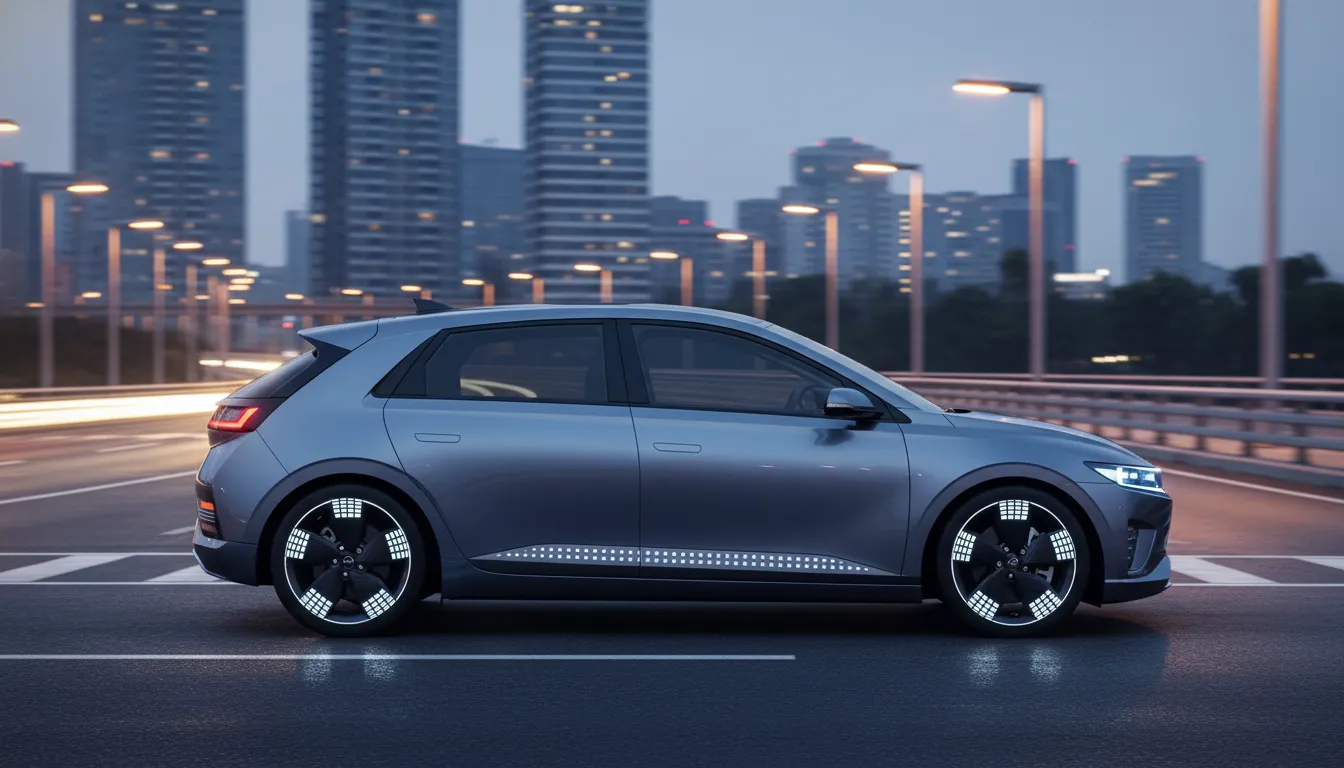
AI Generated Image: Side profile of the Hyundai Ioniq 3 showing its aerodynamic “Aero Hatch” silhouette and pixel lighting details.
2. Class-Leading Range and 400V Architecture
Underneath the sculpted metal, the Hyundai Ioniq 3 offers two distinct battery flavors. The entry-level model utilizes a 42.2kWh battery providing a respectable 208 miles of range. However, the headline-grabber is the 61kWh Long Range variant. Hyundai claims this version will deliver more than 305 miles on a single charge, a figure they describe as “class-leading” for this footprint.
Power comes from front-mounted motors producing either 133bhp or 145bhp. While these numbers won’t set your hair on fire like the Ioniq 5 N, they provide the punchy, immediate torque necessary for urban darting. Charging is equally efficient; thanks to a 400-volt architecture, the Ioniq 3 can replenish its battery from 10 to 80 percent in just 29 minutes. This ensures that even long-distance European trips remain viable without hour-long stops at the plug.
3. A Boot That Shames the Volkswagen Golf
Practicality is where the Hyundai Ioniq 3 truly disrupts the status quo. Despite its compact dimensions, it offers a staggering 441 litres of boot space. To put that into perspective, the current Volkswagen Golf Mk8 offers only 381 litres. This 60-litre advantage is a direct result of the dedicated E-GMP (or evolved derivative) platform, which allows for a flat floor and pushed-out wheels.
Inside, the cabin feels airy and expansive. Hyundai promises enough room to seat five adults comfortably, a feat rarely achieved in the B-segment. The flat floor removes the intrusive transmission tunnel found in internal combustion rivals, giving rear passengers significantly more legroom. This focus on “space efficiency” makes the Ioniq 3 a legitimate primary car for small families, rather than just a secondary city runabout.
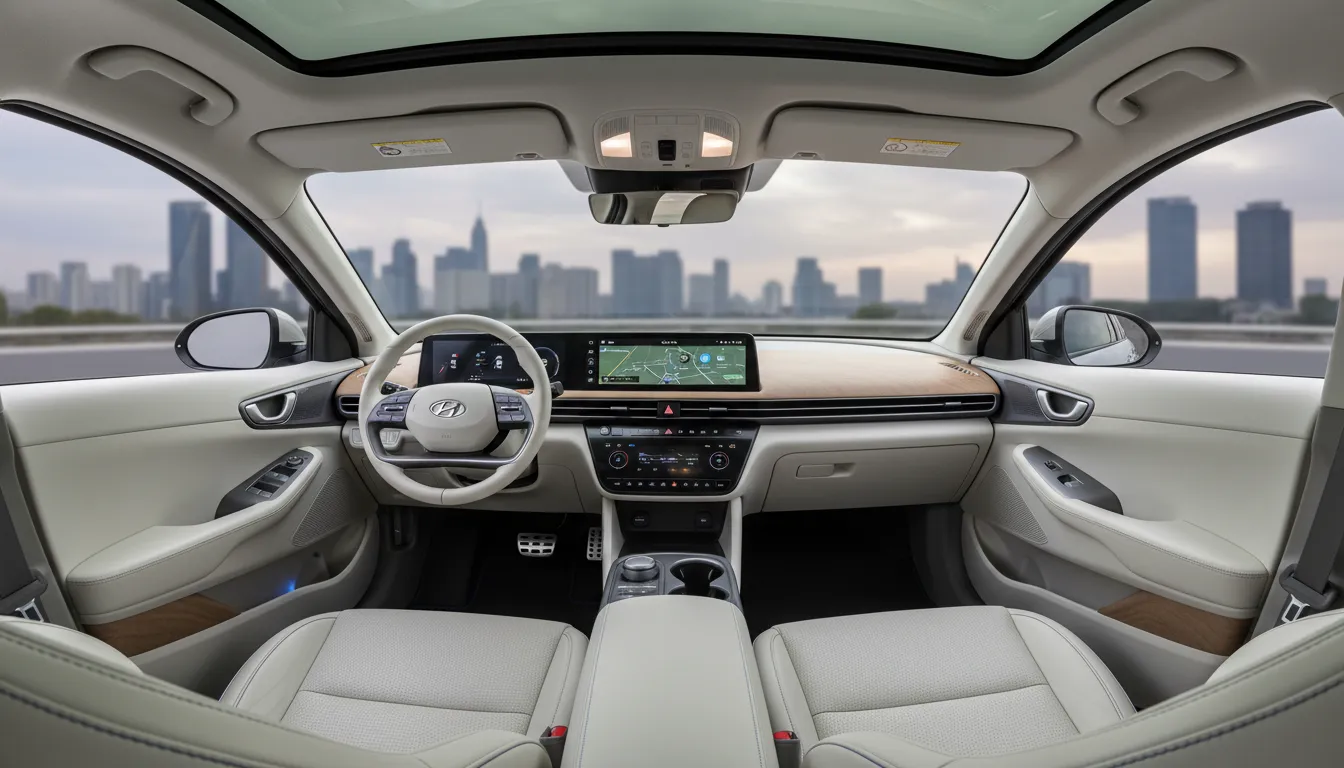
AI Generated Image: Interior view of the Hyundai Ioniq 3 highlighting the flat floor and the 14.6-inch central infotainment screen.
4. Physical Buttons and 1970s Italian Flair
In a move that will delight driving enthusiasts and ergonomics experts alike, Hyundai has bucked the trend of “screen-only” interiors. While the dashboard features massive 12.9 or 14.6-inch displays running a new Android Auto-based infotainment system, it retains a dedicated row of physical buttons for the climate control. This tactile approach ensures that adjusting the temperature doesn’t require diving through three sub-menus while traveling at motorway speeds.
The material choices are equally intriguing. Hyundai’s designers drew inspiration from 1970s Italian furniture, utilizing textures and colors that feel warm and residential rather than cold and clinical. Depending on the trim level, owners can spec heated and ventilated seats, a premium Bose sound system, and customizable ambient LED lighting. It is a sophisticated environment that feels several classes above the car’s expected price point.
5. Taking on the Renault 4 and Ford Puma Gen-E
The Hyundai Ioniq 3 enters a fiercely competitive landscape. Its primary rivals include the retro-futuristic Renault 4 E-Tech and the upcoming Ford Puma Gen-E. While the Renault leans heavily on nostalgia and the Ford on its established best-seller status, the Hyundai bets on superior range and aerodynamic efficiency.
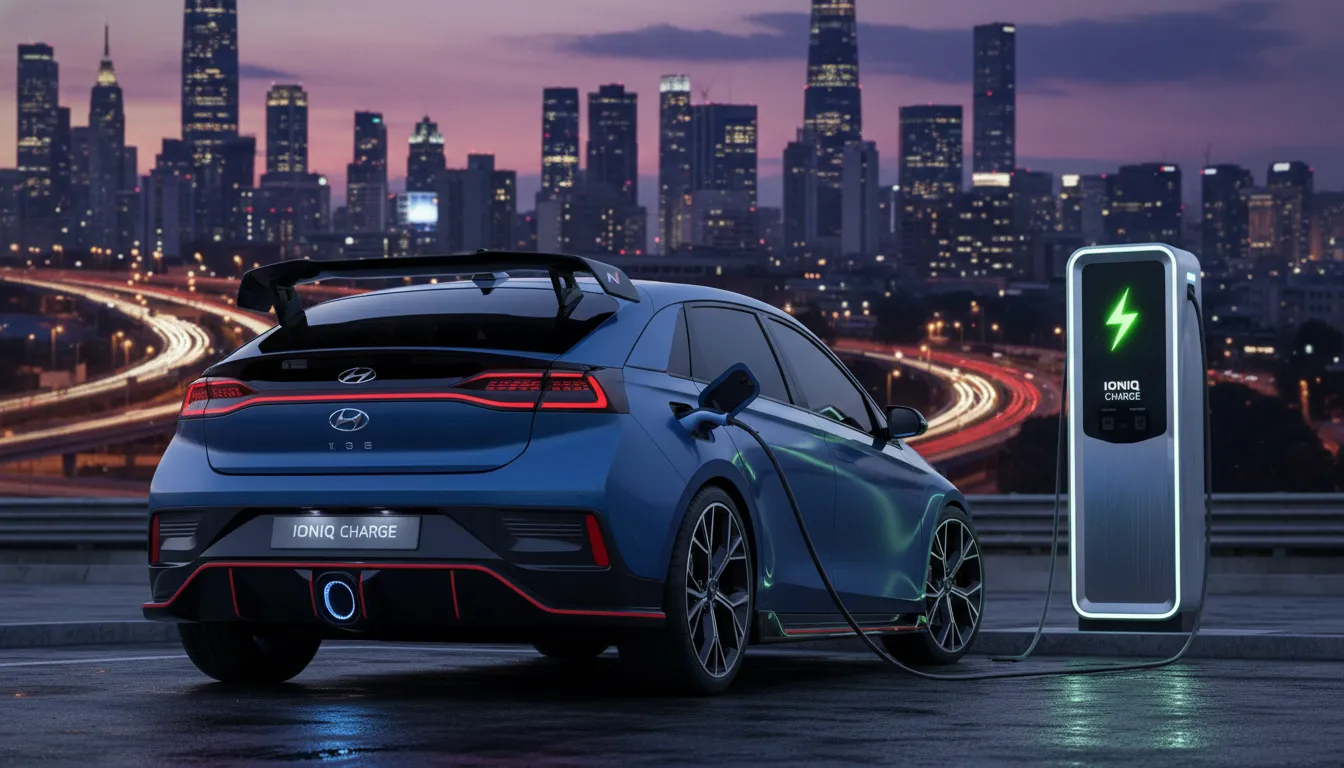
AI Generated Image: The Hyundai Ioniq 3 N-Line parked next to a charging station, showing off its sporty diffuser and spoiler.
Market trends suggest that European buyers are moving away from oversized SUVs in favor of “right-sized” hatchbacks that don’t sacrifice tech or range. By offering over 300 miles in a 4.1-meter package, Hyundai is positioning the Ioniq 3 as the benchmark for this new wave of EVs. While official pricing remains under wraps, the industry expects a starting point that makes it a formidable threat to both established European marques and new Chinese entrants. The “sensible” electric car has finally found its edge.