In the humid, emerald heart of Bangka Belitung, a culinary legend remains hidden beneath the canopy of the Pelawan trees, waiting for the heavens to speak. While the world of fine dining often looks toward the damp forests of Piedmont or the Périgord for the elusive truffle, Indonesia harbors its own subterranean treasure: the Kulat Pelawan. This extraordinary fungus, which rivals the most expensive European ingredients in both price and prestige, is not merely a product of the soil, but a confluence of specific weather patterns, ancient botany, and the raw power of tropical thunderstorms. To the uninitiated, it is a mushroom; to the gourmet, it is a miracle.
The Celestial Birth of the Kulat Pelawan
The mystique of the Kulat Pelawan begins with its volatile origin story. Unlike common button mushrooms or commercially farmed shiitakes, this fungus refuses to be tamed by human hands. It is famously known as the “Lightning Mushroom” because of its symbiotic relationship with the elements. Local harvesters in Bangka believe that the mushroom will only emerge after a specific sequence of nature’s whims: a prolonged three-month drought followed by a week of heavy rainfall punctuated by violent lightning strikes.
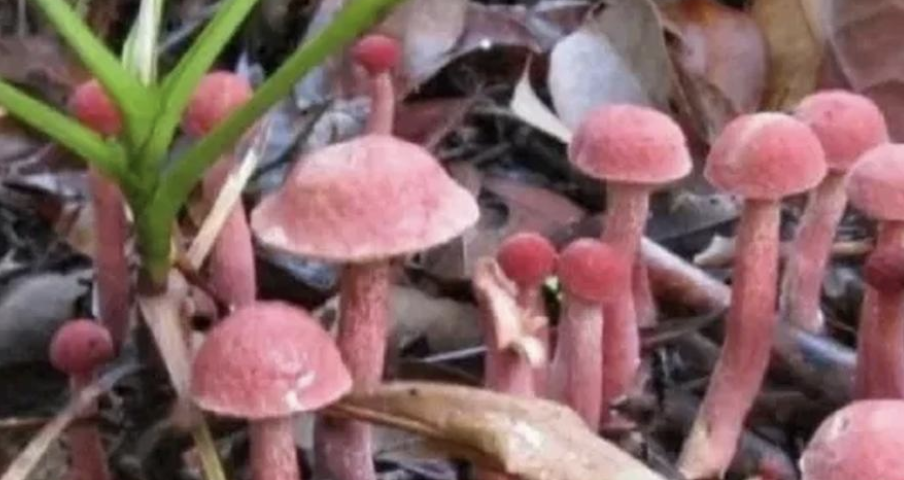
Scientific observers note that lightning may play a role in nitrogen fixation, enriching the soil in a way that triggers the growth of the fungi around the roots of the Pelawan tree (Tristaniopsis merguensis). This tree, known for its distinctive red bark, provides the only host environment where the mushroom can survive. Because these conditions only align perhaps twice a year, the scarcity of the mushroom is guaranteed, driving its market price to a staggering Rp 4 million per kilogram—roughly $250 USD, a price point that places it firmly in the category of world-class luxury ingredients.
Kulat Pelawan: A Masterclass in Patience and Preparation
For those lucky enough to secure a supply, the culinary journey is just beginning. Most Kulat Pelawan is sold in a dried state, appearing as shriveled, chocolate-brown morsels that belie their vibrant, pinkish-red origins. The transition from forest floor to fine-dining plate is an arduous process that demands the respect of a master technician.
Renowned Indonesian culinary figure Chef Ragil Imam Wibowo has long championed the use of this rare fungus, often noting that its preparation is a labor of love. “Dried mushrooms require a minimum of 15 hours of work before they can even be cooked,” the chef has shared in interviews. The process involves a 12-hour soak, followed by a surgical cleaning process where each small stem is split to remove trapped sand and forest debris. Only after a second soak and rigorous cleaning is the mushroom ready to reveal its true character.
Texture, Taste, and the Bangka Tradition
What does a million-rupiah mushroom taste like? In its fresh form, the texture is described as a delicate middle ground between the snap of a wood ear mushroom and the meatiness of a straw mushroom. However, it is in its dried and rehydrated form that the Kulat Pelawan truly shines. The drying process intensifies its earthy profile, resulting in a deeper, more concentrated “umami” punch and a resilient, chewy texture that holds up beautifully against rich sauces.
In the traditional kitchens of Bangka, this mushroom is the centerpiece of Gulai Kulat Pelawan. This is no ordinary curry; it is a thick, celebratory dish often enriched with chicken or shrimp and served at weddings or significant religious festivals. The consistency is reminiscent of a heavy laksa or korma, where the mushroom absorbs the aromatic spices of turmeric, galangal, and coconut milk without losing its structural integrity. It is a dish that tastes of the land—deeply mineral, woody, and unmistakably primal.
A Rival to the European Truffle?
When comparing this Indonesian gem to the Michelin-starred favorites of Europe, the parallels are striking. Both the truffle and the Kulat Pelawan are wild, seasonal, and dependent on complex mycorrhizal relationships with specific trees. While the truffle relies on its intoxicating aroma to lure the senses, the Pelawan mushroom wins on its unique texture and its ability to act as a flavor sponge in complex stews.
As global interest in indigenous and rare culinary treasures grows, the Kulat Pelawan stands as a testament to Indonesia’s untapped gastronomic potential. It is more than just a high-priced commodity; it is a piece of Bangka’s natural history, a gift from the lightning, and a flavor that cannot be replicated in a laboratory. For the true food connoisseur, a journey to the islands to taste this “lightning-born” delicacy is a pilgrimage worth taking.
In an era of mass-produced food, the Kulat Pelawan reminds us that the greatest flavors are still those that require us to wait for the sky to crack open and the earth to respond.
Discover the latest food trends, recipes, and culinary news by exploring our coverage here.