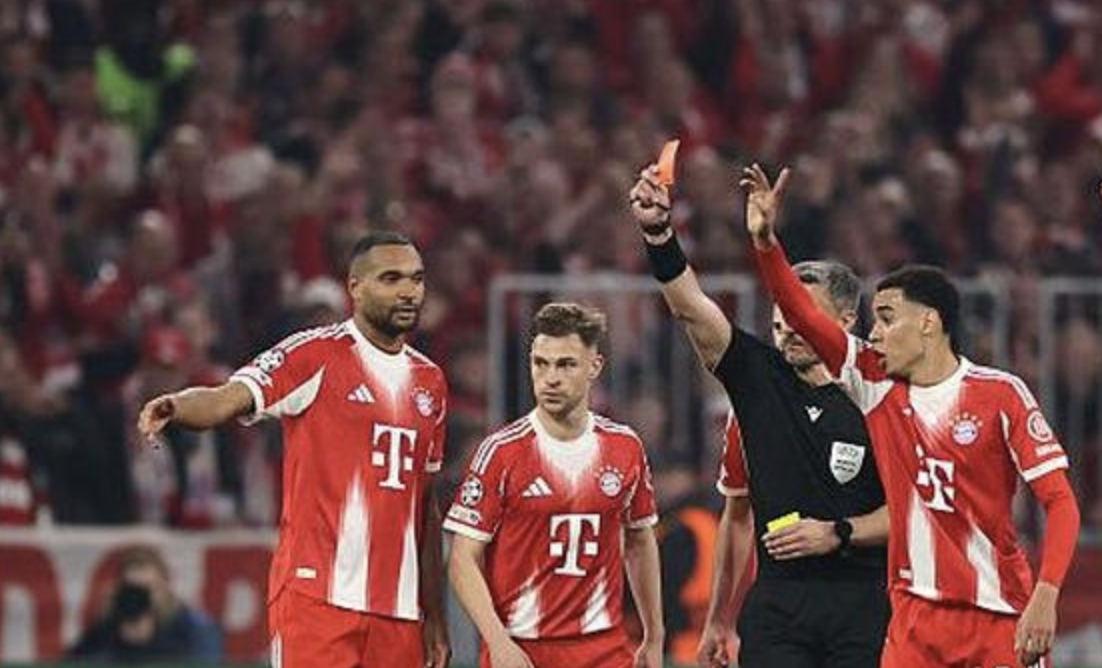
The pursuit of a historic 16th European crown came to a crashing halt at the Allianz Arena as Real Madrid fell victim to a late-game collapse against Bayern Munich. In a match that fluctuated between tactical brilliance and chaotic drama, the narrative was ultimately shifted not by a moment of skill, but by a controversial officiating decision that left the Spanish giants reeling. Following a 3-4 defeat on the night and a 4-6 aggregate loss, the post-match discourse has centered entirely on the dismissal of Eduardo Camavinga, a moment that manager Alvaro Arbeloa insists “ruined” what was a classic encounter between two of football’s greatest institutions.
The Turning Point: Eduardo Camavinga’s Controversial Red Card
For 85 minutes, Real Madrid looked every bit the resilient side that has defined the Champions League’s modern era. Despite the hostile atmosphere in Munich, Los Blancos had clawed their way into a 3-2 lead on the night, effectively leveling the aggregate score at 4-4. The momentum appeared to be shifting toward the visitors as they prepared for a potential extra-time period or a late winner.
However, the complexion of the tie changed irrevocably in the 86th minute. Eduardo Camavinga, who had been introduced as a second-half substitute to provide energy and defensive stability, was involved in a high-stakes challenge with Bayern striker Harry Kane. While the initial contact appeared to be a standard tactical foul, the subsequent sequence—where Camavinga was seen attempting to hold onto the ball to prevent a quick restart—prompted the referee to brandish a red card.
The decision sparked immediate and furious protests from the Madrid bench. According to reports from Sky Sports, the Spanish side felt the punishment was disproportionately harsh for the nature of the infraction, especially given the magnitude of the match.
Alvaro Arbeloa Criticizes Refereeing Standards at Allianz Arena
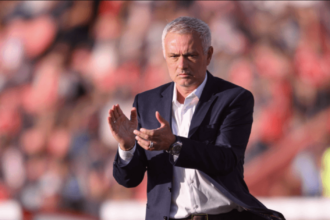
In the aftermath of the defeat, a visibly frustrated Alvaro Arbeloa did not hold back in his assessment of the officiating. The former Madrid defender, now leading the club from the dugout, argued that the red card stripped his team of their ability to compete in the final moments.
“All over after the red card,” Arbeloa told reporters during the post-match press conference, as cited by Reuters. “You cannot exclude a player for something like that on a stage this big. It is a real shame that a match this beautiful was ruined by such a decision.”
Arbeloa’s grievance stems from the belief that Real Madrid had done enough to secure their progression before the numerical disadvantage took its toll. “I feel for my players because of the effort they put in. This hurts because Real Madrid will not be winning their 16th title this year. I am very proud of them; we are returning to Madrid after giving everything on this pitch.”
The managerial perspective highlights a growing tension regarding how “game-management” fouls are officiated in high-stakes knockout rounds. As noted in our previous analysis of UEFA officiating trends, the margin for error for players in the final ten minutes of play has become increasingly slim.
Bayern Munich Capitalize: Luis Diaz and Michael Olise Seal the Win
While the red card was the catalyst, the clinical nature of Bayern Munich’s finish cannot be overlooked. Exploiting the gaps left by a ten-man Real Madrid defense, the German champions struck twice in the dying embers of the game.
Luis Diaz, a constant threat throughout the evening, found the back of the net to put Bayern ahead on aggregate, before Michael Olise put the result beyond doubt with a fourth goal for the hosts. The tactical shift from Bayern manager Thomas Tuchel—pushing his wingers higher the moment Camavinga was dismissed—proved to be a masterstroke.
According to data from ESPN, Madrid’s defensive shape disintegrated following the dismissal, conceding more shots in the final six minutes than they had in the previous thirty. The loss marks a rare occasion where Madrid failed to navigate the “clutch” moments of a Champions League knockout tie, a territory they usually dominate.
What This Means for Real Madrid’s Transition Era
The exit from the Champions League serves as a bitter pill for a Real Madrid squad currently undergoing a significant generational shift. With Arbeloa at the helm and a midfield core built around young talents like Camavinga and Jude Bellingham, the expectation remains nothing less than European silverware.
Industry analysts at Bleacher Report suggest that this defeat may accelerate Madrid’s plans for the summer transfer window, as the club looks to bolster its defensive depth to avoid similar collapses in the future. The “DNA” of the club demands a quick rebound, but the sting of the Allianz Arena exit will likely linger throughout the remainder of the domestic season.
For now, the focus shifts back to La Liga, but the questions surrounding that fateful 86th minute in Munich will continue to haunt the halls of the Santiago Bernabéu. As Arbeloa noted, the dream of “La Decimosexta” must wait another year, leaving fans and pundits alike to wonder what might have been had the referee’s whistle stayed silent.
For more updates on the road to the final, visit the official UEFA Champions League website or click here.