
The landscape of South Korea tourism is undergoing a profound structural transformation as international visitors increasingly look beyond the neon lights of Seoul. For decades, the capital city acted as the singular magnet for global travelers, but new data from the first quarter of 2026 reveals a decisive shift toward the country’s diverse provinces. Driven by improved infrastructure, a surge in “slow travel” trends, and a concerted government push to decentralize the industry, regional destinations are now seeing record-breaking engagement from both foreign and domestic markets.
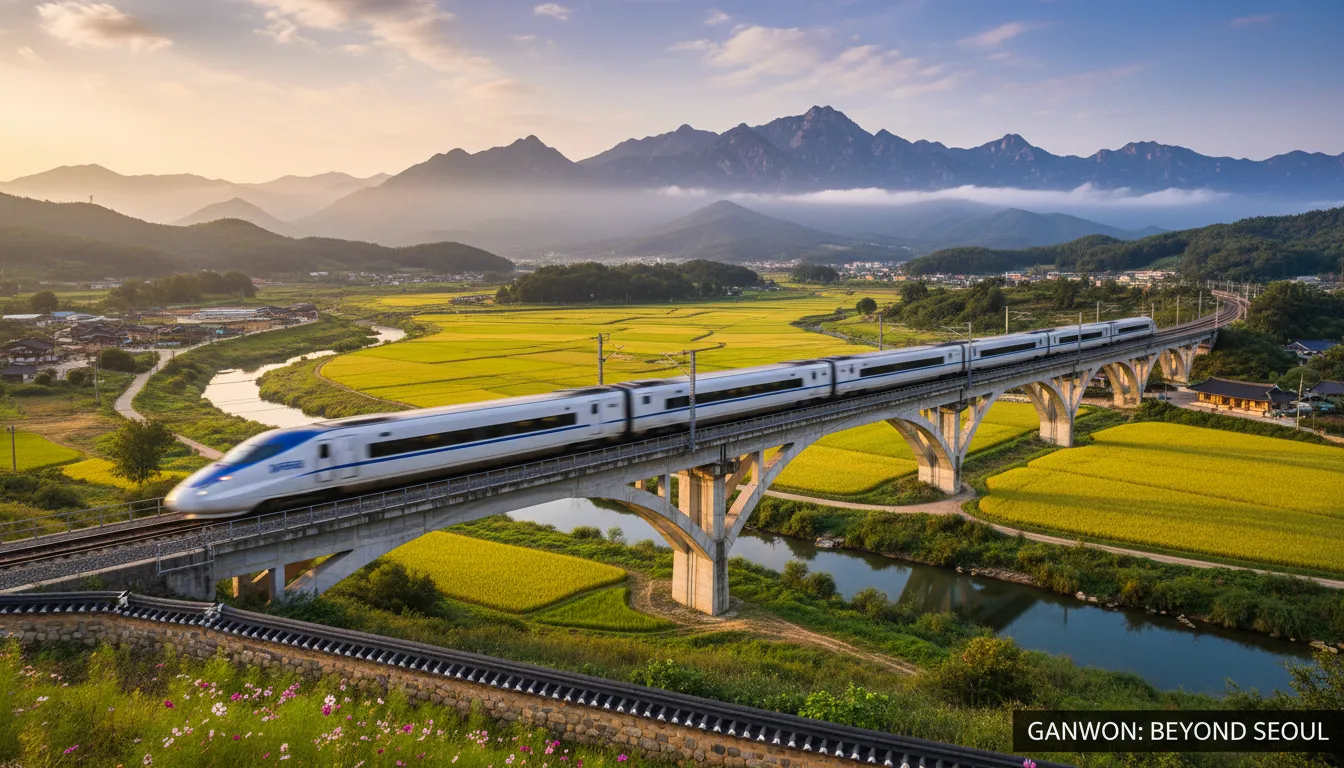
AI Generated Image: A high-speed KTX train passing through the scenic countryside of Gangwon Province, symbolizing the expansion of tourism beyond the capital.
Beyond Seoul: The Rise of South Korea Tourism in the Provinces
According to the latest figures from the Ministry of Culture, Sports and Tourism, the diversification of entry points is a primary driver of this trend. Between January and March 2026, approximately 853,905 foreign tourists entered the country through regional airports—excluding the primary gateways of Incheon and Gimpo. This represents a staggering 49.7% increase compared to the same period last year.
The maritime sector is also contributing to this decentralization. Arrivals via regional seaports reached 335,161, a 6.1% year-on-year increase. This growth is largely attributed to the resurgence of cruise tourism in port cities like Busan and Sokcho, which have positioned themselves as cultural alternatives to the metropolitan experience.
Transportation data further underscores this shift. The Korea Railroad Corporation (Korail) reported that 1.69 million foreign tourists utilized rail services in the first quarter, a 46.4% jump from 2025. As travelers become more comfortable navigating the country’s high-speed KTX network, the “Seoul-centric” model of South Korea tourism is being replaced by a more distributed itinerary that includes the historic sites of Gyeongju and the coastal beauty of Jeolla.
Economic Impact: Regional Spending Hits Record Highs
The movement of people is translating directly into economic vitality for local municipalities. A monthly survey conducted by the Korea Culture & Tourism Institute found that 34.5% of international visitors now include destinations outside the Seoul metropolitan area in their trips, an increase of 3.2 percentage points over the previous year.
More importantly, these visitors are staying longer and spending more. The total accumulated days spent by tourists entering through regional airports reached 5.28 million in Q1 2026, up from 3.88 million in the same period in 2025. This extended duration has led to a 17.2% increase in regional spending, rising from $750 million to $880 million (approximately 1.3 trillion won).
Data from the Korea Tourism Organization (KTO) highlights that credit card transactions by foreign nationals in provincial areas have reached 466.7 billion won. This influx of capital is providing a much-needed boost to local businesses, from traditional markets in Daegu to boutique stays in Jeju. For more on how cultural exports drive these numbers, see our analysis on the K-culture economic ripple effect.
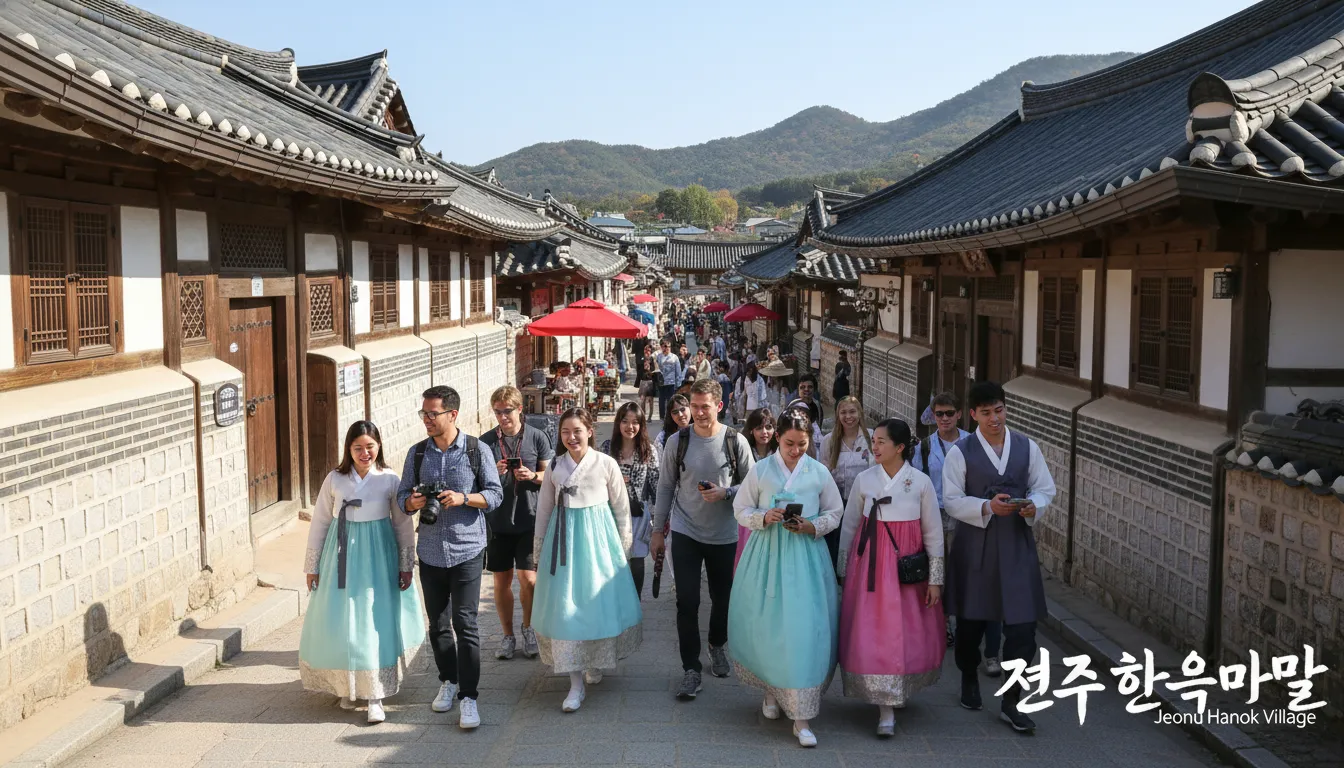
AI Generated Image: International tourists exploring the traditional Hanok villages in Jeonju, a popular regional destination.
Policy Shifts: The Tourism Framework Act and National Strategy
The current boom in regional South Korea tourism is not accidental; it is the result of aggressive legislative and executive action. In early 2026, the South Korean parliament passed a significant revision to the Tourism Framework Act. This legal overhaul placed the national tourism strategy under the direct oversight of the presidency, signaling that the sector is now viewed as a critical pillar of national economic growth.
“We are seeing encouraging developments,” stated Kang Jung-won, Head of Tourism Policy at the Ministry. “Tourism that was previously concentrated in the Seoul metropolitan area is now spreading across the country, and the data proves this phenomenon is sustainable.”
The government’s strategy involves several key pillars:
* Infrastructure Expansion: Enhancing the connectivity of regional airports to major Asian hubs.
* Digital Integration: Streamlining mobile payment systems and translation apps for use in rural areas.
* Qualitative Growth: Moving away from “mass tourism” toward high-value experiences like medical wellness and temple stays.
This policy shift aligns with broader economic goals to combat rural depopulation. By turning provincial hidden gems into world-class attractions, the government aims to create a “virtuous cycle” where tourism revenue funds local infrastructure, which in turn attracts more visitors. Reports from Reuters and the Korea Herald have noted that South Korea is currently one of the fastest-growing destinations in Northeast Asia, largely due to this successful regional diversification.
Domestic Trends and the Path to 30 Million Visitors
The trend is not limited to international arrivals. Domestic travel by South Koreans to areas outside the Seoul metropolitan region reached 39.31 million trips in the first two months of 2026 alone, a 6.9% increase. Domestic spending in these regions is estimated at 5.4 trillion won, reflecting a growing preference among locals for “staycations” and regional exploration over short-haul international flights.
As South Korea targets a milestone of 30 million annual foreign visitors by 2030, the success of its regional hubs will be the deciding factor. By alleviating the pressure on Seoul’s infrastructure and redistributing the “Hallyu” (Korean Wave) effect to the provinces, the country is building a more resilient and authentic tourism model.
With the government vowing to continue strengthening regional growth, the message to the world is clear: the true heart of Korea lies far beyond the borders of its capital. Whether it is the volcanic landscapes of Jeju or the tech-hubs of Daejeon, the future of South Korea tourism is regional, diverse, and economically robust.