
In a remote corner of Colorado, a geological marvel has become the stage for one of the most fascinating “sportainment” spectacles in the natural world. Researchers have discovered a “mega-den” teeming with hundreds, and potentially thousands, of prairie rattlesnakes. This isn’t just a gathering of solitary predators; it is a complex community that is being broadcast to the world via Project RattleCam. Led by Professor Emily Taylor of California Polytechnic State University (Cal Poly), this initiative is using high-tech, solar-powered cameras to pull back the curtain on the social lives of these often-maligned reptiles, proving that even the most feared creatures have a softer, more communal side.
The Science Behind Project RattleCam
The primary goal of Project RattleCam is to observe rattlesnakes in their natural habitat without the bias of human interference. Traditionally, studying snakes in the wild meant catching them, which often resulted in defensive and aggressive behavior that skewed scientific data. By utilizing remote camera technology, the team—a collaboration between Cal Poly and Dickinson College—can watch the snakes bask, interact, and even “babysit” each other’s young in real-time.
According to a report by National Geographic, these observations are dismantling long-held myths. For decades, snakes were categorized as solitary and purely reflexive animals. However, the Colorado mega-den shows pregnant females huddling together for warmth and protection, a behavior that suggests a level of social cohesion previously thought to be reserved for mammals and birds.
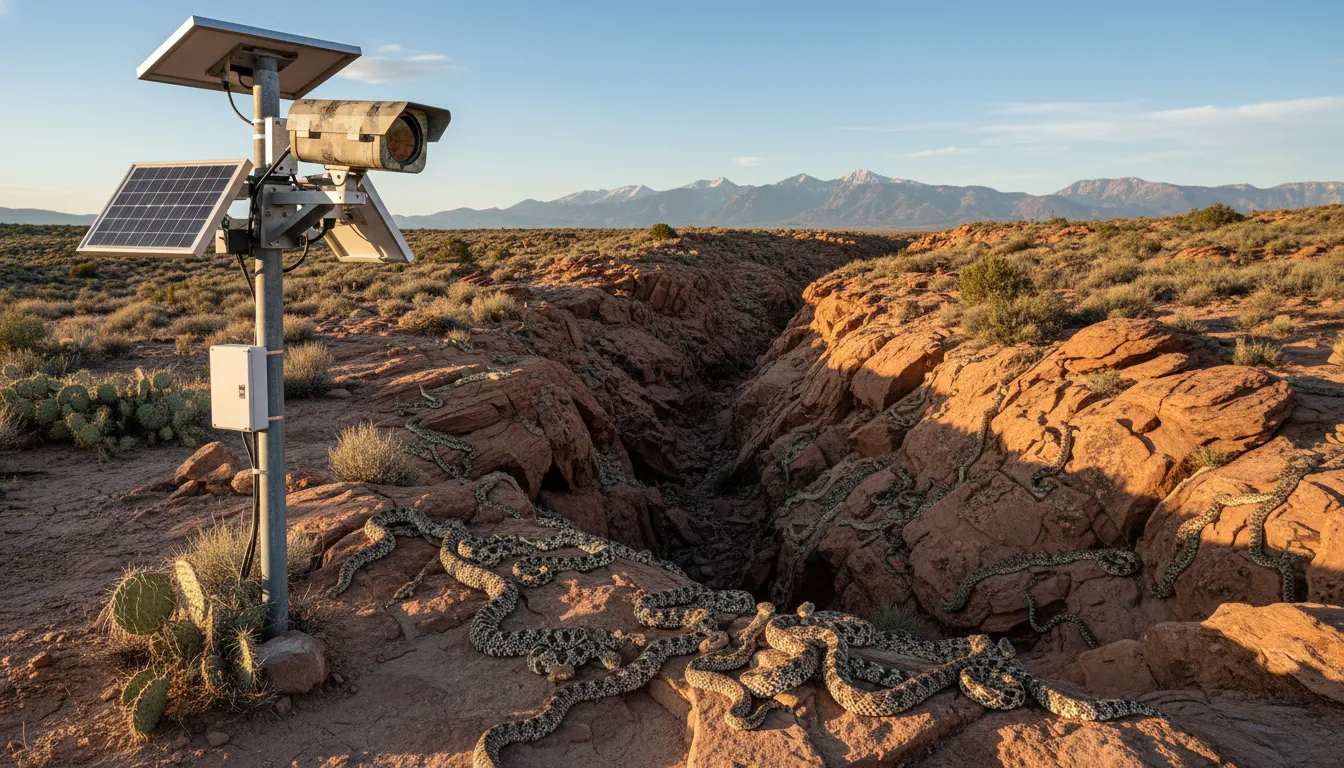
AI Generated Image: A high-tech solar-powered camera overlooking a rocky crevice in Colorado where dozens of rattlesnakes are basking in the sun.
Breaking the “Solitary” Myth
One of the most striking discoveries made through the lens of Project RattleCam is the evidence of maternal care. In the world of reptiles, “motherhood” is often a brief affair, but at this Colorado rookery, researchers have observed mother snakes staying with their pups for weeks. These females help regulate the temperature of the newborns and protect them from predators, a rare sight in herpetology.
This shift in understanding is not just academic; it’s a rebranding of the species. Professor Taylor notes that the “defensive” posture most people associate with rattlesnakes is a result of stress. When left to their own devices, as seen on the Project RattleCam YouTube channel, the snakes are remarkably calm and even gentle with one another.
Citizen Science and the YouTube Phenomenon
What makes Project RattleCam a true “sportainment” crossover is its massive public engagement. The project has turned thousands of viewers into “citizen scientists.” Through the live stream, the public helps researchers identify individual snakes by their unique scale patterns—much like a human fingerprint. This interactive element has created a dedicated community of fans who follow the “lives” of specific snakes, giving them names and tracking their health throughout the season.
The project also utilizes platforms like Zooniverse, where volunteers can analyze thousands of time-lapse images to help count populations and identify predators. This level of engagement is similar to how modern sports fans use advanced analytics to track player performance, turning wildlife conservation into an immersive, data-driven experience.
The Tech Powering the Stream
Operating a 24/7 live stream in a remote, undisclosed location in northern Colorado is no small feat of engineering. The system is entirely off-grid, relying on solar panels to power the cameras and satellite technology to beam the footage to the internet. This intersection of technology and nature is a growing trend in the business of wildlife documentaries, where the “live” aspect adds a layer of unpredictability and excitement that pre-recorded shows lack.
For those interested in the broader trends of how technology is reshaping our interaction with the outdoors, check out our previous feature on the rise of remote wildlife monitoring.
The Business of Nature and Conservation
From a business perspective, Project RattleCam represents a new era of conservation funding. Rather than relying solely on government grants, the project is largely supported by donations from its global viewership. This “direct-to-consumer” model of science allows researchers to maintain independence while fostering a global brand.
The success of the Colorado mega-den has already paved the way for expansion. A third camera is planned for launch in Pennsylvania in 2026 to study Timber Rattlesnakes. As reported by Cal Poly News, these livestreams are significantly improving the public’s perception of snakes, which is a crucial step in securing long-term conservation efforts and reducing unnecessary human-wildlife conflict.
Conclusion: A New Lens on Wildlife
Project RattleCam is more than just a scientific study; it is a cultural shift. By inviting the world to watch the quiet, social, and even maternal moments of rattlesnakes, Professor Taylor and her team are replacing fear with curiosity. In the world of “sportainment,” where we are constantly seeking the next big thrill, the slow, sun-drenched life of a Colorado rattlesnake has proven to be surprisingly captivating.
Whether you are a tech enthusiast, a budding scientist, or just someone looking for a unique live stream, the Colorado mega-den offers a rare window into a world that was once hidden in the shadows. As the project continues to grow, it serves as a reminder that there is still so much to learn about the creatures we share our planet with—if only we take the time to watch.