The Singer Porsche 911 Carrera Cabriolet represents a fascinating moment in the restomod timeline where technical perfection meets a sudden wave of enthusiast backlash. While the automotive world typically bows at the altar of Rob Dickinson’s creations, a vocal minority now questions whether the California-based outfit has reached a saturation point. Suddenly, it feels less “cool” to obsess over every “Singerised” variant, especially as the lineup expands into the wild, big-winged territory of the DLS Turbo. Yet, for those who value the edit, the detail, and the surgical thought behind a build, this new open-top 964 remains a masterclass in atmospheric engineering.
Singer Porsche 911 Engineering: The 420bhp Masterpiece
At the heart of this machine lies a 4.0-liter naturally aspirated flat-six, a unit that benefits from the legendary touch of Cosworth. This engine marks a significant milestone for the company, incorporating variable valve timing and water-cooled cylinder heads for the first time in a naturally aspirated application. These advancements, derived from the high-stakes engineering of the DLS program, allow the engine to breathe with unprecedented efficiency. A six-speed manual transmission sends 420 horsepower directly to the rear wheels, ensuring that the analog connection remains the primary focus. According to a detailed technical breakdown by Autocar, this powertrain revs beyond 8,000 rpm, firing a visceral acoustic signature straight into the driver’s ears.
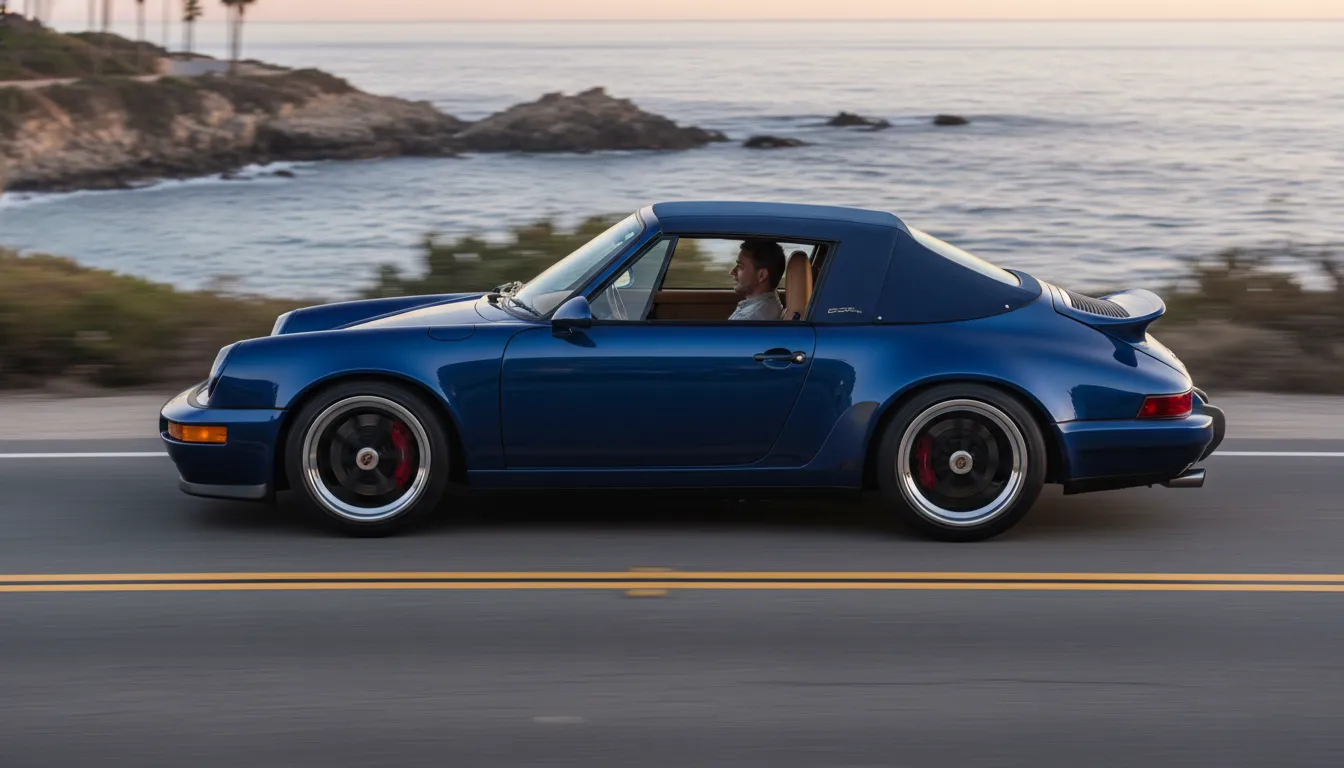
AI Generated Image: Side profile of the Singer Porsche 911 Carrera Cabriolet in Pacific Blue with the Z-fold roof stowed.
Singer builds this car on a donor Type 964 chassis, but very little of the original steel remains untouched. The team strips each donor car to its bare monocoque before reinforcing the structure with carbon fiber and composite materials. This reinforcement addresses the inherent torsional rigidity issues that plague classic convertibles. By utilizing modern material science, Singer ensures the Cabriolet handles with the same precision as its fixed-roof siblings. The bodywork itself takes inspiration from the rare “Wide Turbo Look” (WTL) cars of the 1980s, featuring flared arches that house 18-inch center-lock wheels wrapped in Michelin Pilot Sport tires.
The Innovation of the Z-Fold Roof
The most striking visual change involves the roof mechanism. Traditional 911 Cabriolets often suffer from an ungainly “humpback” silhouette when the top is up, but Singer engineers solved this with a bespoke, lightweight Z-fold mechanism. This system preserves a clean, low-slung profile regardless of the roof’s position. It operates with electric precision, allowing the driver to transition from a cocooned grand tourer to an open-air screamer in seconds. This focus on silhouette proves that Singer remains obsessed with the “edit”—the process of removing aesthetic friction until only the purest form of the 911 remains.
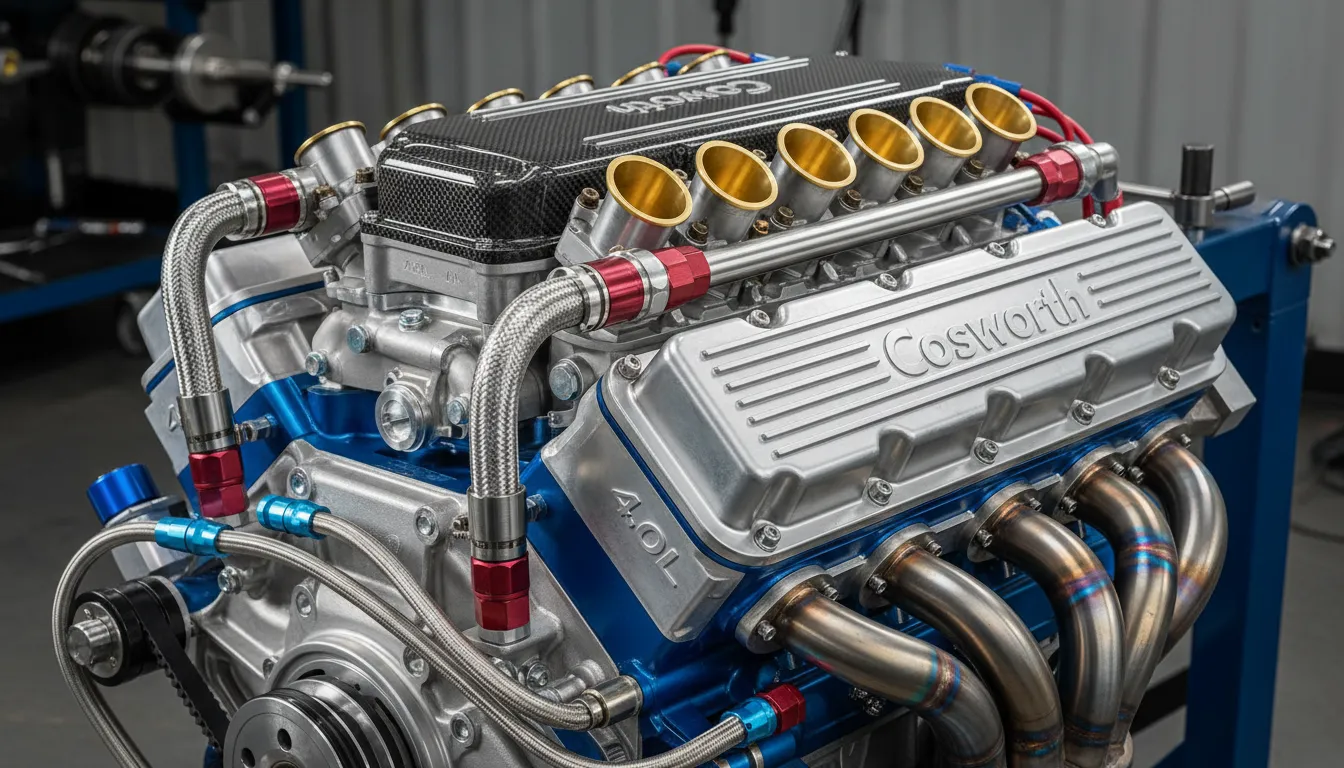
AI Generated Image: Close-up of the 4.0-liter Cosworth-fettled flat-six engine with water-cooled cylinder heads.
California Roots and Global Appeal
While the car debuted in a spec that screams “Pacific Coast Highway,” the engineering supports a much broader range of environments. Owners can specify five different drive modes, ranging from a compliant “Road” setting to a sharp “Track” focus. Four-way electronically adjustable dampers work alongside a nose-lift system to make the car usable in the real world, rather than just a museum piece. However, critics argue that a drop-top 911 of this caliber belongs exclusively in its native California sunshine. The “Classic Study” philosophy typically works anywhere in the world, but the Cabriolet feels specifically tuned for the golden hour in Malibu. You can read more about how these cars compare to other high-end builds in our Related Topic guide.
Market Saturation: Has Singer Reached the Proliferation Peak?
The sheer volume of Singer variants—from the original Classic Study to the DLS, the Turbo Study, and now the DLS Turbo—creates a sense of “Singer fatigue” for some collectors. Purists often prefer the original, least-caricatured versions of these cars. They argue that the purity of the early builds gets lost when every new variant requires a complex name and a specific explanation. The DLS Turbo, for instance, represents a radical departure from the subtle, jewel-like details that first made the brand famous. As noted in a recent first drive by Top Gear, the more extreme models risk jumping the shark by prioritizing outright performance over the nuanced “thoughtfulness” of the early cars.
Despite the backlash, the market demand remains insatiable. Singer limits the Carrera Cabriolet to just 75 commissions, ensuring that exclusivity remains a core part of the value proposition. Each car represents a massive financial commitment, likely reaching into the seven-figure range once the owner supplies the donor 964 and selects their bespoke options. Car and Driver highlights that while the price is astronomical, the level of craftsmanship justifies the cost for those seeking the ultimate air-cooled experience.
Comparing the DLS Turbo and the Cabriolet
The contrast between the 710bhp DLS Turbo and this 420bhp Cabriolet highlights the two paths Singer now treads. One path leads toward track-focused, aerodynamic insanity, while the other maintains the “distillery” approach—refining the essence of the 911 into its most potent, naturally aspirated form. The Cabriolet sits firmly in the latter camp. It does not need massive wings or aggressive splitters to make a statement. Instead, it relies on the subtlety of its lines and the mechanical symphony of its Cosworth heart.
Purists might stick their heads above the parapet to criticize the proliferation of models, but few can deny the execution. Whether you prefer the “Classic Study” or this new open-top evolution, the level of detail remains the gold standard for the industry. The backlash might be real, but the engineering is undeniable. Singer continues to reimagine the 911 with a level of intensity that no other restomod company can currently match.