
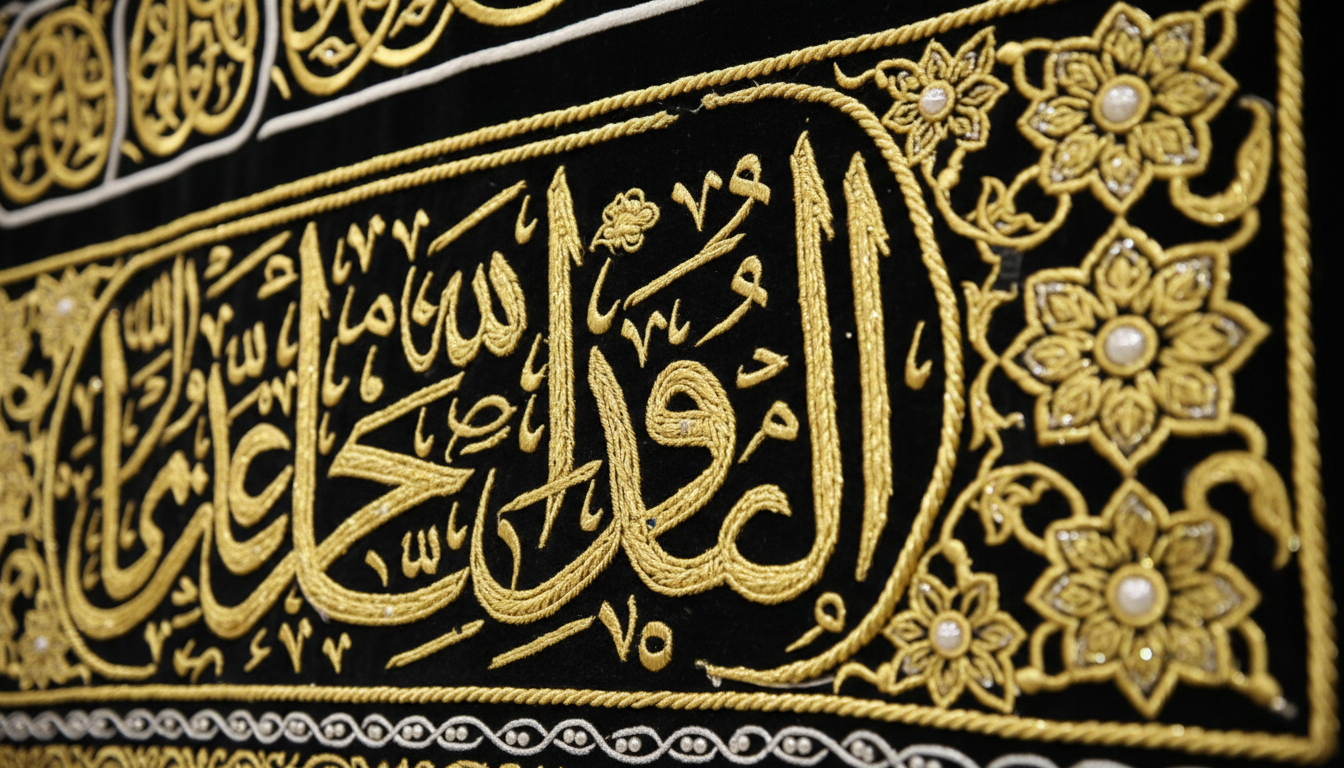
Money often buys proximity to power. However, the recently unsealed Jeffrey Epstein Kiswah document from the Department of Justice (DOJ) suggests it also buys proximity to the divine. For years, the Epstein saga has remained a revolving door of high-profile names and stomach-churning allegations. Nevertheless, the latest revelation reported by Middle East Eye takes us away from the courtrooms. Instead, it moves us into the realm of cultural theft and high-stakes logistics. Consequently, we now know that in 2017, agents shipped a piece of the Kiswah—the sacred silk cloth of the Ka’bah—to Epstein’s residence.
This isn’t just a story about a weird souvenir. Because of this discovery, we see how the global “super-class” uses technology and shell companies to commodify the world’s most untouchable artifacts.
The Jeffrey Epstein Kiswah Document and Modern Logistics
According to correspondence dated March 22, 2017, the path of the Kiswah was a masterclass in modern logistics. The cloth traveled from the heart of the Islamic world to Epstein’s doorstep in St. Thomas. The documents name Aziza Al-Ahmadi, CEO of Boss Bunny Games, as a central figure. She described the cloth in visceral terms. Specifically, she noted it had been “touched by millions” and carried the “prayers, hopes, and tears” of the faithful.
Yet, the US Department of Justice’s paper trail reduced this spiritual weight to a mere line item. A network including Abdullah Al-Maari and Daphne Wallace coordinated the shipment. Logistics expert Chalmer Stauffer navigated the customs process to move the goods to Epstein’s LSJE LLC. On the official paperwork, they simply classified the Kiswah as “artwork from Saudi Arabia.”
This classification represents a common loophole in the high-end art market. By labeling a primary religious relic as “artwork,” the shipment bypassed intense scrutiny. Furthermore, this Jeffrey Epstein Kiswah document highlights a massive gap in how we track “soft power” gifts across international borders.
The Commodification of the Divine
The human element of this story creates the true friction. For the average Muslim, the Kiswah represents the pinnacle of sanctity. Authorities replace it annually and traditionally gift fragments to heads of state. However, the idea of a fragment sitting in the home of a convicted offender has sparked a digital firestorm.
On platforms like X, the reaction has been a mix of theological debate and raw anger. For instance, user @klystagram pointed out the psychological dissonance. They argued that millions of Muslims want to see the Ka’bah, yet this sacred item became a carpet for a criminal. In contrast, others took a more pragmatic view. They argued that the cloth is just material and its removal doesn’t diminish the Ka’bah itself.
This divide illustrates a growing tension. As technology makes transport easier, we are losing the “context” of objects. To Epstein, the Kiswah wasn’t a vessel for prayers; it was a trophy. It was physical proof that he could reach into restricted spaces and pull out a piece of the architecture.
Transparency Needs for Global Gift Economies
The connection found in the Jeffrey Epstein Kiswah document exposes a deep issue in the “gift economy.” Currently, no centralized database tracks where these high-value cultural gifts end up. When an authority gifts a piece of history, it often vanishes into private collections. Often, shell companies like Epstein’s LSJE LLC shield these items from public view.
Looking forward, this event will likely trigger a push for “provenance technology.” We are already seeing the beginnings of this with blockchain-based art registries. Therefore, we need more rigorous tracking for state-level gifts. If every piece of the Kiswah had a digital “DNA” or a non-fungible record, the secondary market would be harder to manipulate.
The ethical implications are clear. The world’s heritage cannot remain the plaything of a shadow elite. Since the DOJ is releasing these files in stages, the Kiswah is likely just the tip of the iceberg. As we move deeper into this decade, the demand for transparency will only grow.
Ultimately, the Jeffrey Epstein Kiswah document serves as a haunting metaphor for modern power. It represents a class that knows the price of everything but the value of nothing. While authorities have yet to comment, the digital record is now permanent. The “prayers, hopes, and tears” of millions were, for a time, just another asset in a portfolio of horrors. No amount of logistics can sanitize that reality.