
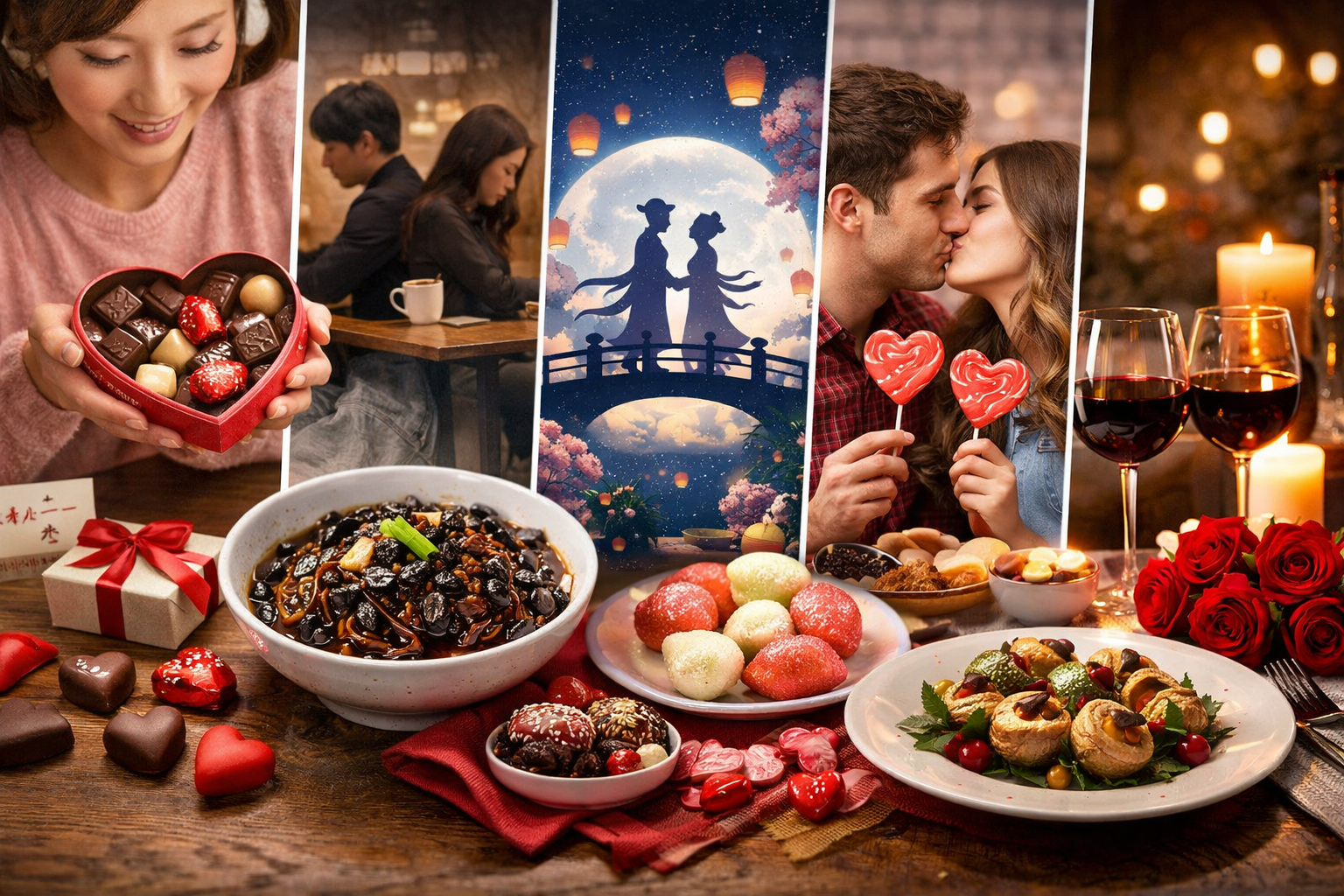
On February 14, love seems universal. Flowers sell out, restaurants fill up, and chocolate becomes a language of affection. But if you look beyond the roses and candlelight, Valentine’s Day reveals something even more fascinating — every culture expresses love differently, and food often tells the story best.
From carefully chosen chocolates in Japan to bowls of black noodles in South Korea, romantic traditions vary widely. Some are rooted in ancient legends, others in clever marketing campaigns. Yet all of them show how deeply culture shapes the way we celebrate love.
Here are five Valentine’s food traditions that give February 14 a truly global flavor.
🇯🇵 Japan: When Chocolate Speaks for the Heart
In Japan, Valentine’s Day works differently from most Western countries. On February 14, women traditionally give chocolate to men. But not all chocolate means the same thing.
There are two well-known categories:
- Honmei choco — given to someone you truly love.
- Giri choco — given out of courtesy to coworkers or acquaintances.
This system emerged in the 20th century, influenced by confectionery marketing, but it eventually became part of everyday social life.
Then comes White Day on March 14, when men return the favor — usually with sweets that are slightly more valuable than what they received.
Interestingly, modern trends show change. Many women are moving away from obligation-based gifts. The rise of “self-reward chocolate” reflects a shift toward self-love and independence.
If your website has a chocolate or dessert article, click
🇰🇷 South Korea: Love, Then Black Noodles
Like Japan, South Korea celebrates Valentine’s Day with women giving chocolate and men responding on White Day. But the calendar doesn’t stop there.
April 14 is known as Black Day — a holiday for singles.
On this day, people who did not receive gifts gather to eat jajangmyeon, noodles covered in thick black bean sauce. The dark color inspired the name “Black Day.”
Originally, the day carried a sense of loneliness. Today, it feels much lighter. Friends meet, laugh, and treat it as a celebration of independence rather than a reminder of exclusion.
Even being single becomes part of the Valentine season narrative.
🇨🇳 China: Ancient Romance and Symbolic Rice
Although February 14 is recognized in modern China, the country’s historic day of love is the Qixi Festival.
Held on the seventh day of the seventh lunar month, Qixi tells the story of the Weaver Girl and the Cowherd — lovers separated by the Milky Way who reunite once a year.
During Qixi, couples exchange flowers and sweets. In some southwest regions, the Sister’s Meal Festival adds a unique culinary twist: young women prepare colorful rice dishes for potential suitors. Hidden symbols inside the rice quietly communicate romantic interest — or rejection.
Today, modern gestures like giving 99 roses symbolize eternal love, blending ancient myth with contemporary romance.
🇦🇷 Argentina: A Whole Week of Sweetness
In Argentina, Valentine’s Day exists — but it’s only part of the story.
Every July, the country celebrates Sweetness Week. Originally launched in 1989 as a candy marketing campaign, it grew into a beloved tradition. Throughout the week, people exchange chocolates, candies, and small tokens of affection.
The celebration flows naturally into Friendship Day, reinforcing that love is not limited to romantic partners. Friends and family are equally important.
In Argentina, sweetness becomes a social language.
🇫🇷 France: Romance on the Plate
Few places are as strongly associated with romance as France. Valentine’s Day here focuses almost entirely on couples.
Known as La Fête de Saint Valentin, the celebration emphasizes intimacy. Perfume, Flowers, and Fine Chocolate are common gifts, but dining is the highlight.
Couples often reserve tables at restaurants or prepare elegant meals at home. Given France’s world-renowned culinary tradition, Valentine’s becomes an experience of taste as much as emotion.
Romance, in France, is served course by course.
❤️ Why Food Matters in Valentine’s Traditions
Although February 14 appears universal, its meaning shifts across borders.
- In Japan and South Korea, structured gift exchanges extend the season of love.
- In China, mythology still shapes modern romance.
- In Argentina, affection lasts an entire week.
- In France, gastronomy elevates intimacy.
Even a bowl of black noodles tells a story about identity and belonging.
Love may be universal — but its flavor is beautifully local.
FAQ
Why do Japanese women give chocolate on Valentine’s Day?
The tradition began as a confectionery marketing strategy but evolved into a social custom. Different chocolates express different levels of affection.
What is Black Day in South Korea?
Black Day, observed on April 14, is when singles gather to eat jajangmyeon (black bean noodles) and celebrate independence.
When is the Qixi Festival celebrated?
Qixi takes place on the seventh day of the seventh lunar month, usually between July and August.
What is Argentina’s Sweetness Week?
Sweetness Week is a July tradition where people exchange candies and small gifts to express affection.
How do couples celebrate Valentine’s Day in France?
Most celebrate with romantic dinners, either at restaurants or at home, often accompanied by flowers or perfume.